
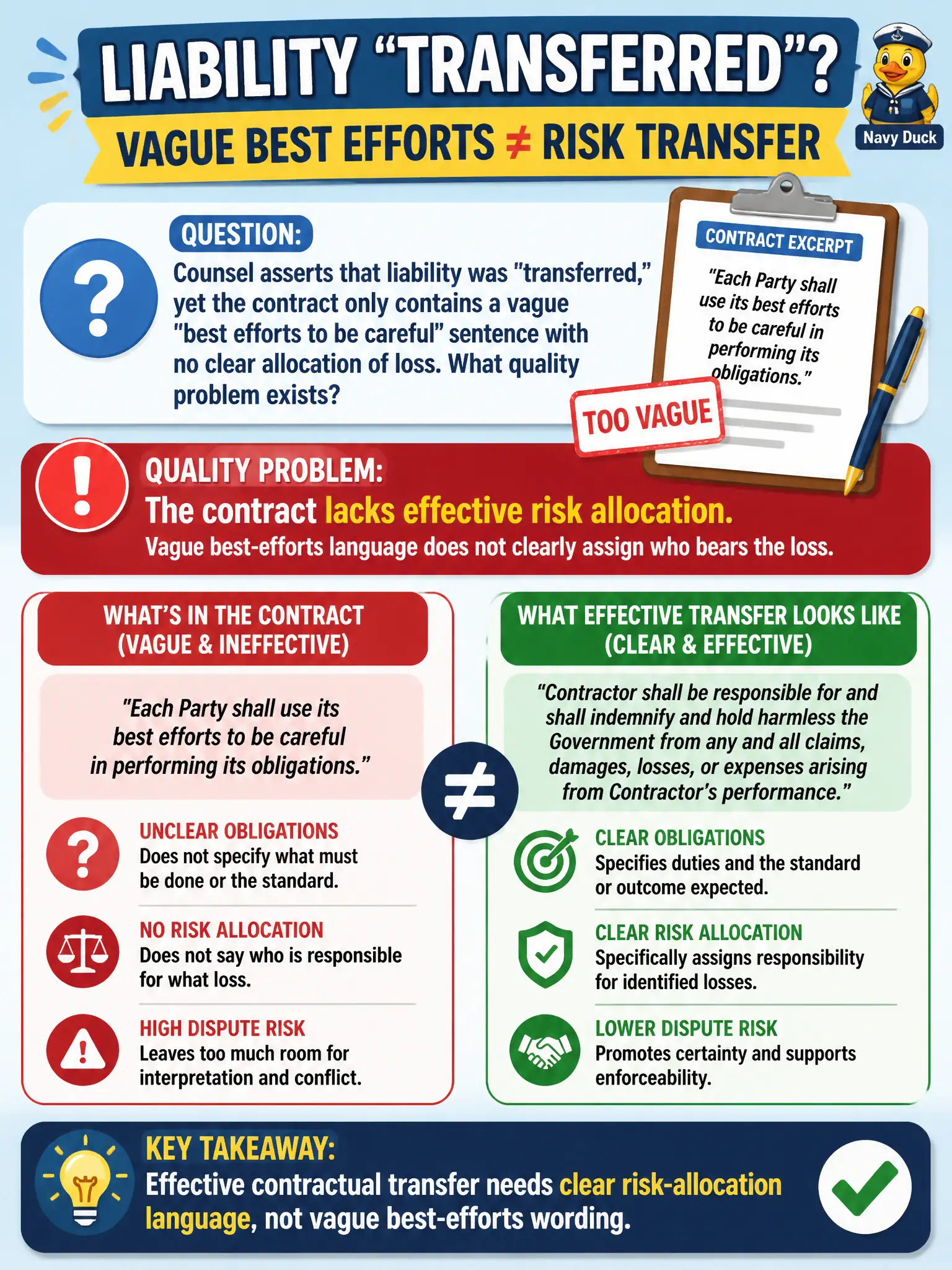
Counsel asserts that liability was "transferred," yet the contract only contains a vague "best efforts to be careful" sentence with no clear allocation of loss. What quality problem exists?
Select an answer to reveal the explanation.
Short Explanation
"We'll try to be careful" is a nice sentiment, not a transfer. Real transfer language says who owns which losses. If it's fuzzy, you probably still own the problem.
Full Explanation
Effective contractual transfer needs clear risk-allocation language, not vague best-efforts wording is the quality problem when counsel asserts liability was “transferred” yet the contract only says “best efforts to be careful.” Vague aspirations do not allocate who pays for defined losses. Civic counsel should insist on clear indemnity, defense, and insurance clauses matched to hazard.
Claiming best-efforts sentences automatically create full indemnity under all risk frameworks fails by concept because best-efforts duties are not equivalent to indemnity allocations of loss. Claiming vague wording is preferred because courts reject any specific allocation fails because specific negotiated clauses are standard and enforceable design—not something courts universally reject. Claiming transfer is complete whenever the word careful appears anywhere fails because isolated adjectives do not create transfer mechanics.
Exam caveat: CRMC contractual transfer quality depends on clear allocation language. “Best efforts to be careful” is insufficient evidence of transfer.
Operational check: Redline high-hazard municipal agreements to replace vague care language with explicit indemnity/defense/insurance requirements; train project owners not to equate “careful” boilerplate with completed risk transfer.