
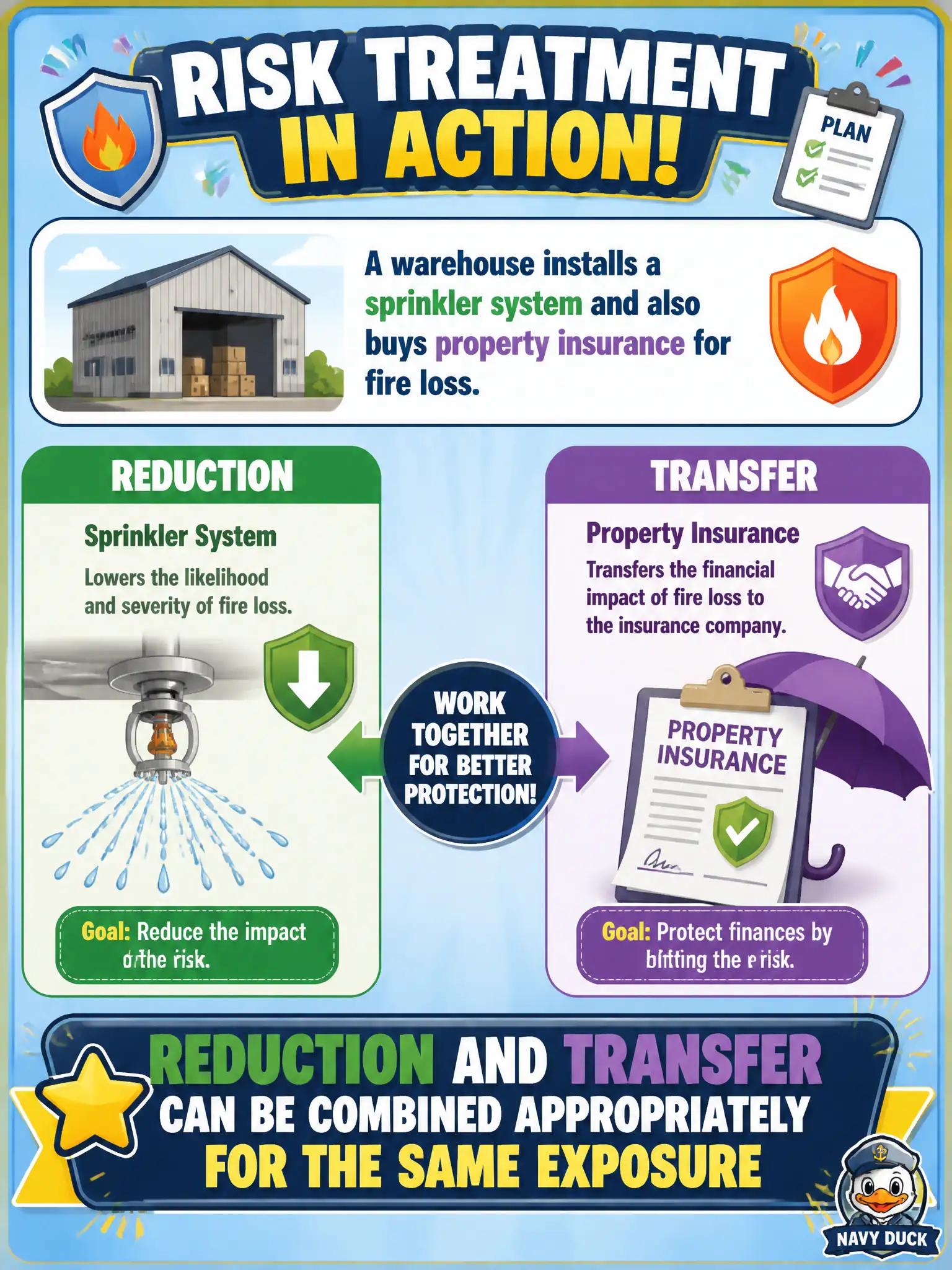
A warehouse installs a sprinkler system and also buys property insurance for fire loss. Which statement best describes this treatment combination?
Select an answer to reveal the explanation.
Short Explanation
Sprinklers cut the fire down; insurance helps with what still burns. Using both is normal — treatments aren't mutually exclusive when they tackle different parts of the same problem.
Full Explanation
Reduction and transfer can be combined appropriately for the same exposure is best shown by installing sprinklers (reduction) and buying property insurance for fire loss (transfer). Layered treatment is normal: engineering lowers frequency/severity while insurance funds catastrophic residual loss. Civic facilities routinely combine these strategies for fire.
Claiming sprinklers void any property insurance so only one strategy is allowed fails by concept because insurers often require or reward suppression systems; combination is standard, not forbidden. Claiming property insurance forbids engineered fire controls under risk doctrine fails because doctrine encourages reduction alongside transfer. Claiming acceptance is the only valid treatment once both sprinklers and insurance exist fails because those controls are reduction and transfer; acceptance would address only any remaining documented residual, not erase the other treatments.
Exam caveat: CRMC allows combined treatments on one exposure. Dichotomies that force “only one strategy” are distractors.
Operational check: For city buildings, maintain sprinkler inspection/testing as reduction evidence and keep property insurance current as transfer; document any residual fire risk acceptance separately if leadership formally retains a portion.