
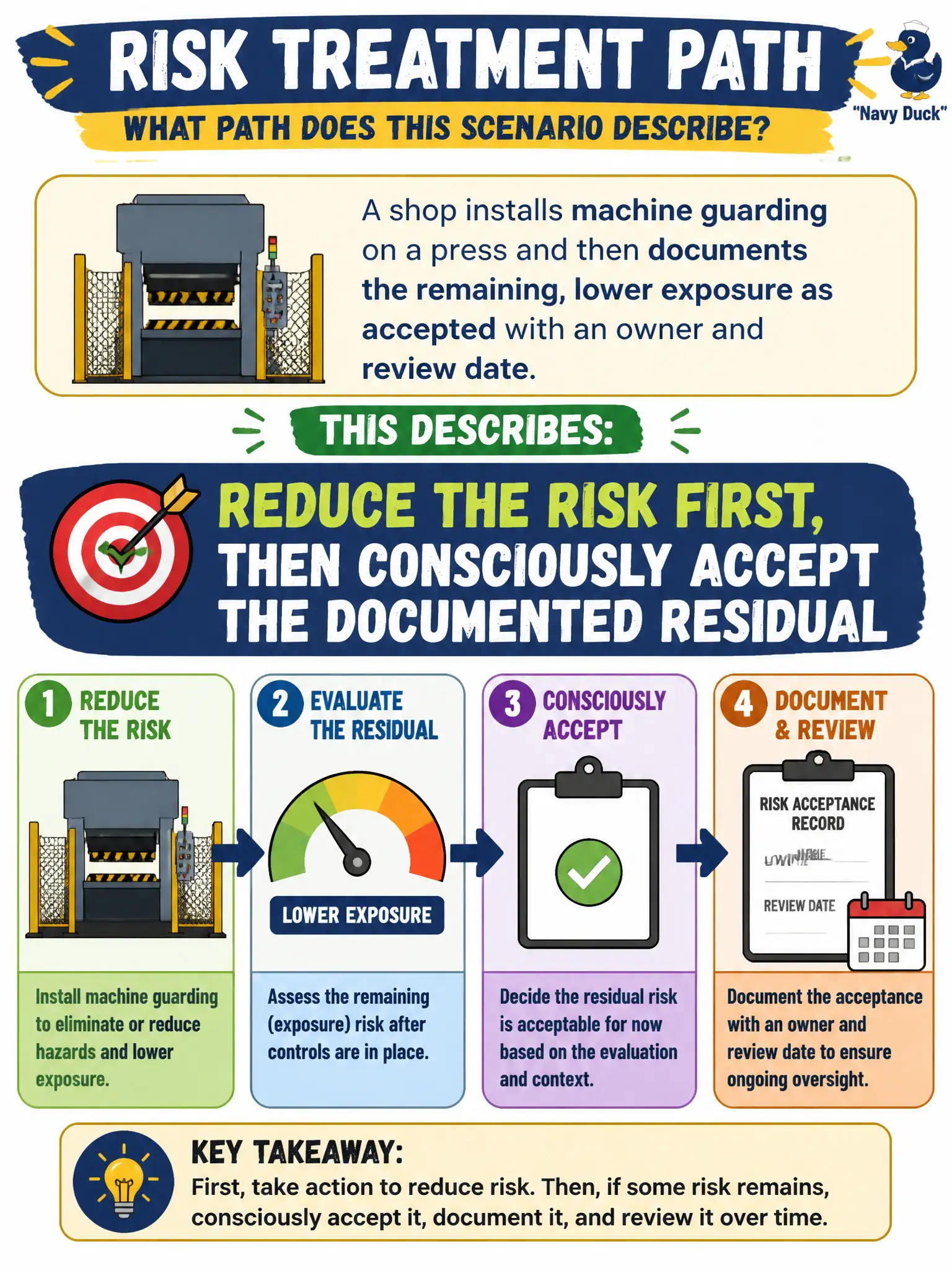
A shop installs machine guarding on a press and then documents the remaining, lower exposure as accepted with an owner and review date. Which treatment path does this describe?
Select an answer to reveal the explanation.
Short Explanation
You put a fence around the cliff (reduce), then decide the leftover trail risk is okay with eyes open (accept residual). That sequence — lower it, then own what's left — is classic good treatment.
Full Explanation
Reduce the risk first, then consciously accept the documented residual describes installing machine guarding on a press and then documenting the remaining lower exposure with an owner and review date. That sequence matches good treatment order: apply effective reduction, then accept only what remains within appetite under ownership and review. Civic shops should show that trail in the risk register.
Avoiding the press entirely by shutting the plant and transferring all production offshore is a different treatment path (broad avoidance) not described by guarding-plus-residual-acceptance. Accepting the unguarded press first then installing guarding only if insurance demands reverses proper order and treats insurance appetite as the driver rather than hazard control. Transferring all press injuries to workers through waivers and skipping physical guarding fails because waivers do not replace engineering controls and are not the path described.
Exam caveat: CRMC treatment sequencing favors reduction of practicable hazards before residual acceptance. Documented acceptance follows controls—it does not excuse leaving presses unguarded.
Operational check: After guarding installation, update the risk register with residual rating, owner, and review date; verify the guard remains in place during inspections and revisit acceptance if conditions change.