
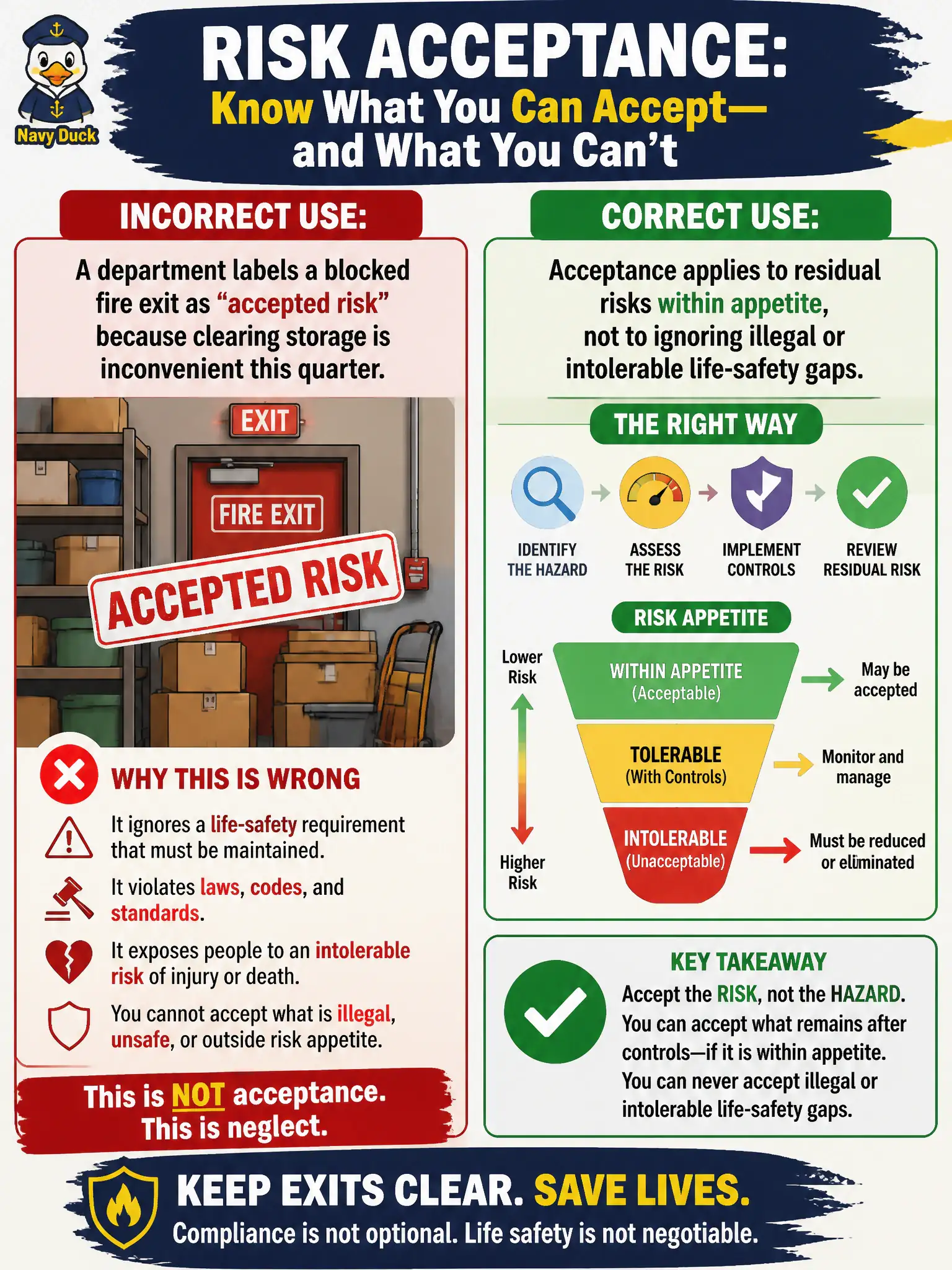
A department labels a blocked fire exit as "accepted risk" because clearing storage is inconvenient this quarter. Why is that use of acceptance incorrect?
Select an answer to reveal the explanation.
Short Explanation
Calling a blocked exit "accepted risk" is like saying you'll "accept" driving with no brakes because the shop is busy. Acceptance is for leftover risk after you've done the right controls — not for shrugging off life-safety and code failures.
Full Explanation
Acceptance applies to residual risks within appetite, not to ignoring illegal or intolerable life-safety gaps is why labeling a blocked fire exit as “accepted risk” because clearing storage is inconvenient is incorrect. Acceptance is a conscious decision about residual exposure after appropriate treatment—not a euphemism for noncompliance. Civic facilities cannot accept blocked exits as a quarterly convenience choice.
Claiming acceptance always requires buying insurance before clearing an exit fails by concept because clearing a life-safety egress is reduction/restoration of a required control, not an insurance precondition. Claiming blocked exits are acceptable if the fire marshal has not yet cited fails because absence of citation does not equal compliance or acceptable residual risk. Claiming acceptance means postponing all safety work until the next capital budget fails because budget timing does not redefine acceptance to cover known intolerable egress failures.
Exam caveat: CRMC acceptance is bounded by risk appetite and legal/life-safety constraints. Mislabeling uncontrolled intolerable hazards as “accepted” is a classic exam error.
Operational check: Clear the blocked exit immediately, photograph restoration, assign storage owners so egress stays clear, and remove any register entry that falsely listed the blocked exit as accepted residual.