
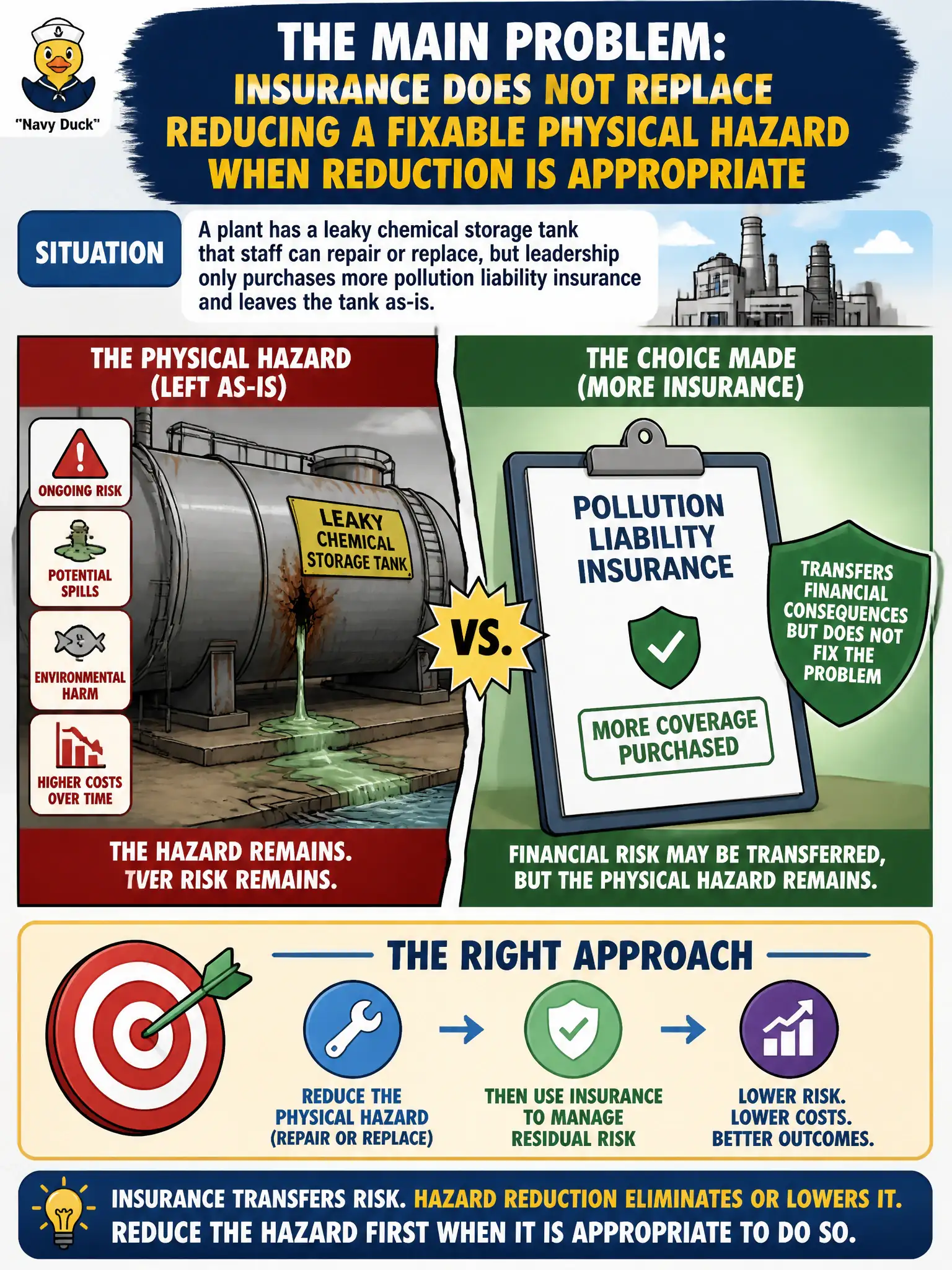
A plant has a leaky chemical storage tank that staff can repair or replace, but leadership only purchases more pollution liability insurance and leaves the tank as-is. What is the main problem with that approach?
Select an answer to reveal the explanation.
Short Explanation
Insurance is like buying a bigger bandage while the faucet is still running. Transfer can soften financial hits, but it does not stop chemicals from leaking. Fix the tank — reduce the hazard — then decide what residual to insure or accept.
Full Explanation
Transfer through insurance does not replace reducing a fixable physical hazard when reduction is appropriate is the core problem with buying more pollution liability insurance while leaving a leaky chemical storage tank as-is. Insurance may fund cleanup costs; it does not stop the leak, protect workers, or satisfy environmental duty when repair/replace is feasible. Civic plants should reduce containment failures first, then use insurance as a complement for residual catastrophic loss.
Claiming insurance always eliminates the need for any physical controls fails by concept because financial transfer ≠ hazard elimination; tanks still leak. Claiming pollution policies automatically fix containment failures once premiums are paid fails because insurers pay claims under terms—they do not magically repair tanks. Claiming acceptance of a leaking tank is required before any insurance purchase is valid fails because acceptance is a separate treatment decision about residual risk within appetite, not a prerequisite ritual that legitimizes ignoring fixable leaks.
Exam caveat: CRMC treatment selection expects reduction of practicable physical hazards; transfer is complementary, not a substitute for fixing a known leaky tank.
Operational check: Issue a work order to repair/replace the leaking tank, verify containment, update spill procedures, and retain pollution insurance as catastrophic backstop—not as the sole “treatment” of an active leak.