
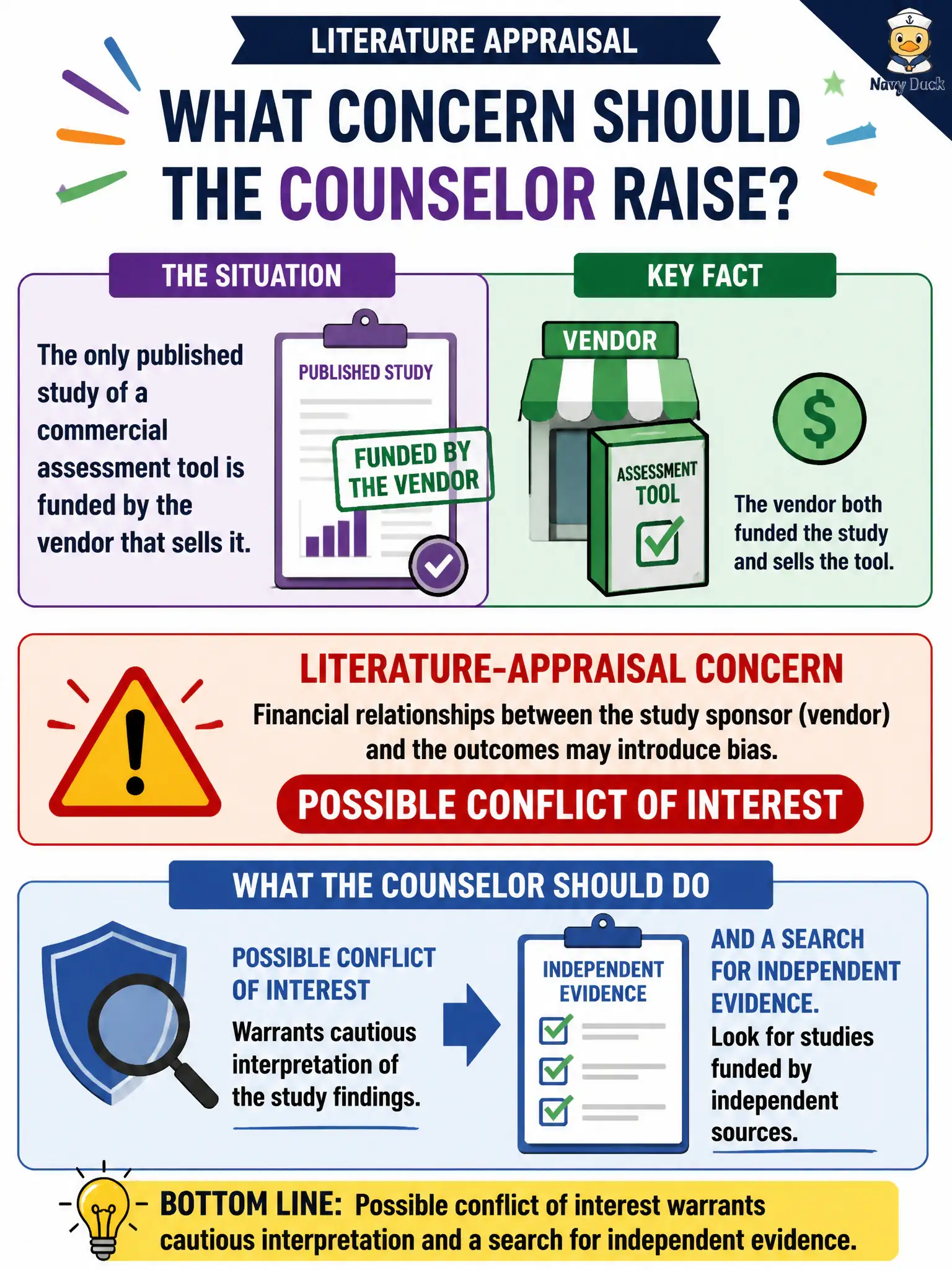
The only published study of a commercial assessment tool is funded by the vendor that sells it. What literature-appraisal concern should the counselor raise?
Select an answer to reveal the explanation.
Short Explanation
When the company writing the check also sells the product, raise an eyebrow—not a conspiracy board, just healthy skepticism. Look harder for independent studies before you bet the caseload on that tool. Bias risk is part of EBP homework.
Full Explanation
When the only published study of a commercial assessment tool is funded by the vendor that sells it, possible conflict of interest warrants cautious interpretation and a search for independent evidence. Funding source does not automatically falsify findings, but it raises appraisal red flags for municipal purchasers and CRC users who must protect clients from biased marketing science. Vendor funding does not always guarantee unbiased gold-standard evidence. Conflicts of interest are not irrelevant merely because a PDF looks professionally formatted. Counselors should not avoid reading methods sections when vendors fund studies; methods scrutiny becomes more important under COI conditions. Exam caveat: transparent vendor research can still be useful if methods are strong and replicated independently; the exam targets naive acceptance without conflict-of-interest awareness. Operational check: note vendor funding in the appraisal, seek independent studies or local validation before wide civic adoption, and disclose COI limitations when recommending the tool to clients or agency leaders. In civic rehabilitation settings, documenting the rationale and verifying the next concrete step keeps practice aligned with CRC standards and client rights.