
Program evaluation finds high client satisfaction but poor employment outcomes. How should leadership respond?
Select an answer to reveal the explanation.
Short Explanation
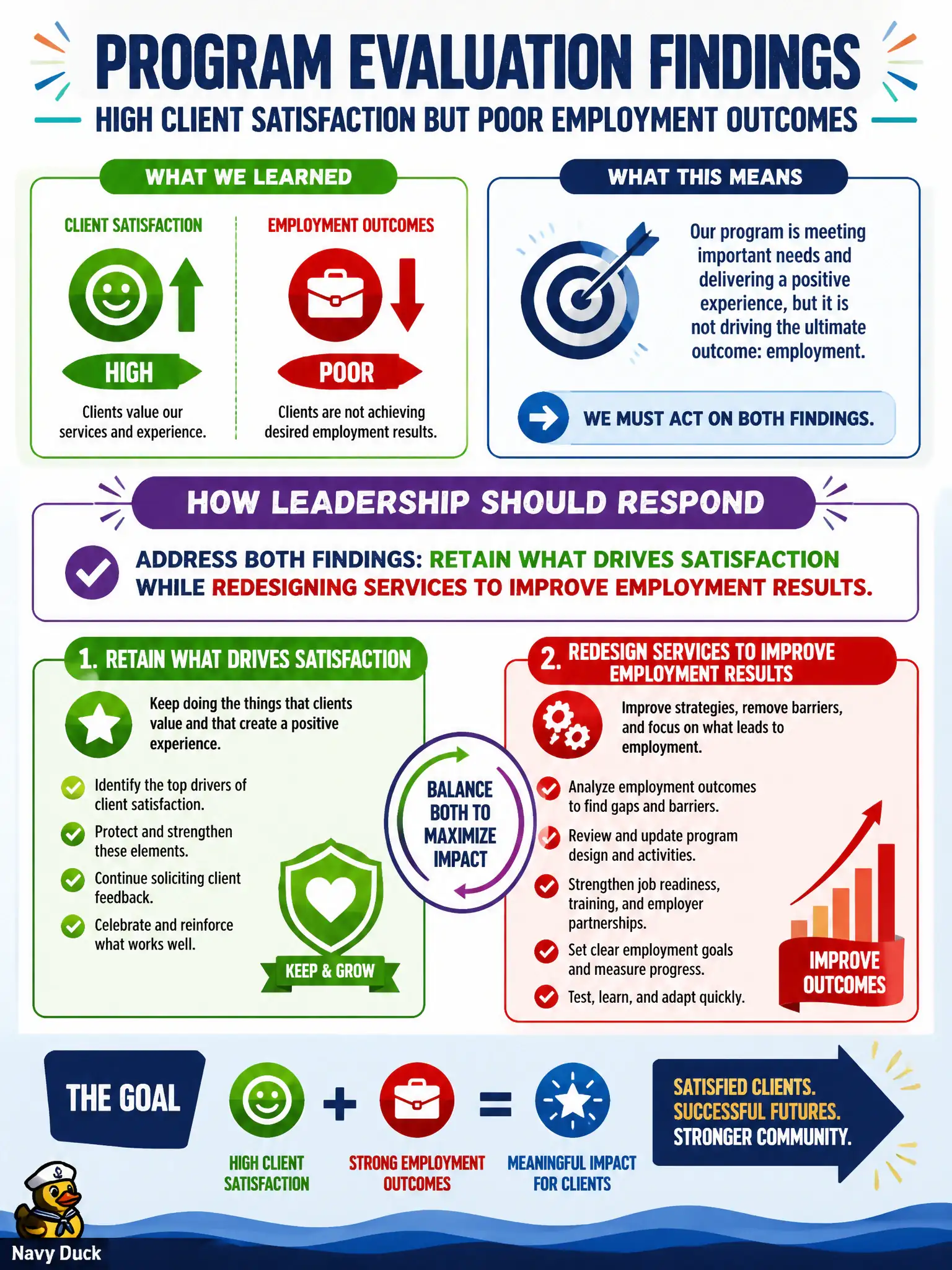
Happy clients who still aren't working means the program is friendly—but not finished. Keep the parts people value and fix the employment engine. Sweeping either number under the rug just delays the real repair.
Full Explanation
When program evaluation finds high client satisfaction but poor employment outcomes, municipal CRP leadership should address both findings: retain what drives satisfaction while redesigning services to improve employment results. Satisfaction and outcomes are complementary accountability signals, not interchangeable proofs of success. Ignoring employment outcomes because satisfaction alone proves program success neglects the vocational mission funders and clients often prioritize. Eliminating all client feedback processes since outcomes matter more than experience discards valuable process information that can explain retention and engagement. Celebrating satisfaction scores publicly while suppressing outcome data from funders is ethically and often contractually improper. Exam caveat: measurement quality matters—poor outcome definitions can create false failure, and satisfaction surveys can be biased—but the leadership response is still to examine both domains rather than choose one narrative. Operational check: present both metrics to stakeholders, identify service elements linked to satisfaction, redesign job-development or support intensity targeting employment gaps, and set a dated re-evaluation of civic employment outcomes without silencing satisfaction data.