
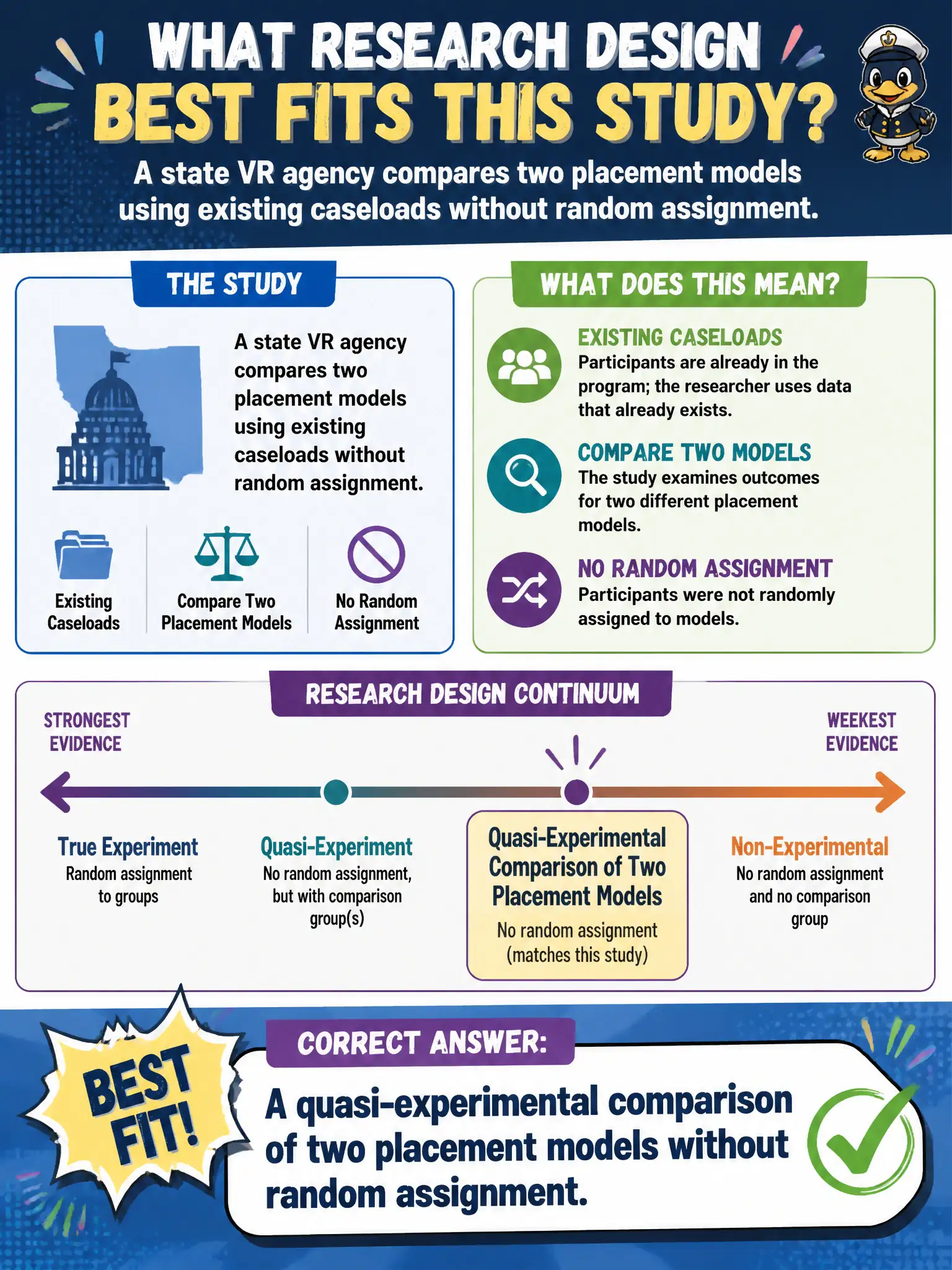
A state VR agency compares two placement models using existing caseloads without random assignment. Which research design label best fits this applied study?
Select an answer to reveal the explanation.
Short Explanation
No random assignment? You're in quasi-experimental territory—still a real comparison, just not a textbook RCT. Rehab agencies use this design all the time when they can't shuffle clients like lab subjects. Name it honestly and watch the caveats.
Full Explanation
A state VR agency comparison of two placement models using existing caseloads without random assignment is best labeled a quasi-experimental comparison. The design includes an empirical contrast of real programs but lacks randomization that defines a true RCT, so causal claims must be tempered. Accurate design labeling supports honest appraisal of evidence strength in municipal program research. Calling it a true randomized controlled trial with full random assignment of all clients misstates the assignment method and overclaims internal validity. Labeling it a purely fictional narrative with no empirical comparison ignores the real caseload data contrast. Calling it a double-blind pharmaceutical crossover trial imports an unrelated clinical trial model that does not fit vocational program comparison. Exam caveat: quasi-experiments can still be informative for VR policy but require caution about selection bias and confounding when clients were not randomized. Operational check: in the methods summary, state that assignment was nonrandom, identify likely confounders such as acuity or counselor effects, and avoid claiming RCT-level causal certainty in civic leadership reports. In civic rehabilitation settings, documenting the rationale and verifying the next concrete step keeps practice aligned with CRC standards and client rights.