
When explaining assessment results to a client, why should a counselor prefer discussing standard scores (with appropriate context) over raw scores alone?
Select an answer to reveal the explanation.
Short Explanation
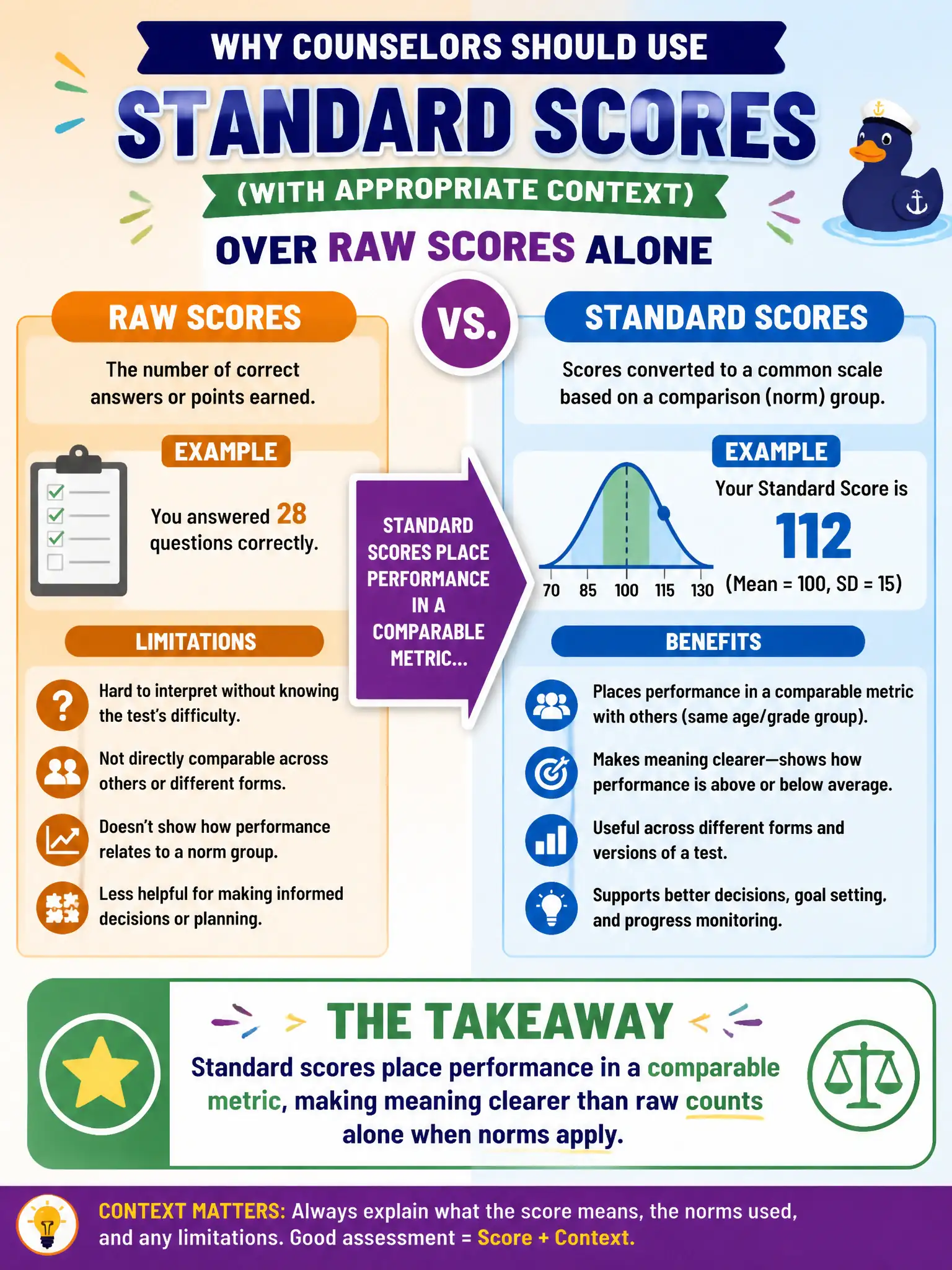
Raw scores are like saying you got '42 points' without saying what game you were playing. Standard scores help translate that into a shared yardstick—when the norms fit. Explain them in plain language so the client actually owns the information.
Full Explanation
Standard scores place performance in a comparable metric, making meaning clearer than raw counts alone when norms apply, which is why counselors prefer discussing them with appropriate context when explaining assessment results to municipal VR clients. Raw totals without a reference framework often mislead clients about standing, readiness, or progress relative to a norm group. Claiming raw scores are always more interpretable than any norm-referenced metric ignores the purpose of standardization. Asserting standard scores eliminate the need for any explanation or informed consent is false; scores still require plain-language interpretation and consent for assessment use. Saying clients should never hear score information of any kind conflicts with informed participation and feedback ethics in rehabilitation counseling. Exam caveat: standard scores are only as meaningful as the norms and validity behind them; when norms misfit, counselors must qualify interpretation rather than present polished numbers as absolute truth. Operational check: in feedback, present the standard score with a plain-language meaning, note norm relevance, invite questions, and document that the civic client received interpretable results rather than raw counts alone.