
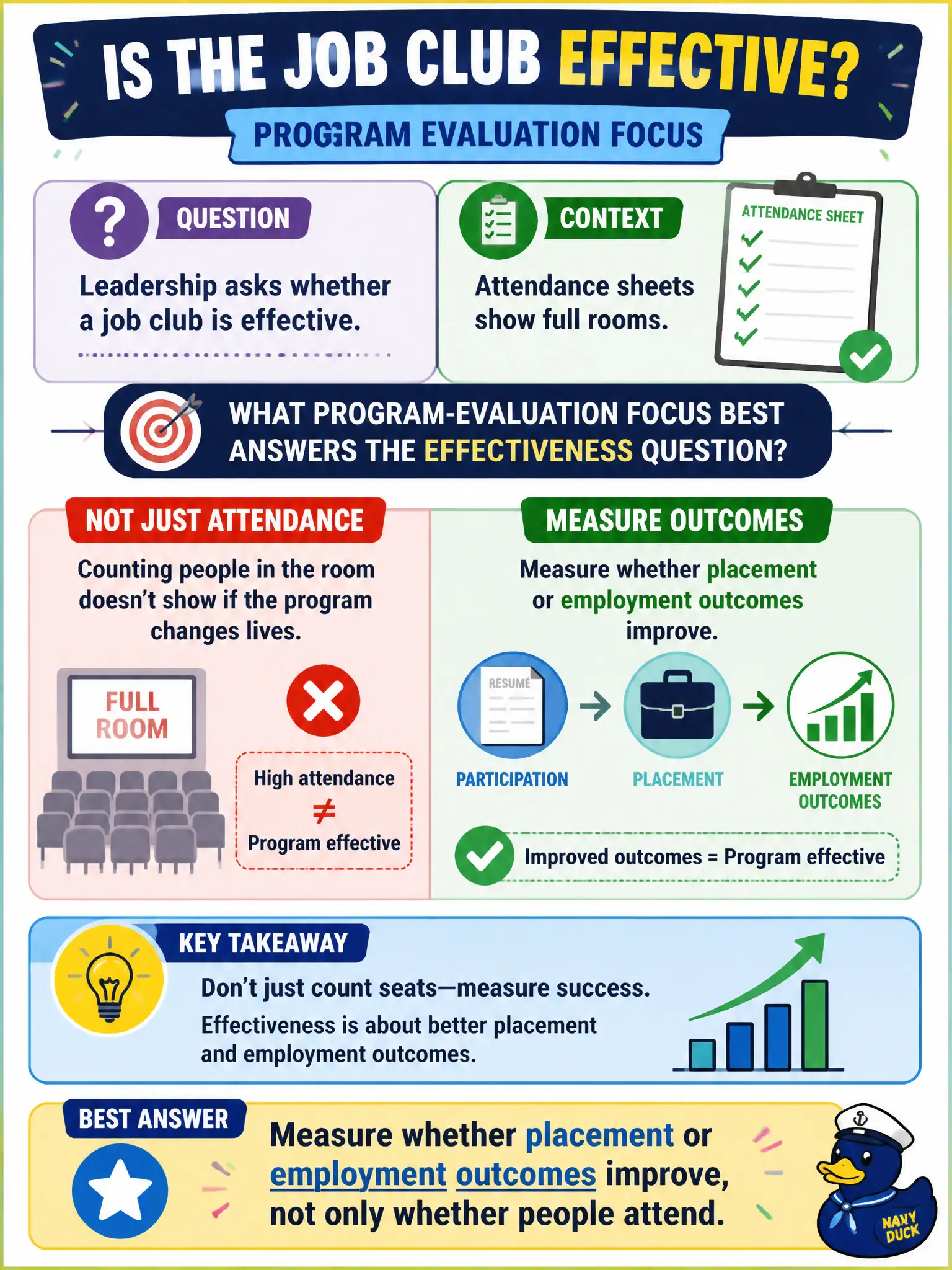
Leadership asks whether a job club is effective. Attendance sheets show full rooms. What program-evaluation focus best answers the effectiveness question?
Select an answer to reveal the explanation.
Short Explanation
A packed room means people showed up—not that anyone got hired. Effectiveness is about outcomes like placements, not just warm chairs. Track the result you actually care about.
Full Explanation
Program evaluation of a municipal job club's effectiveness should measure whether placement or employment outcomes improve, not only whether people attend. Attendance is an output that shows reach; employment results are the outcome leadership usually needs for accountability to funders and clients. Counting attendance only because filled seats prove employment success confuses popularity with impact. Evaluating facilitator charisma ratings exclusively as the outcome metric prioritizes personality over vocational results. Declaring effectiveness based on how colorful the marketing flyer is substitutes branding for evidence. Exam caveat: attendance and satisfaction can be useful intermediate indicators for engagement, but they should not replace employment outcome measurement when effectiveness is the question asked. Operational check: define employment or placement indicators for job-club participants, compare attendees' outcomes to a baseline or comparison group when feasible, and report attendance as process data rather than as proof of civic program success alone. In civic rehabilitation settings, documenting the rationale and verifying the next concrete step keeps practice aligned with CRC standards and client rights.