
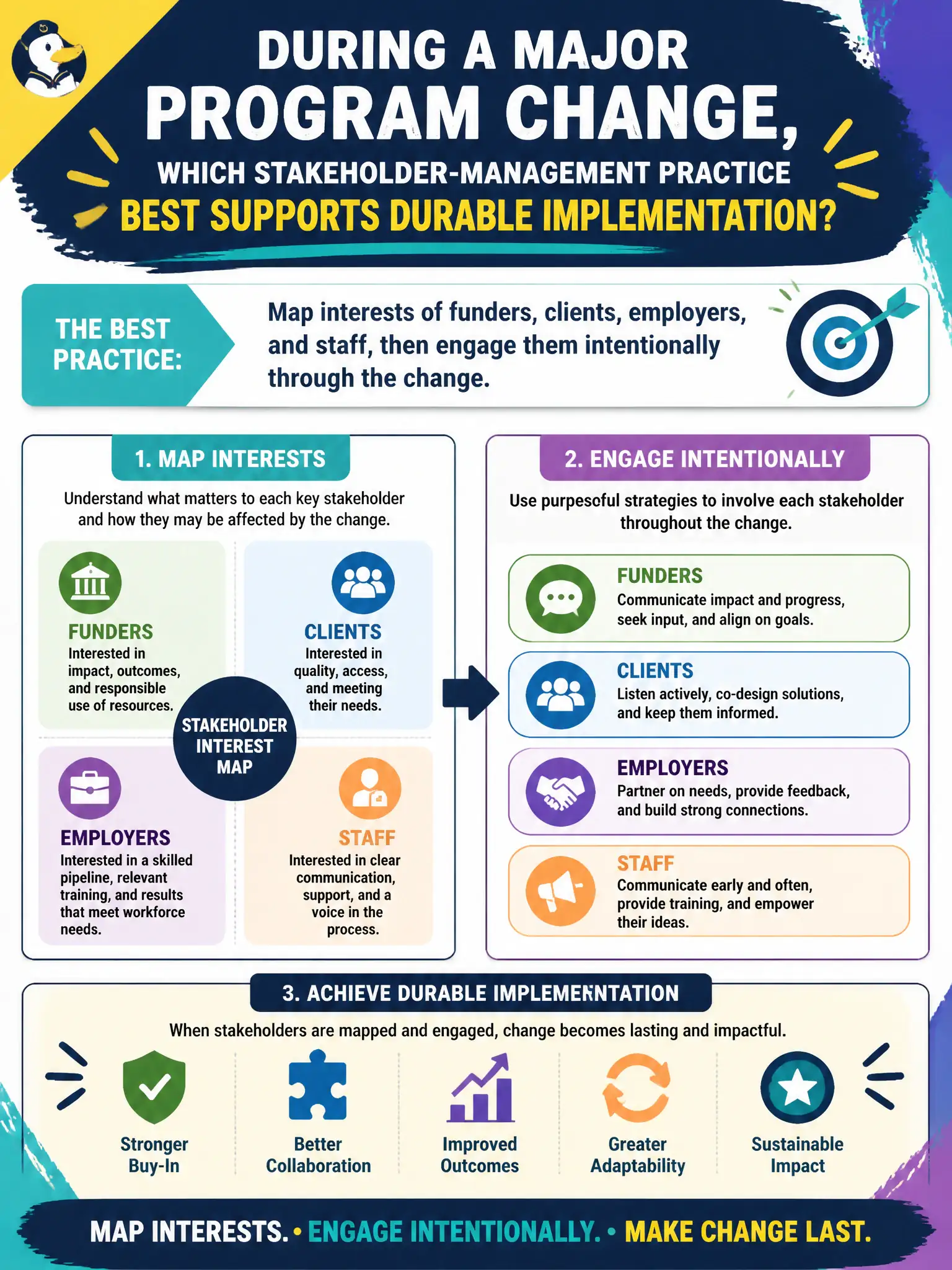
During a major program change, which stakeholder-management practice best supports durable implementation?
Select an answer to reveal the explanation.
Short Explanation
Program change is a potluck—funders, clients, employers, and staff all bring different dishes to the table. Mapping who cares about what, then inviting them in, beats surprising everyone at the end. That's stakeholder management in plain clothes.
Full Explanation
During major program change in a community or municipal rehabilitation setting, durable implementation is supported by mapping interests of funders, clients, employers, and staff, then engaging them intentionally through the change. Stakeholder management surfaces resistance early and builds legitimacy for new processes that affect public services. Consulting only internal executives and excluding clients, employers, funders, and front-line staff produces brittle rollouts that fail at the point of service. Announcing the change after implementation to avoid stakeholder feedback maximizes surprise and sabotage risk. Assuming all stakeholders share identical priorities so mapping interests is unnecessary ignores predictable conflict among civic audiences with different incentives. Exam caveat: engagement does not mean every stakeholder gets veto power over clinically or legally required changes; it means interests are understood and communication is planned. Operational check: create a stakeholder map with interests and influence, schedule engagement touchpoints for each priority group before go-live, document feedback incorporated or deferred, and reassess adoption barriers after the municipal program change launches.