
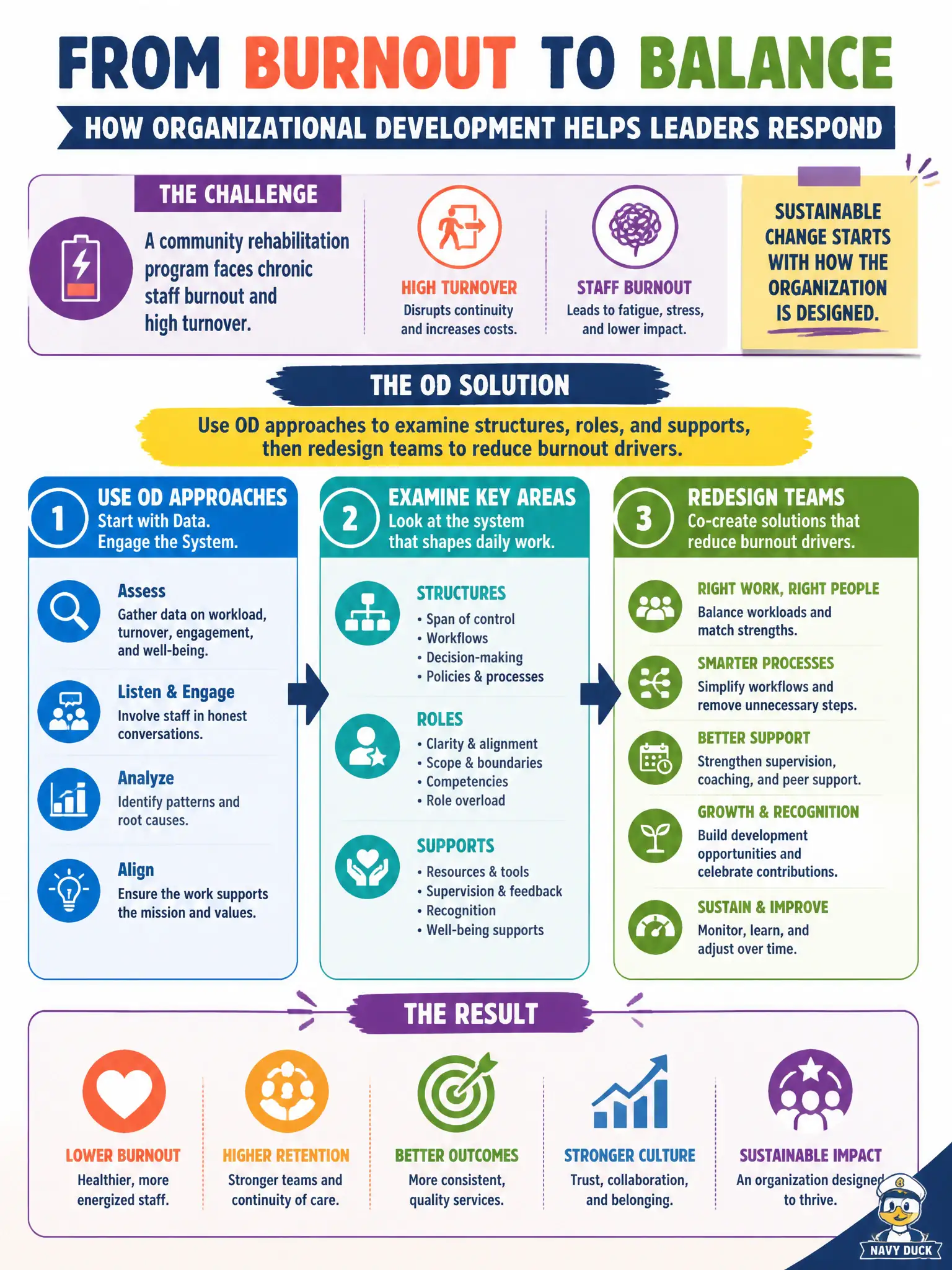
A community rehabilitation program faces chronic staff burnout and high turnover. How do organizational development concepts most help leadership respond?
Select an answer to reveal the explanation.
Short Explanation
Burnout isn't fixed by yelling 'try harder'—it's often the system chewing people up. Organizational development looks at roles, workload, and supports, then rebuilds the team setup. Rehab agencies need that same toolbox as any other workplace.
Full Explanation
Organizational development approaches help community rehabilitation program leadership examine structures, roles, workloads, and supports, then redesign teams to reduce burnout drivers and high turnover. OD is applicable to nonprofit and municipal human-service settings, not only Fortune 500 firms, and structural diagnosis beats superficial cheerleading when staff are exhausted. Claiming OD concepts only apply to Fortune 500 firms so CRPs should ignore team redesign abandons useful organizational tools. Mandating unpaid overtime as the primary OD intervention for burnout worsens the problem it pretends to solve and harms retention further. Replacing all clinical supervision with motivational posters and declaring OD complete substitutes slogans for systemic redesign. Exam caveat: OD initiatives still need worker voice, realistic staffing, and evaluation; redesign plans should not become endless meetings without changing workload drivers that fuel civic counselor burnout. Operational check: map burnout drivers (caseload acuity, role conflict, supervision gaps), engage staff in redesign options, implement at least one structural change with a turnover or burnout indicator, and review results on a set leadership calendar.