
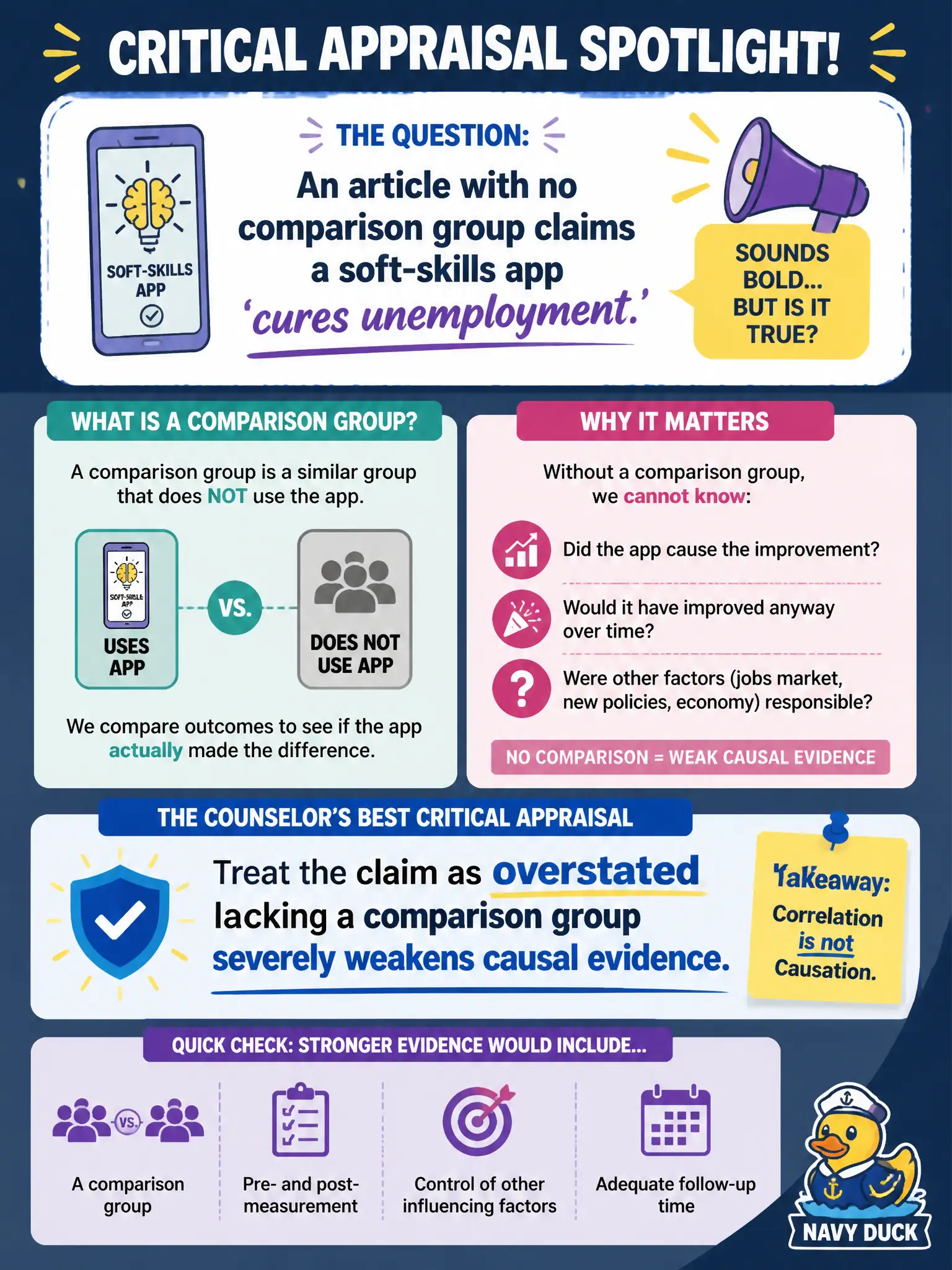
An article with no comparison group claims a soft-skills app 'cures unemployment.' What is the counselor's best critical appraisal?
Select an answer to reveal the explanation.
Short Explanation
No comparison group means you can't tell if the app helped or if people would have found work anyway. 'Cures unemployment' is a billboard, not science. Call out the weak design and keep shopping for better evidence.
Full Explanation
An article with no comparison group that claims a soft-skills app cures unemployment should be treated as overstated because lacking a comparison group severely weakens causal evidence. Critical appraisal protects municipal clients and CRPs from hype-driven purchases and program adoption that waste scarce training resources. Accepting the cure claim because any published article is definitive proof confuses publication with methodological rigor. Assuming apps without comparison groups are stronger evidence than randomized trials inverts evidence hierarchies taught in CRC research literacy. Citing the article as Level A evidence solely because it used the word cure is rhetorical rather than scientific appraisal. Exam caveat: weak designs can still generate hypotheses for local pilots; the error is elevating uncontrolled cure claims to strong causal proof for civic program decisions. Operational check: note absence of a comparison group in the appraisal, downgrade causal confidence, seek better-controlled studies or local pilot data with comparison, and refuse to market the app as a cure in CRP materials. In civic rehabilitation settings, documenting the rationale and verifying the next concrete step keeps practice aligned with CRC standards and client rights.