
Before adopting an evidence-based practice method from a research article, what appraisal step should the counselor prioritize?
Select an answer to reveal the explanation.
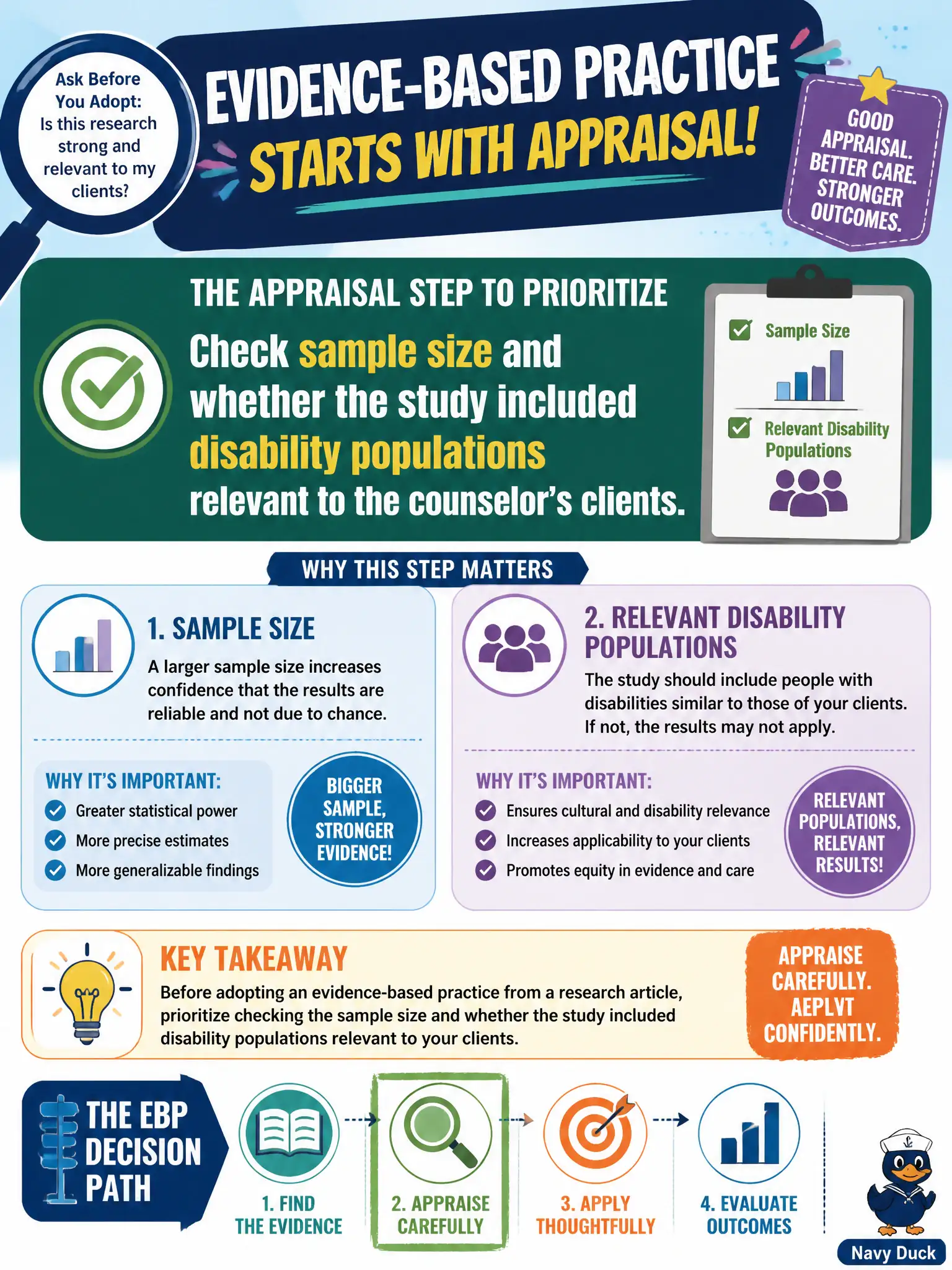
Short Explanation
EBP isn't 'copy the catchy title.' Peek under the hood—how many people, and were they anything like your clients with disabilities? If the study crowd doesn't resemble your caseload, pump the brakes before you rebuild the whole program.
Full Explanation
Before adopting an evidence-based practice method from a research article, counselors should check sample size and whether the study included disability populations relevant to their municipal clients. Population fit and adequate sampling affect transferability of EBP claims into VR and CRP settings where impairment, supports, and labor markets differ from generic samples. Adopting a method because the title sounds innovative without reading methods is marketing-driven practice. Ignoring sample characteristics because population fit never matters for EBP transfer invites mismatch and failed implementation. Implementing first and evaluating relevance only if clients complain reverses responsible appraisal order and risks harm. Exam caveat: no single study is perfect; appraisal weighs design, sample, outcomes, and local fit rather than demanding identical populations before any learning occurs. Operational check: complete a brief appraisal checklist (design, N, disability representation, outcomes, limitations) before agency adoption, pilot with outcome measures on the civic caseload, and revisit fit after a defined trial period. In civic rehabilitation settings, documenting the rationale and verifying the next concrete step keeps practice aligned with CRC standards and client rights.