
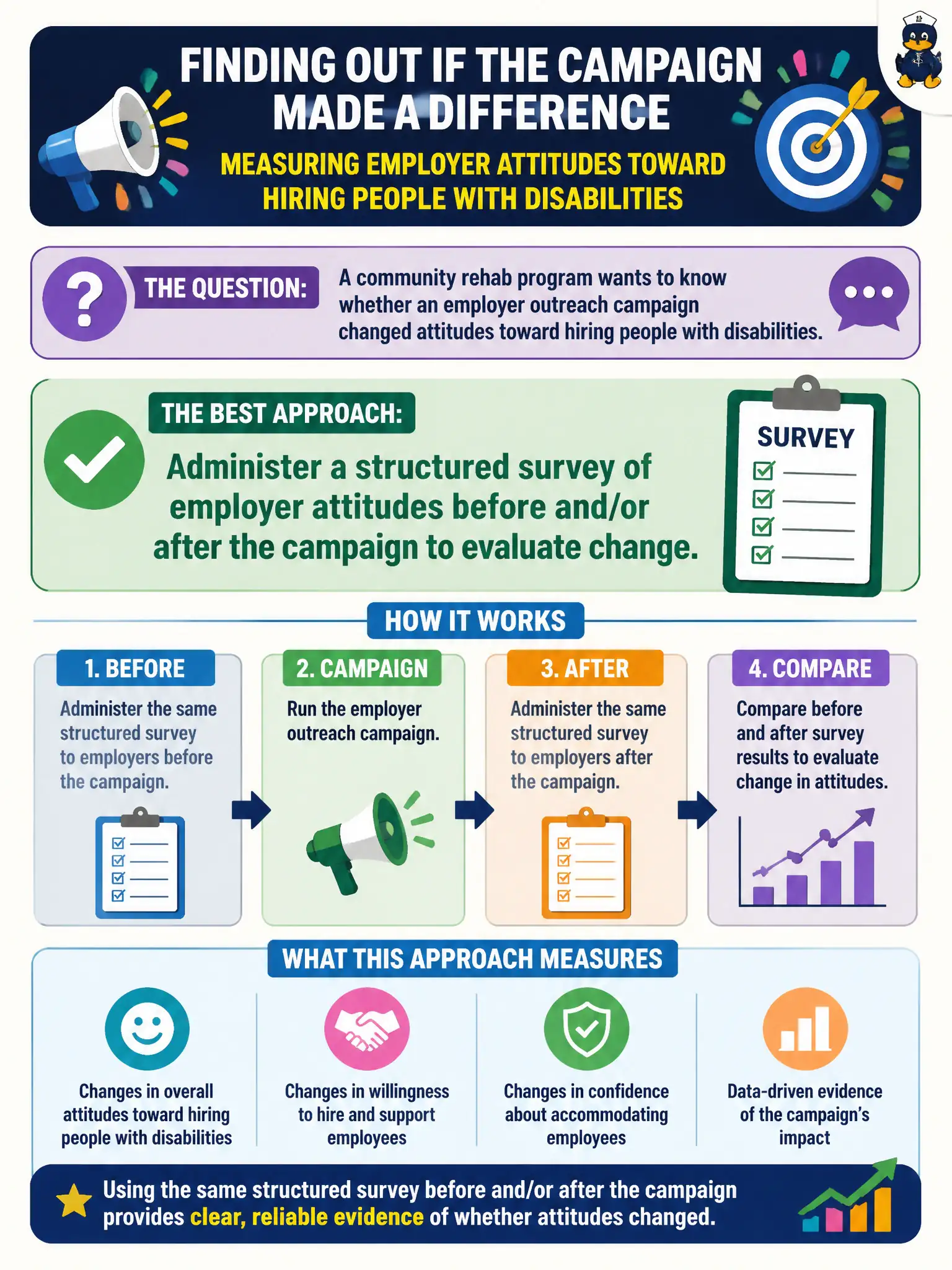
A community rehab program wants to know whether an employer outreach campaign changed attitudes toward hiring people with disabilities. Which research approach best fits that question?
Select an answer to reveal the explanation.
Short Explanation
Want to know if minds moved? Ask with a survey, not vibes. A good attitude survey—especially before and after—beats one story or a victory lap with no numbers. It's basic research methods for outreach work.
Full Explanation
To evaluate whether an employer outreach campaign changed attitudes toward hiring people with disabilities, a community rehab program should administer a structured survey of employer attitudes before and/or after the campaign. Systematic attitude measurement fits the evaluation question better than anecdotes or enthusiasm. Relying only on a single anonymous anecdote from one hiring manager as definitive proof overgeneralizes from n-of-1 evidence. Skipping data collection and declaring success based on staff enthusiasm alone confuses internal morale with employer attitude change. Using a medical imaging study of employers as the primary attitude measure is methodologically mismatched and impractical. Exam caveat: pre/post surveys still need decent sampling, item quality, and humility about causality without comparison groups; they are appropriate first-line tools for civic CRP attitude questions, not automatic proof of hiring behavior change. Operational check: field a brief structured employer attitude survey aligned to campaign messages, collect baseline and follow-up responses from the targeted employer pool, and report change with limitations rather than claiming success from staff enthusiasm alone.