
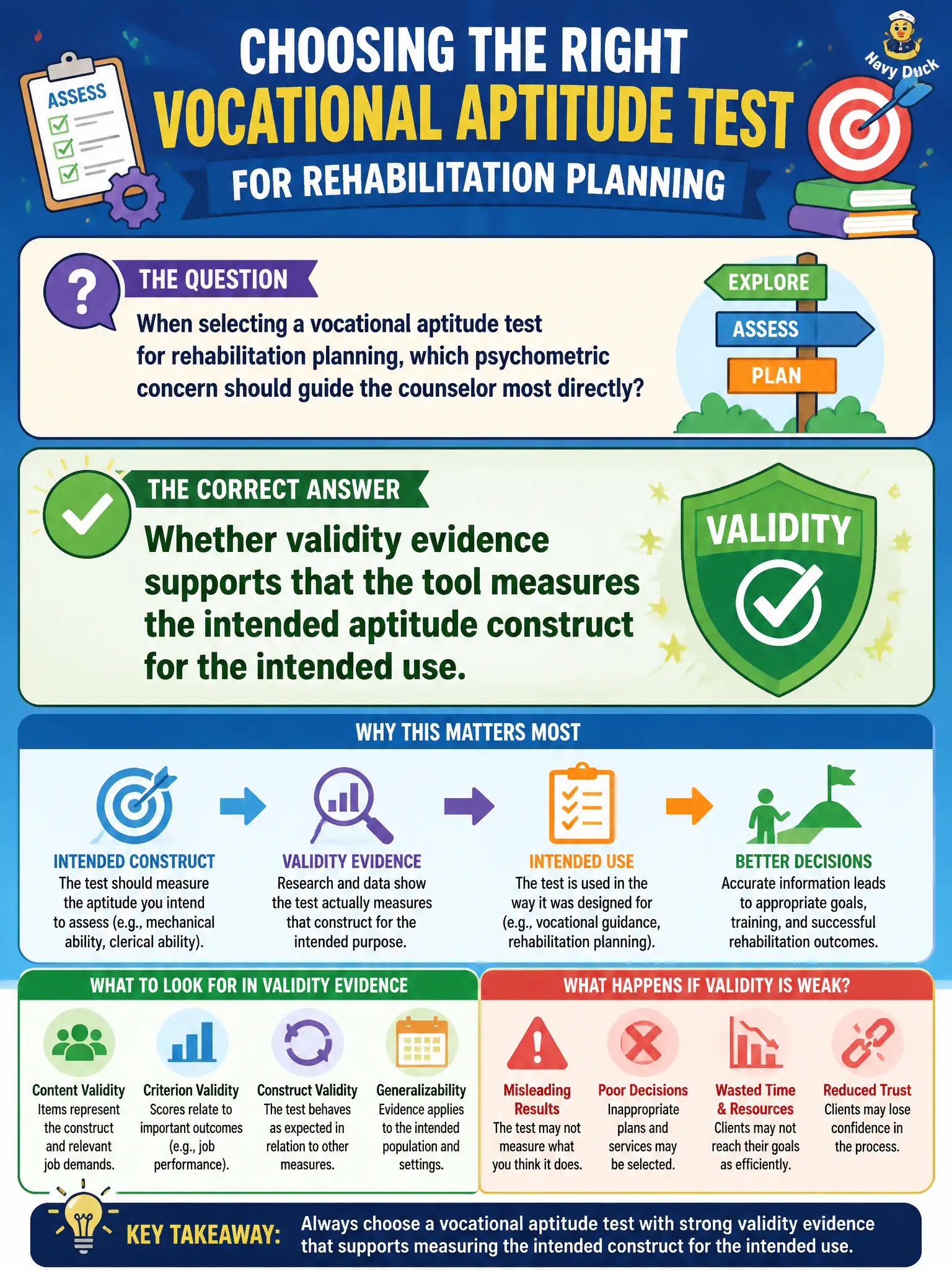
When selecting a vocational aptitude test for rehabilitation planning, which psychometric concern should guide the counselor most directly?
Select an answer to reveal the explanation.
Short Explanation
Validity asks a simple question: does this tool actually measure what you think it measures for the job you're using it for? A neat booklet that misses the construct is just expensive wallpaper. Pick assessments with evidence that matches your purpose.
Full Explanation
When selecting a vocational aptitude test for rehabilitation planning, the guiding psychometric concern is whether validity evidence supports that the tool measures the intended aptitude construct for the intended use with the counselor's municipal clients. Validity-for-use protects clients from misleading scores that derail plans and misdirect training dollars. Publisher logo colorfulness is irrelevant to psychometric quality. Choosing the booklet with the fewest pages prioritizes convenience over measurement adequacy. Preferring tests that can be administered without any instructions or standardized procedures abandons standardization required for interpretable scores. Exam caveat: validity is use-specific—an instrument valid for one aptitude prediction may be invalid for another decision—and accommodations must be considered without casually discarding standardization essential to score meaning. Operational check: before adoption in a civic VR setting, read validity evidence for the intended construct and population, confirm standardized administration is feasible, and document why the tool fits the planned decision rather than selecting by marketing aesthetics or booklet length.