
A new hire confuses "impairment," "disability," and environmental "handicap" language when writing community education materials. Which clarification is most consistent with rehabilitation terminology?
Select an answer to reveal the explanation.
Short Explanation
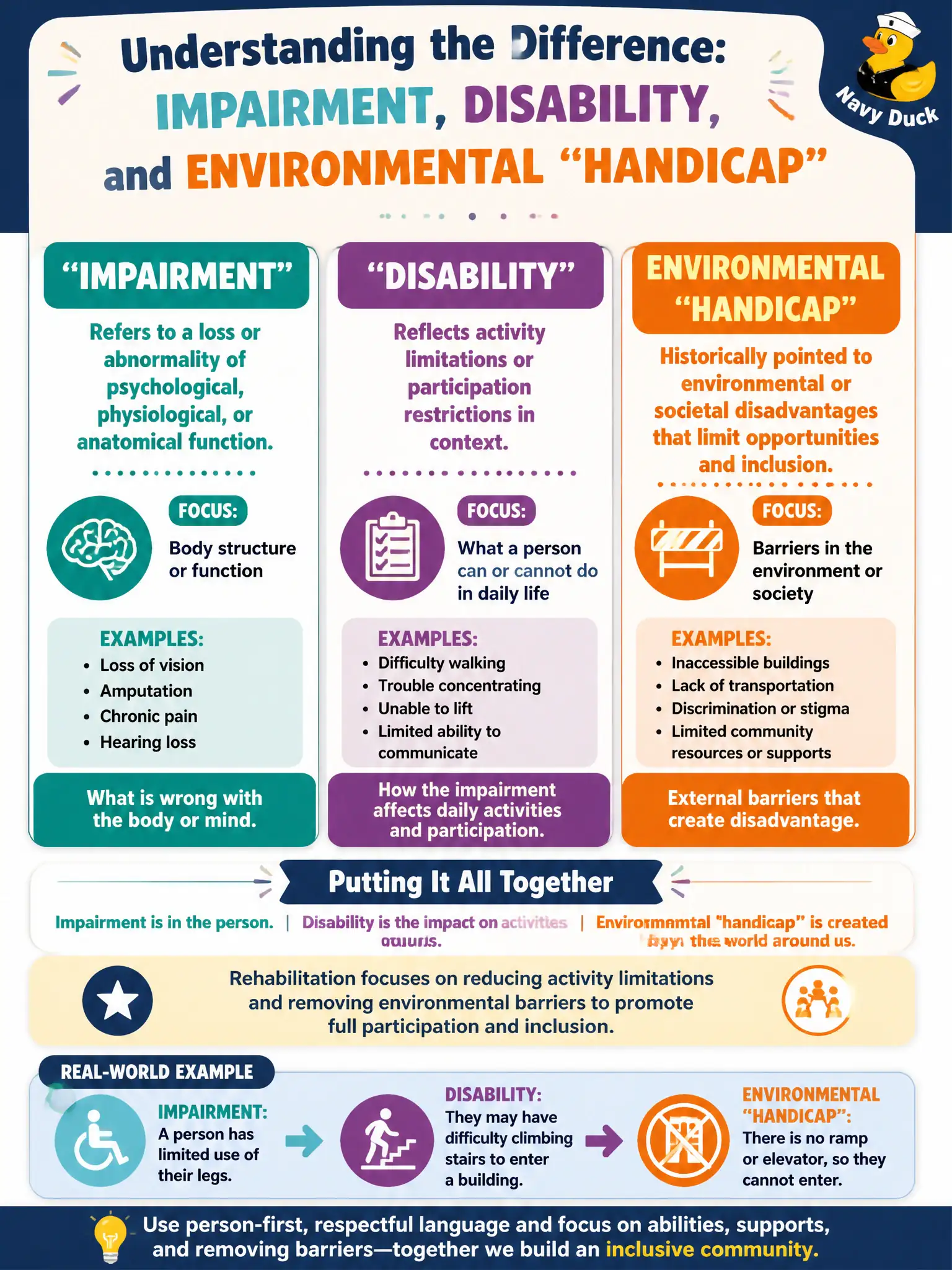
Impairment is the body/mind change; disability is how that plays out in activity and participation; old "handicap" talk pointed at environmental snags. Mixing them muddies teaching materials.
Full Explanation
Community education materials for disability services should use precise rehabilitation terminology. Impairment refers to a loss or abnormality of body function or structure; disability reflects activity and participation limitations in context; historical “handicap” language pointed toward environmental or societal disadvantages. These are not interchangeable medical synonyms, and modern practice is careful with person-first or identity-respecting language while teaching conceptual distinctions.
Treating impairment, disability, and handicap as interchangeable labels for the same diagnosis fails by concept because the terms locate problems at different levels (body, activity/participation, environment/society). Saying disability always means inability to work while impairment means temporary illness fails because disability is not synonymous with unemployability and impairment is not limited to temporary illness. Preferring “handicap” as the modern clinical replacement fails because contemporary rehabilitation discourse has moved away from handicap as the preferred umbrella term.
Exam caveat: WHO ICF language (functioning, disability, environmental factors) is widely taught; older exam stems may still contrast impairment/disability/handicap—answer the conceptual mapping asked. Operational check: revise public materials to define terms once, prefer accurate ICF-aligned wording, and avoid implying that disability equals inability to work in municipal communications.