
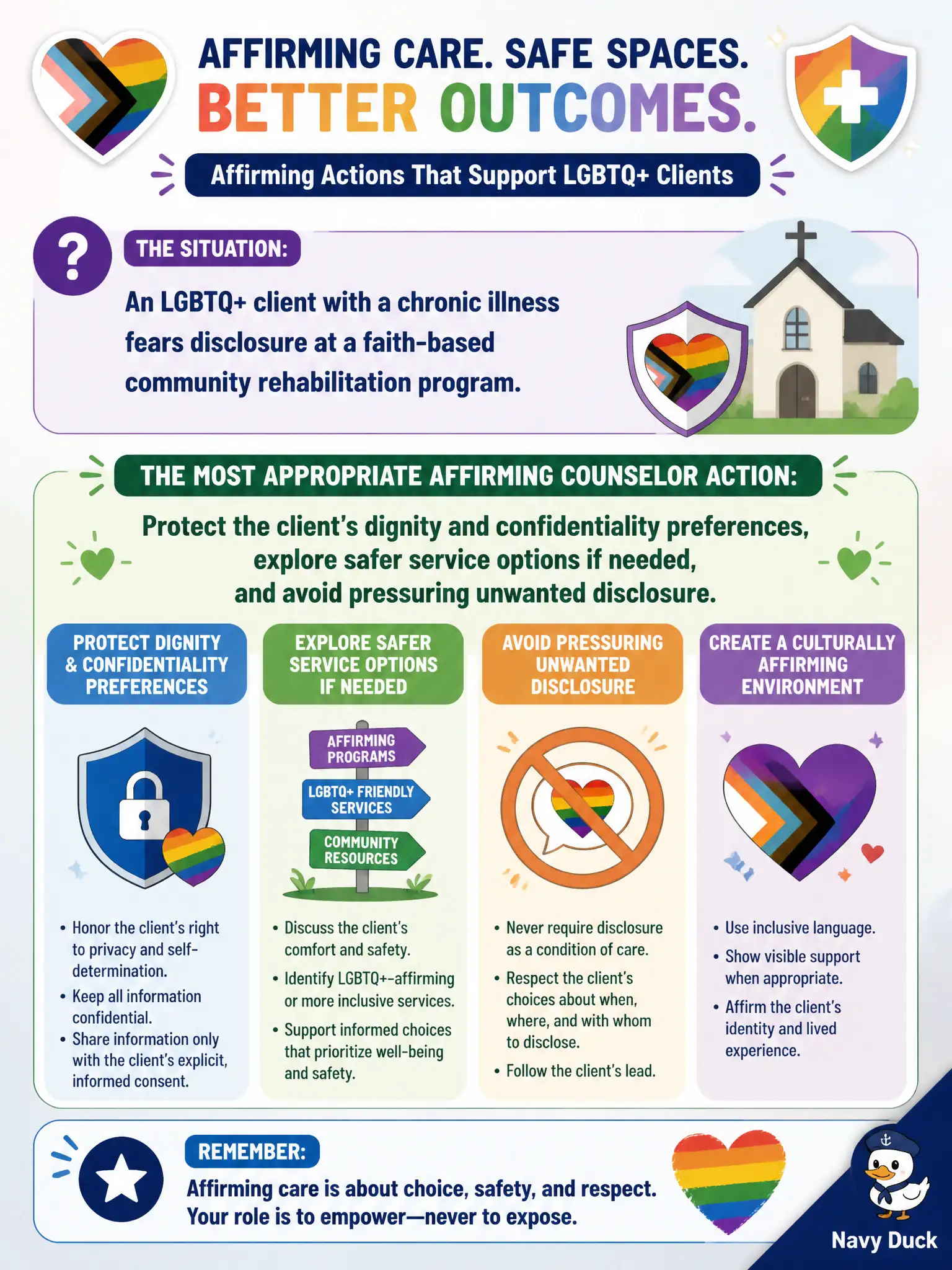
An LGBTQ+ client with a chronic illness fears disclosure at a faith-based community rehabilitation program. What affirming counselor action is most appropriate?
Select an answer to reveal the explanation.
Short Explanation
Affirming care means the client controls disclosure. Protect dignity, explore safer options, and never trade services for forced outing.
Full Explanation
An LGBTQ+ client with chronic illness who fears disclosure in a faith-based community rehabilitation program needs affirming practice that protects dignity and confidentiality preferences, explores safer service options if needed, and avoids pressuring unwanted disclosure. Disability counseling intersects with sexual orientation and gender identity whenever those identities affect safety, access, and trust in civic and community programs.
Requiring full identity disclosure as a condition of services fails by concept because services should not be conditioned on forced outing. Ignoring the fear because disability counseling “never intersects” with SOGI fails because intersectional identity and safety are within multicultural counseling competence. Telling the client to leave rehab entirely rather than problem-solve affirming options fails as abandonment of vocational support instead of advocacy and referral.
Exam caveat: program religious character may affect some employment rules, but counselors still protect client autonomy and confidentiality within applicable law and ethics. Operational check: clarify what must be shared for services versus what is optional, discuss risks/benefits of disclosure, identify affirming providers or accommodations, and document the client’s confidentiality preferences.