
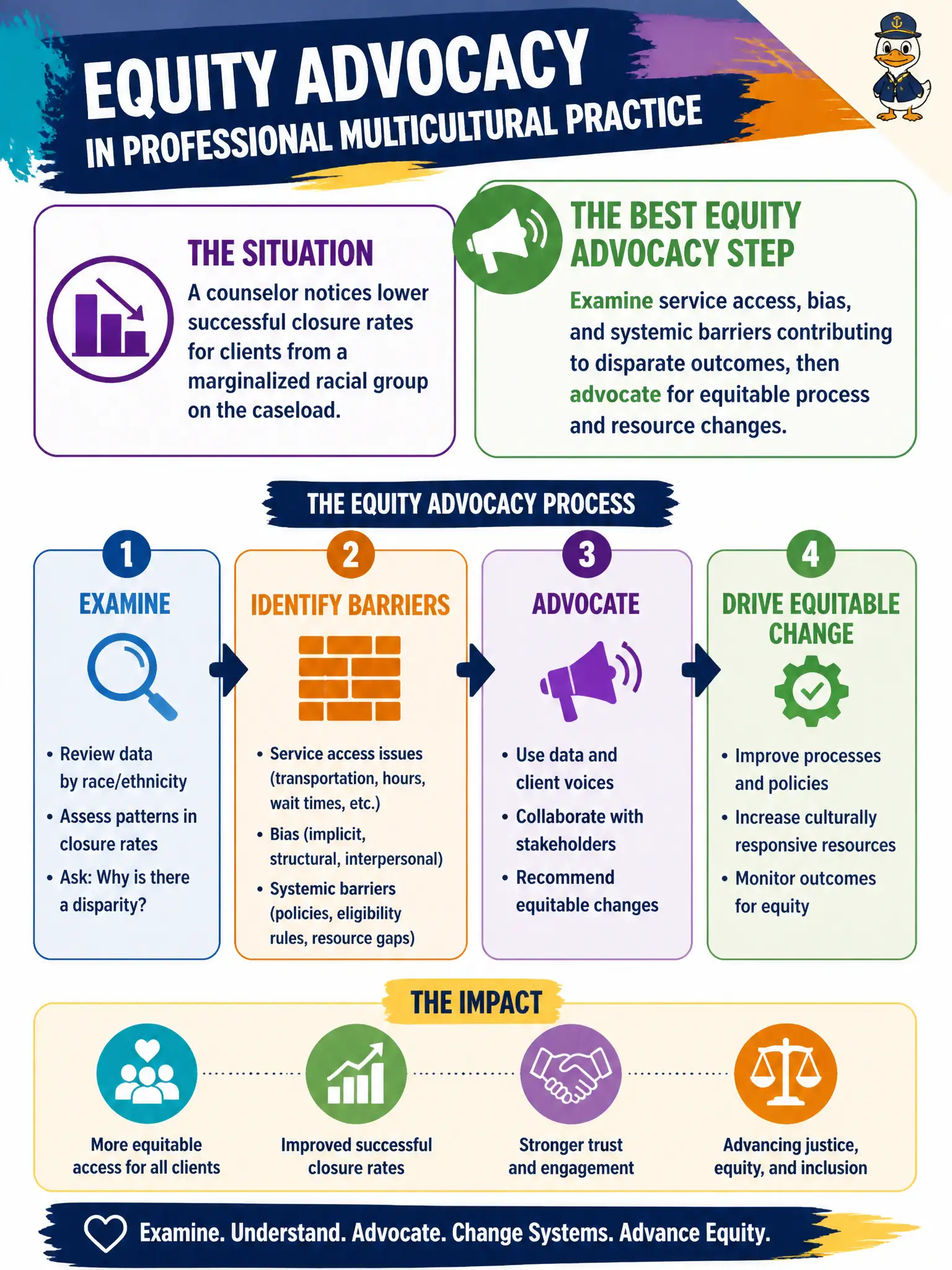
A counselor notices lower successful closure rates for clients from a marginalized racial group on the caseload. What equity advocacy step best fits professional multicultural practice?
Select an answer to reveal the explanation.
Short Explanation
Disparate closures are a dashboard light, not proof that a group "tries less." Dig into barriers and advocate for fairer access and process.
Full Explanation
Lower successful-closure rates for clients from a marginalized racial group are a civic equity signal, not proof of inferior motivation. Professional multicultural practice examines service access, bias, and systemic barriers, then advocates for equitable process and resource changes. Public VR performance culture can hide disparities; counselors are obligated to surface and address them.
Assuming lower closures mean less motivation and reducing outreach fails by concept because it attributes system outcomes to individual deficit without barrier analysis. Hiding the disparity from supervisors fails because concealment protects appearances over clients and accountability. Transferring all clients from that group off the caseload without reviewing barriers fails as avoidance that can worsen disparate access rather than remediate it.
Exam caveat: disparity analysis must avoid stereotyping individuals; aggregate gaps guide system review, not assumptions about any one client. Operational check: disaggregate process metrics (referral, plan development, service authorization, placement supports), review for bias in counselor behaviors and vendor access, and propose concrete equity interventions with supervisory sponsorship.