
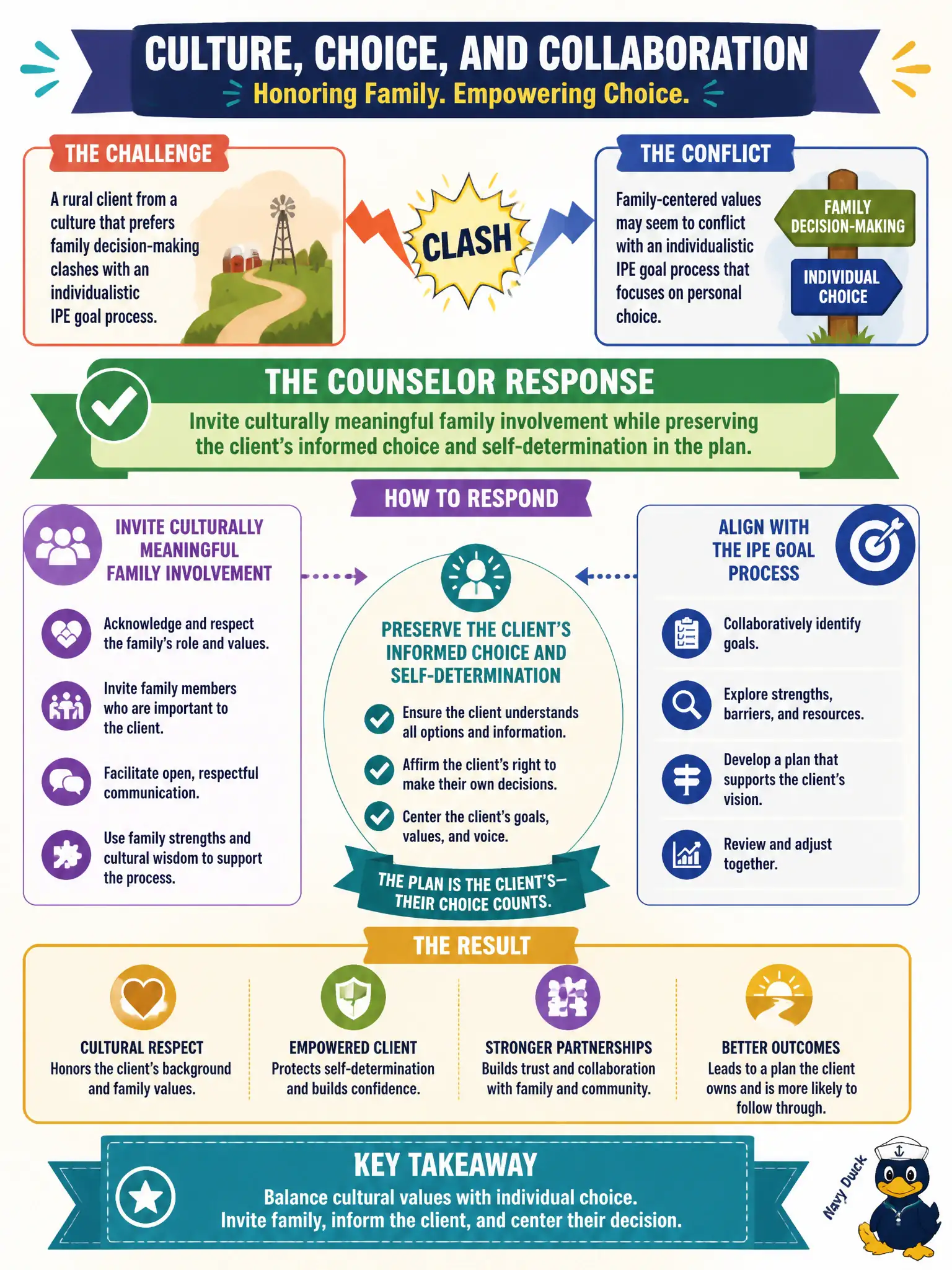
A rural client from a culture that prefers family decision-making clashes with an individualistic IPE goal process. How should the counselor respond?
Select an answer to reveal the explanation.
Short Explanation
Family involvement can be a bridge, not a takeover. Honor the culture, still check that the client's own informed choice drives the IPE.
Full Explanation
When a rural client’s culture prefers family decision-making, rehabilitation counselors invite culturally meaningful family involvement while preserving the client’s informed choice and self-determination in the IPE. Civic VR planning centers the eligible individual, yet culturally responsive practice can include family as supports and consultants without surrendering the client’s legal and ethical role as decision-maker.
Excluding family entirely because IPE goals must ignore culture fails by concept: cultural decision-making preferences can be honored within informed-choice frameworks. Letting the family set all goals without confirming the client’s preferences fails because it displaces the client’s informed choice. Closing the case as uncooperative until the client abandons family consultation fails as punitive cultural invalidation rather than collaborative planning.
Exam caveat: when family pressure conflicts with the adult client’s stated preferences, document the client’s choice and manage coercive dynamics; culture does not authorize silencing the client. Operational check: obtain appropriate consents for family participation, structure meetings so the client speaks first, and record both family input and the client’s final informed decisions on the plan.