
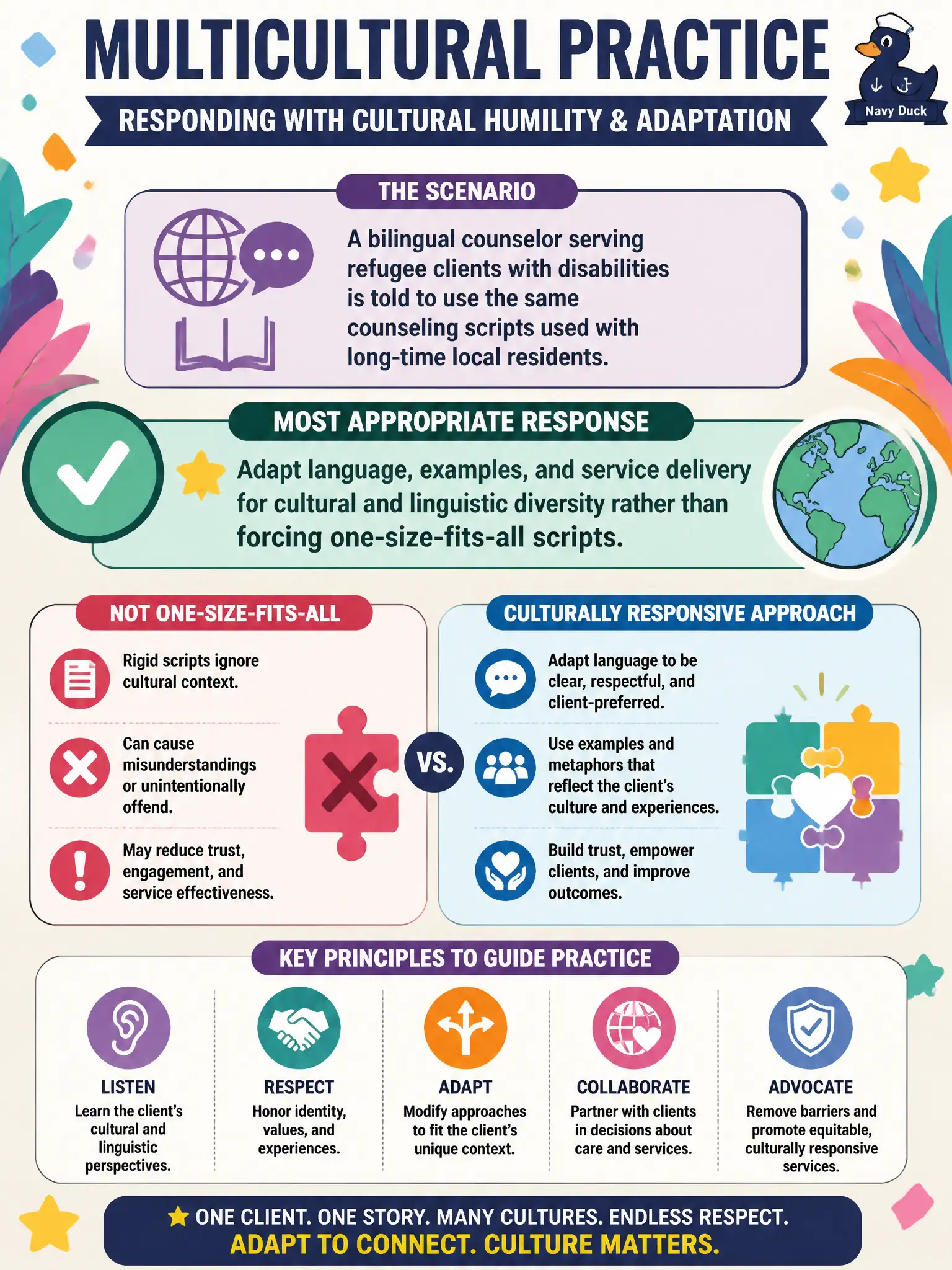
A bilingual counselor serving refugee clients with disabilities is told to use the same counseling scripts used with long-time local residents. What multicultural practice response is most appropriate?
Select an answer to reveal the explanation.
Short Explanation
One script for every culture is like one key for every lock. Multicultural practice means adapting language and delivery so refugee clients are actually reached.
Full Explanation
Serving refugee clients with disabilities in municipal and nonprofit human services requires multicultural adaptation, not identical scripts written for long-time local residents. Ethical multicultural practice adapts language, examples, and service delivery for cultural and linguistic diversity, including interpreter support when needed. Cultural humility improves engagement, informed choice, and outcomes for newcomers navigating unfamiliar civic systems.
Keeping scripts unchanged for identical wording regardless of culture fails by concept because equal wording is not the same as equitable, understandable service. Refusing interpreter support because scripts “standardize” communication fails because standardization without language access excludes clients and can invalidate consent. Requiring clients to adopt local cultural norms before counseling begins fails as assimilationist gatekeeping contrary to culturally responsive counseling.
Exam caveat: adaptation does not mean abandoning professional ethics or clinical accuracy; it means delivering the same ethical standards in culturally accessible ways. Operational check: assess language need, schedule qualified interpreters, revise metaphors and examples for cultural relevance, and verify comprehension before clients sign plans or releases.