
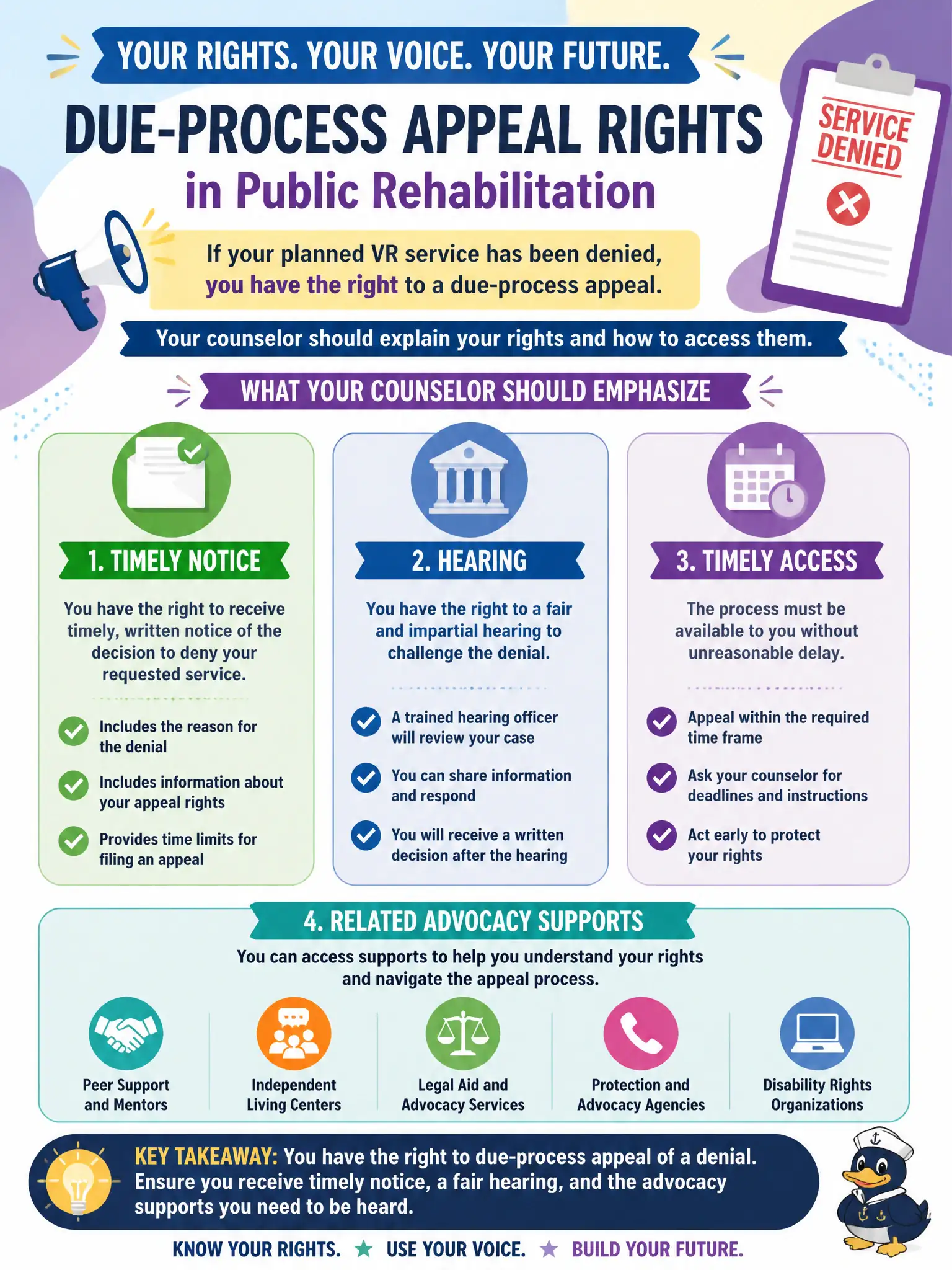
A VR client faces denial of a planned service and asks about due-process appeal rights under public rehab policy. What should the counselor emphasize?
Select an answer to reveal the explanation.
Short Explanation
A denial is not the end of the road in public VR. Due-process appeal rights exist so clients can challenge decisions with notice and a fair shot at being heard.
Full Explanation
In public vocational rehabilitation, service denial triggers due-process protections for the consumer. The counselor should explain the client’s right to appeal, including timely notice, hearing opportunities, and related advocacy supports such as the Client Assistance Program where available. Civic rehabilitation systems are accountable to eligible individuals; supervisory signature on a denial does not erase appeal rights, and clients should not be steered to abandon remedies.
Advising that denials cannot be appealed once a supervisor signs fails by concept because public VR due process is designed precisely for contested eligibility and service decisions. Saying appeals exist only after unsuccessful closure fails because appeal rights attach to adverse actions, not solely to final unsuccessful status. Recommending quitting and reapplying next year instead of appealing fails because it abandons available procedural protections and can worsen access delays.
Exam caveat: exact timelines, forms, and hearing structures vary by state VR agency policy and federal vocational rehabilitation rules—teach the local process accurately. Operational check: provide written denial reasons and appeal instructions, document that rights were explained, offer CAP or advocacy contact information, and continue courteous case communication during the appeal window.