
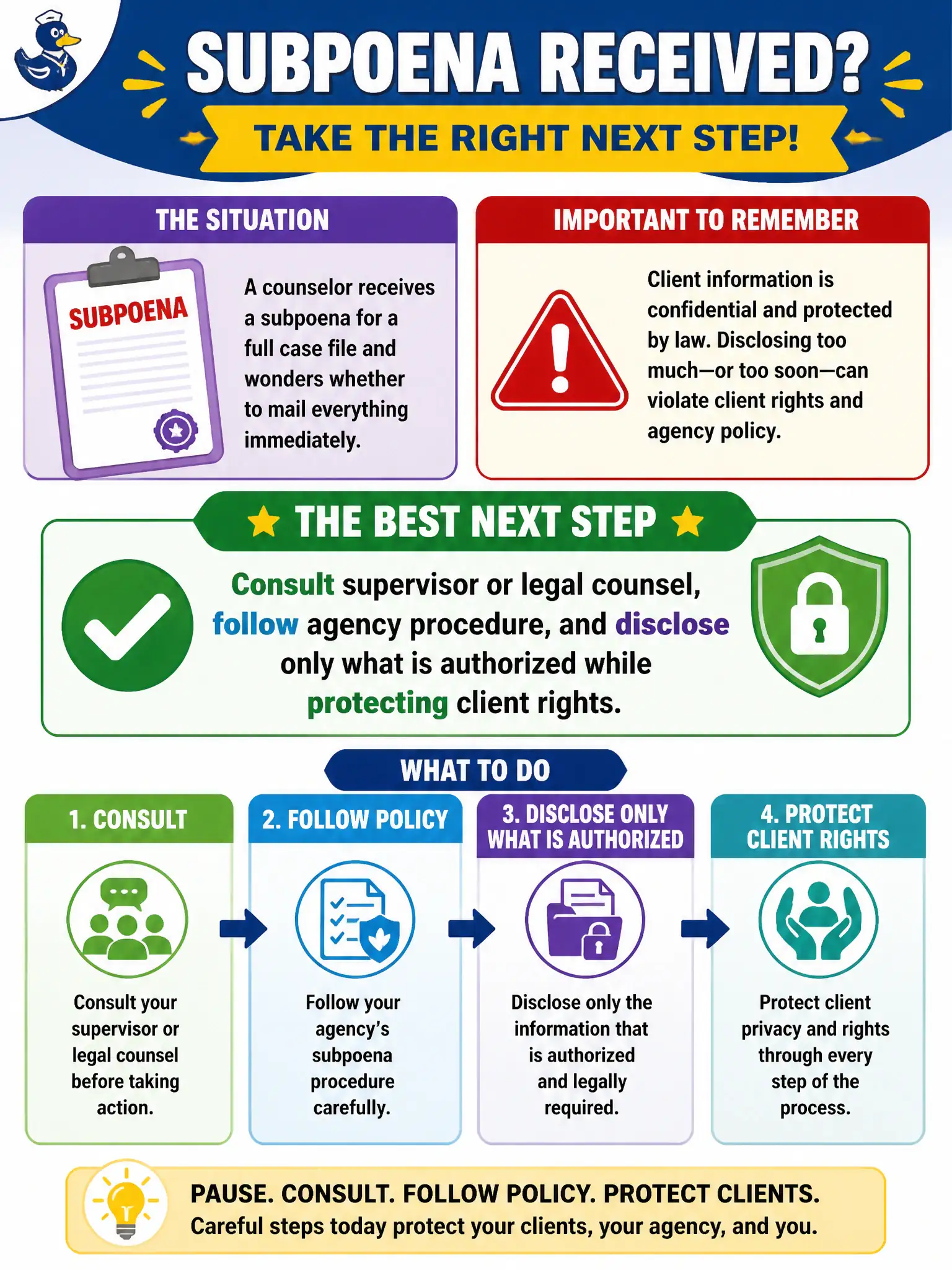
A counselor receives a subpoena for a full case file and wonders whether to mail everything immediately. What is the best next step?
Select an answer to reveal the explanation.
Short Explanation
A subpoena is not a "mail everything now" button. Pause, get guidance, follow procedure, and share only what you are authorized to release.
Full Explanation
When a subpoena seeks a full rehabilitation case file, the civic and ethical next step is consultation with a supervisor or legal counsel, adherence to agency procedure, and disclosure limited to what is authorized while protecting client rights. Courts and administrative bodies can compel information, but counselors do not improvise by mailing everything the same day or opening the EHR to opposing counsel. Privilege, minimum necessary disclosure, and client notice rules often apply alongside the duty to respond.
Mailing the entire chart immediately to “show cooperation” fails by concept because speed without authorization review can over-disclose protected health and counseling information. Ignoring the subpoena until a second notice fails because lawful process generally requires timely response through proper channels, not avoidance. Giving unrestricted remote EHR access fails because it abandons access control, audit trails, and scope limits required for protected records.
Exam caveat: procedures differ for subpoenas versus court orders, and some jurisdictions require client notice or a motion to quash—follow agency legal guidance rather than memorizing one script. Operational check: log receipt of the subpoena, notify the designated records/legal contact the same business day, determine what is requested versus what is privileged, and release only the authorized subset with documentation of what was produced.