
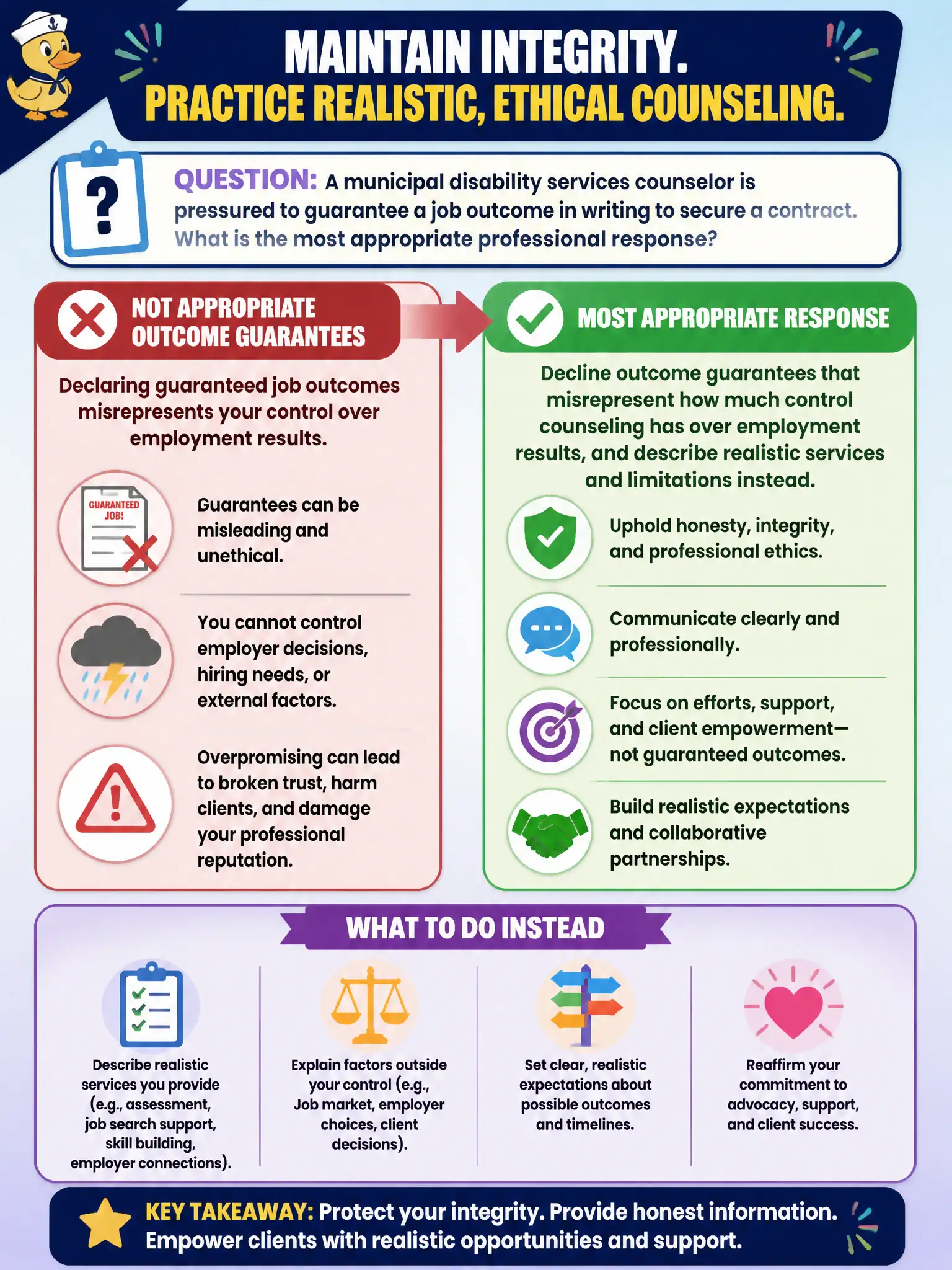
A municipal disability services counselor is pressured to guarantee a job outcome in writing to secure a contract. What is the most appropriate professional response?
Select an answer to reveal the explanation.
Short Explanation
Promising a hire is like guaranteeing the weather. You can offer solid counseling and placement work; you cannot ethically sign a blank check for someone else's employment decision.
Full Explanation
Municipal disability-services contracting creates pressure to promise outcomes cities want to buy, but rehabilitation counselors do not control employer hiring. The professional response is to decline written job-outcome guarantees that misrepresent counseling’s limited control, and instead describe realistic services, processes, and limitations. Honest civic contracting protects clients from coerced waivers of rights and protects agencies from deceptive performance claims.
Signing the guarantee to keep the contract fails by concept because contract survival does not justify misrepresentation of professional control over employment results. Guaranteeing placement only for clients without visible disabilities fails as disability discrimination dressed up as risk management. Promising a job within 30 days if the client abandons due-process appeals fails because it trades fundamental consumer rights for an outcome the counselor cannot honestly guarantee.
Exam caveat: outcome data and placement rates may be reported truthfully; guaranteeing an individual hire is different from describing historical statistics. Operational check: rewrite proposal language to cover services delivered (assessment, counseling, placement assistance, follow-along) and measurable process indicators, and escalate any demand for rights-waiving guarantees to leadership and contracting counsel.