
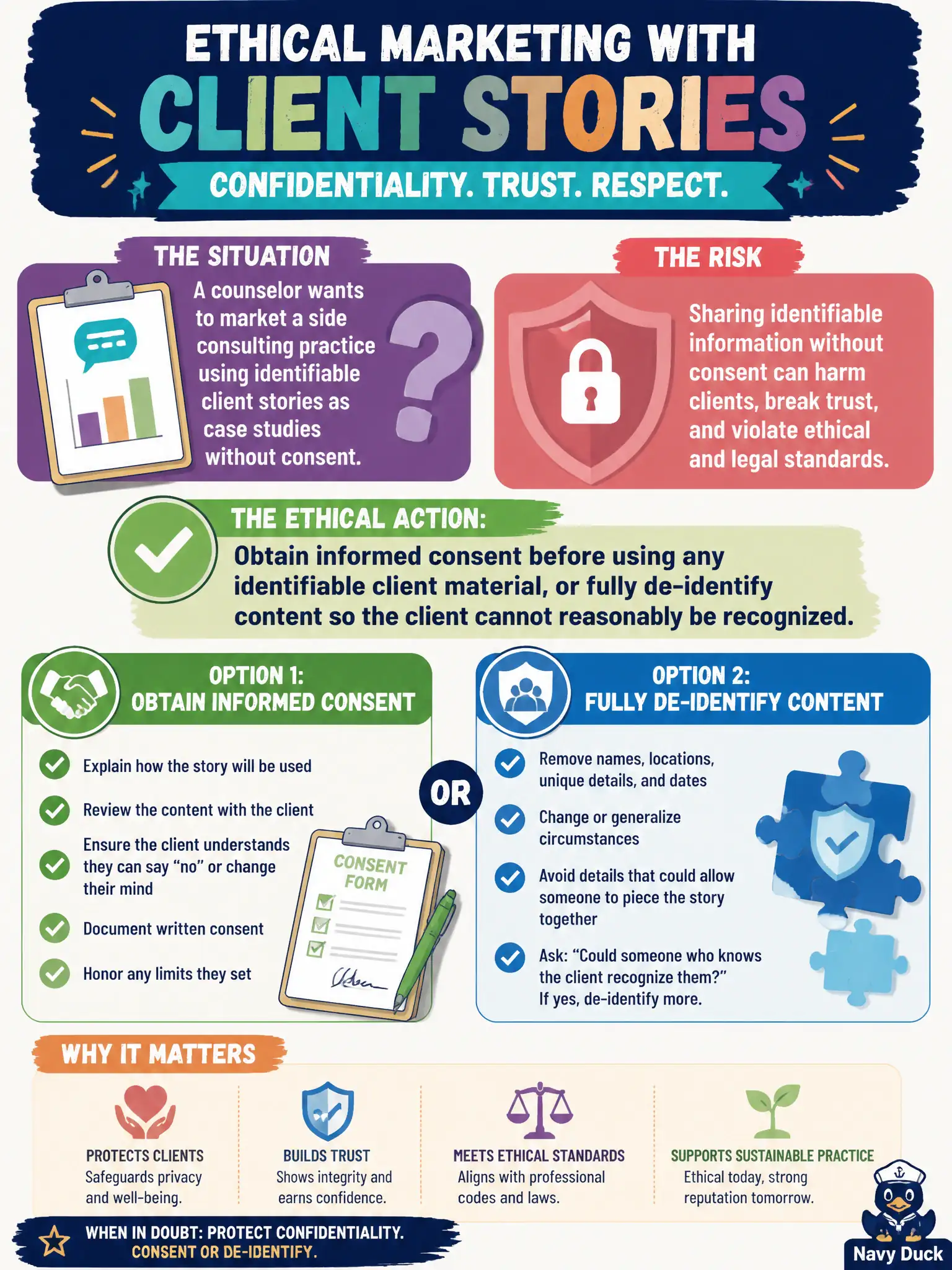
A counselor wants to market a side consulting practice using identifiable client stories as case studies without consent. Which action aligns with ethical confidentiality practice?
Select an answer to reveal the explanation.
Short Explanation
Client stories are not free marketing copy. If someone could spot themselves in the anecdote, you need consent — or strip the details until recognition is gone.
Full Explanation
Confidentiality remains a civic trust obligation when counselors market consulting practices. Ethical practice requires informed consent before using identifiable client material, or thorough de-identification so the person cannot reasonably be recognized. Initials plus workplace and age often still identify someone in a small community; case closure does not end confidentiality; and professional audiences are not a free pass to disclose without authorization.
Using stories with initials while keeping workplaces and ages fails by concept because residual identifiers can re-identify clients, especially in municipal or niche disability networks. Publishing after closure because “confidentiality ends” fails because confidentiality generally survives case closure absent a valid exception or authorization. Sharing only with other rehab counselors at conferences without permission fails because peer professional interest is not a substitute for client consent when material remains identifiable.
Exam caveat: fully de-identified composites may be usable without consent, but “de-identified” means no reasonable chance of recognition—not merely dropping a surname. Operational check: obtain written authorization specifying the marketing use, or strip unique details and test whether colleagues who know the caseload could still identify the person before any public or conference use.