
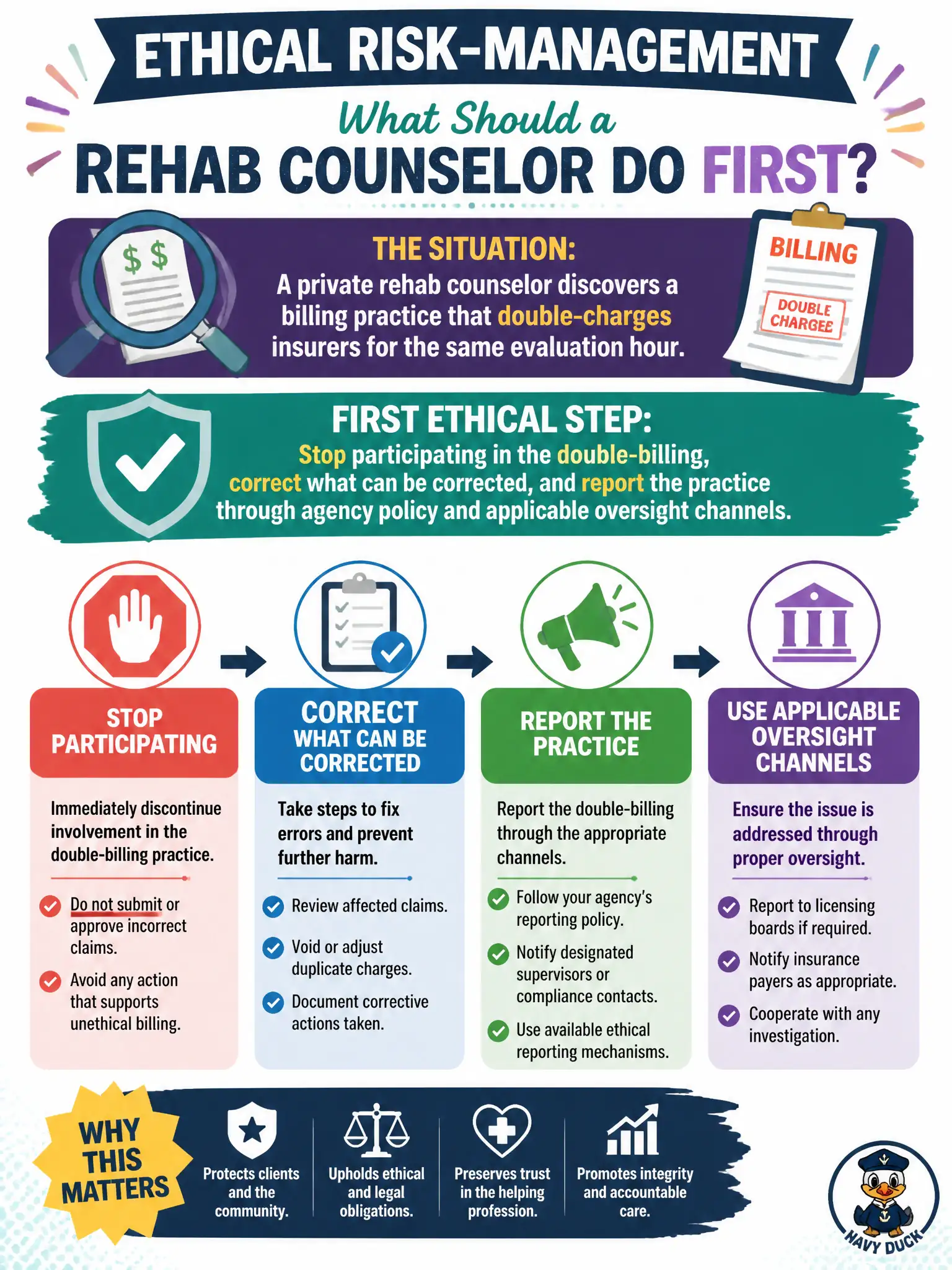
A private rehab counselor discovers a billing practice that double-charges insurers for the same evaluation hour. What should the counselor do first as an ethical risk-management step?
Select an answer to reveal the explanation.
Short Explanation
Double-billing is like charging the same parking ticket twice — it looks clever until the audit lights flash. Stop the practice, fix what you can, and use the reporting path your policy (and the law) expect.
Full Explanation
In private rehabilitation settings that bill public and private insurers, double-charging for the same evaluation hour is fraudulent billing and an ethical risk-management emergency. The counselor’s first obligation is to stop participating, correct what can be corrected, and report through agency policy and applicable oversight channels. Civic stewardship of disability benefits and insurance funds depends on counselors refusing to become instruments of improper claims, even when a coding template has managerial approval.
Continuing to bill because management approved the template fails by concept: superior approval does not legalize fraud or absolve individual professional responsibility. Refunding only future clients while leaving past double charges untouched fails because it preserves completed improper claims and prioritizes avoiding scrutiny over restitution and truth. Posting the agency’s name on social media before internal reporting fails because sensational public shaming skips required internal and regulatory pathways and can harm clients and due process.
Exam caveat: reporting duties and False Claims-related exposure depend on role, employer, and jurisdiction; the exam concept is cease participation, correct, and report—not freelance media campaigns. Operational check: halt the improper code immediately, inventory affected claims, notify compliance/legal per policy, document your actions, and cooperate with corrective refunds or disclosures without continuing the scheme.