
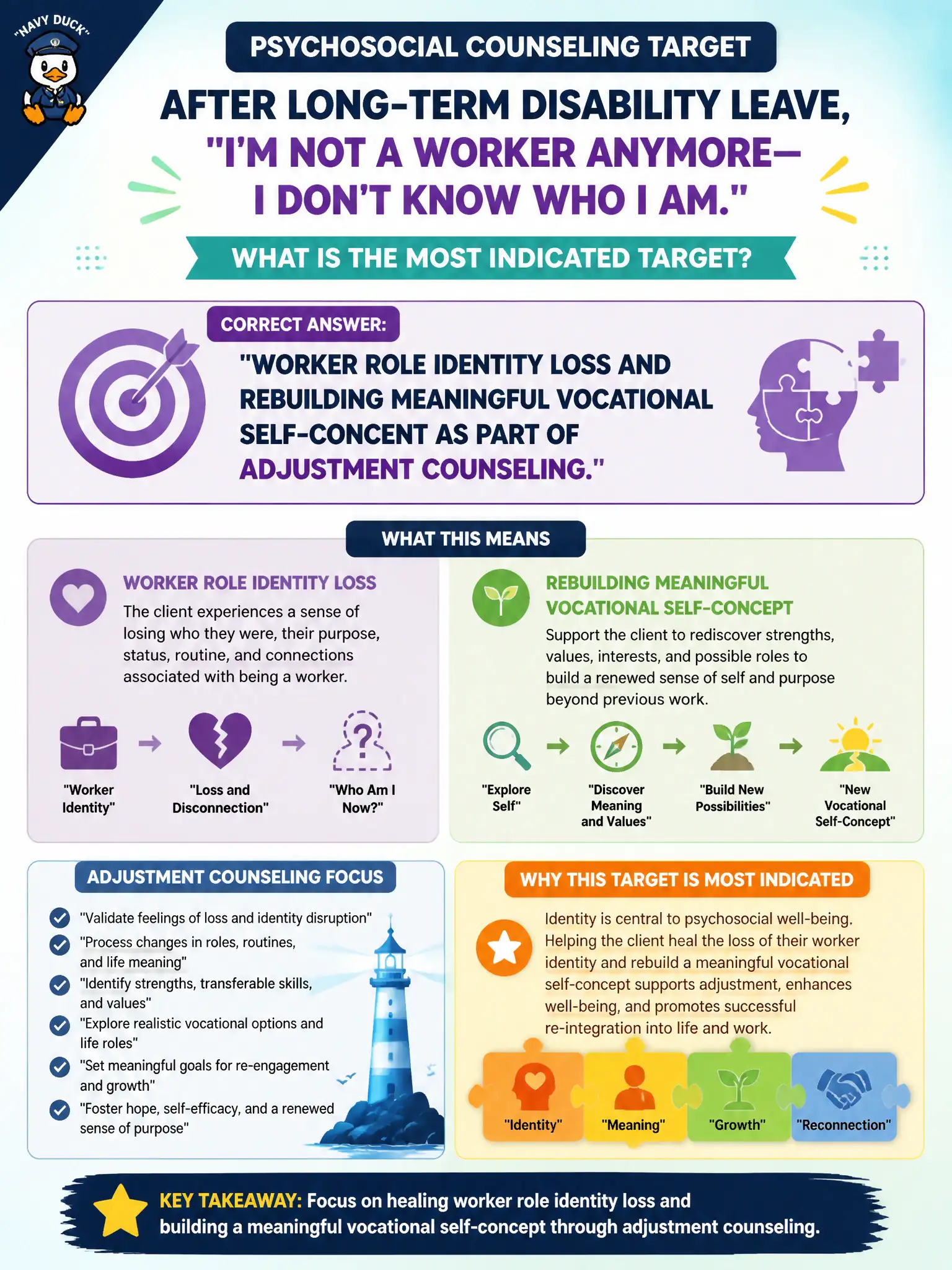
After long-term disability leave, a client says, 'I'm not a worker anymore—I don't know who I am.' What psychosocial counseling target is most indicated?
Select an answer to reveal the explanation.
Short Explanation
Long leave can steal the 'I work' badge and leave a hollow spot where identity used to sit. That's not drama—it's psychosocial adjustment calling for rebuild work, not just a prettier resume. Help reclaim a worker self that fits the new chapter.
Full Explanation
After long-term disability leave, ‘I’m not a worker anymore—I don’t know who I am’ signals worker-role identity loss. Psychosocial counseling should rebuild meaningful vocational self-concept as part of adjustment—values, roles, and gradual mastery—not résumé formatting alone. Identity repair is inside rehabilitation counseling’s scope in public VR return-to-work pathways.
Solely updating the résumé format without discussing identity or role loss treats a surface task as the whole problem. Immediate closure because identity concerns are ‘outside’ rehab counseling abandons a core psychosocial target. Focusing only on medical terminology drills until identity spontaneously returns is irrelevant busywork.
Rebuilding worker identity after LTD often includes volunteer tryouts, education milestones, and narrative work that restore ‘I contribute’ meanings before full-time return.
Exam caveat: worker-role identity loss after LTD is a primary psychosocial counseling target in vocational rehabilitation.
Operational check: explore lost and valued worker meanings; set small mastery experiences that restore worker identity; integrate identity work with stepwise return-to-work planning; screen mood/safety as needed.