
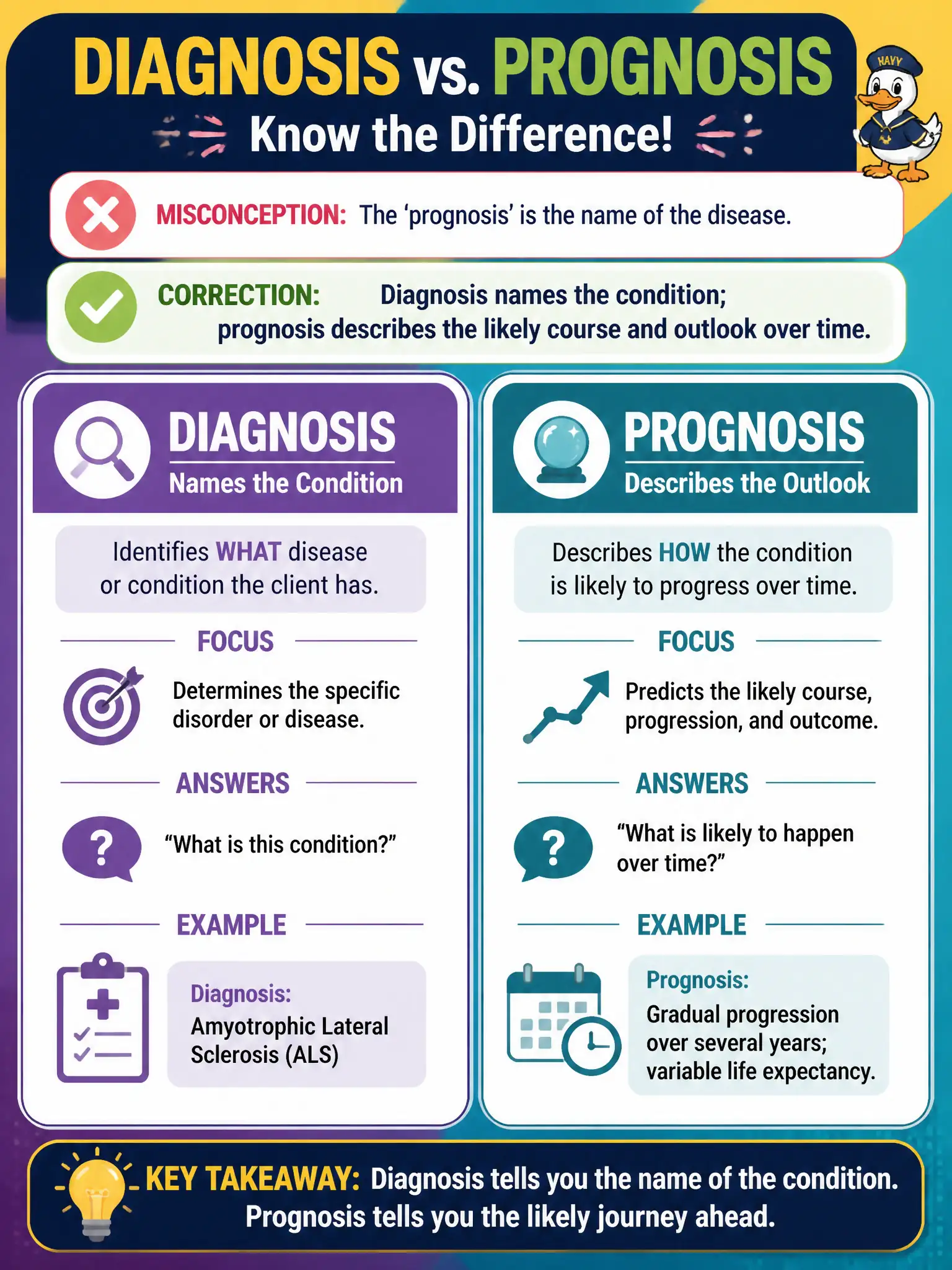
While educating a client about a degenerative neuromuscular condition, a counselor says the 'prognosis' is the name of the disease itself. What correction is accurate?
Select an answer to reveal the explanation.
Short Explanation
Diagnosis is the name tag; prognosis is the weather forecast. Mixing them up leaves clients thinking the label itself predicts the future. Teach the condition name and the likely course as two different ideas.
Full Explanation
Diagnosis names the condition; prognosis describes the likely course and outlook over time. Educating a client that ‘prognosis’ is merely the disease name confuses the two and weakens informed vocational planning about future functioning. Accurate patient education is a medical-aspects competency for CRCs in public health-linked rehab settings.
Treating diagnosis and prognosis as synonyms collapses distinct concepts clients need for planning. Saying prognosis names the laboratory test misdefines both terms. Claiming prognosis is only used for mental health and never for physical disability is false.
Clear diagnosis-versus-prognosis teaching supports informed consent for surgery, therapy intensity, and the time horizon of vocational goals.
Exam caveat: diagnosis = what it is; prognosis = likely course/outlook—do not conflate them in client education.
Operational check: correct the teaching point with clear definitions and examples; discuss how prognosis (not just the label) informs pacing of vocational goals; verify client understanding. Re-verify length and fidelity of the written plan at the next supervisory case review so civic accountability stays visible. Confirm the rationale in the case record so auditors and supervisors can see the clinical logic.