
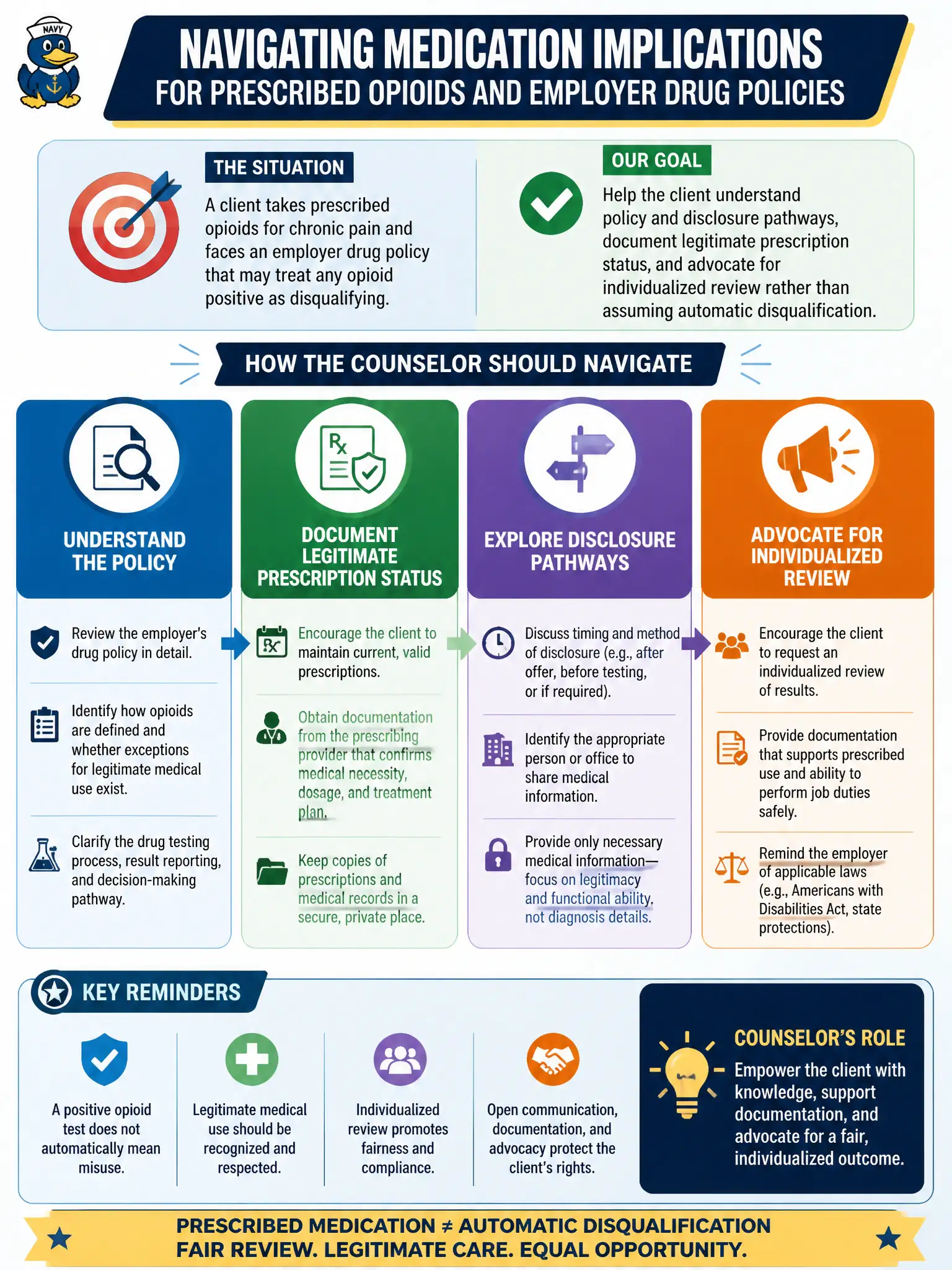
A client takes prescribed opioids for chronic pain and faces an employer drug policy that may treat any opioid positive as disqualifying. How should the counselor navigate this medication implication?
Select an answer to reveal the explanation.
Short Explanation
A legitimate pain prescription can still collide with a blunt drug policy—paperwork and advocacy matter. Help the client show the prescription trail and push for an individualized medical review instead of a knee-jerk 'positive equals out.' Secretly quitting or faking forms is a landmine.
Full Explanation
Prescribed opioids colliding with an employer drug policy that may treat any positive as disqualifying require helping the client understand policy and disclosure pathways, documenting legitimate prescription status, and advocating for individualized medical review rather than assuming automatic disqualification. Concealment and falsification are unsafe and unethical. Civic employment programs navigate drug-policy intersections carefully.
Advising secret cessation the night before a test without medical advice risks withdrawal and dishonest process. Claiming prescribed opioids never conflict with workplace drug policies ignores common policy friction. Encouraging falsifying a medical review officer form is fraudulent and unethical.
Medical review officer pathways exist to distinguish legitimate prescriptions from illicit use; counselors help clients use those pathways rather than circumvent them.
Exam caveat: prescribed controlled substances need policy literacy, legitimate documentation, and individualized review—not concealment or fraud.
Operational check: review the written drug policy and MRO process; gather prescription documentation; coach honest disclosure pathways; advocate for individualized review; never advise falsification or abrupt unsafe stoppage.