
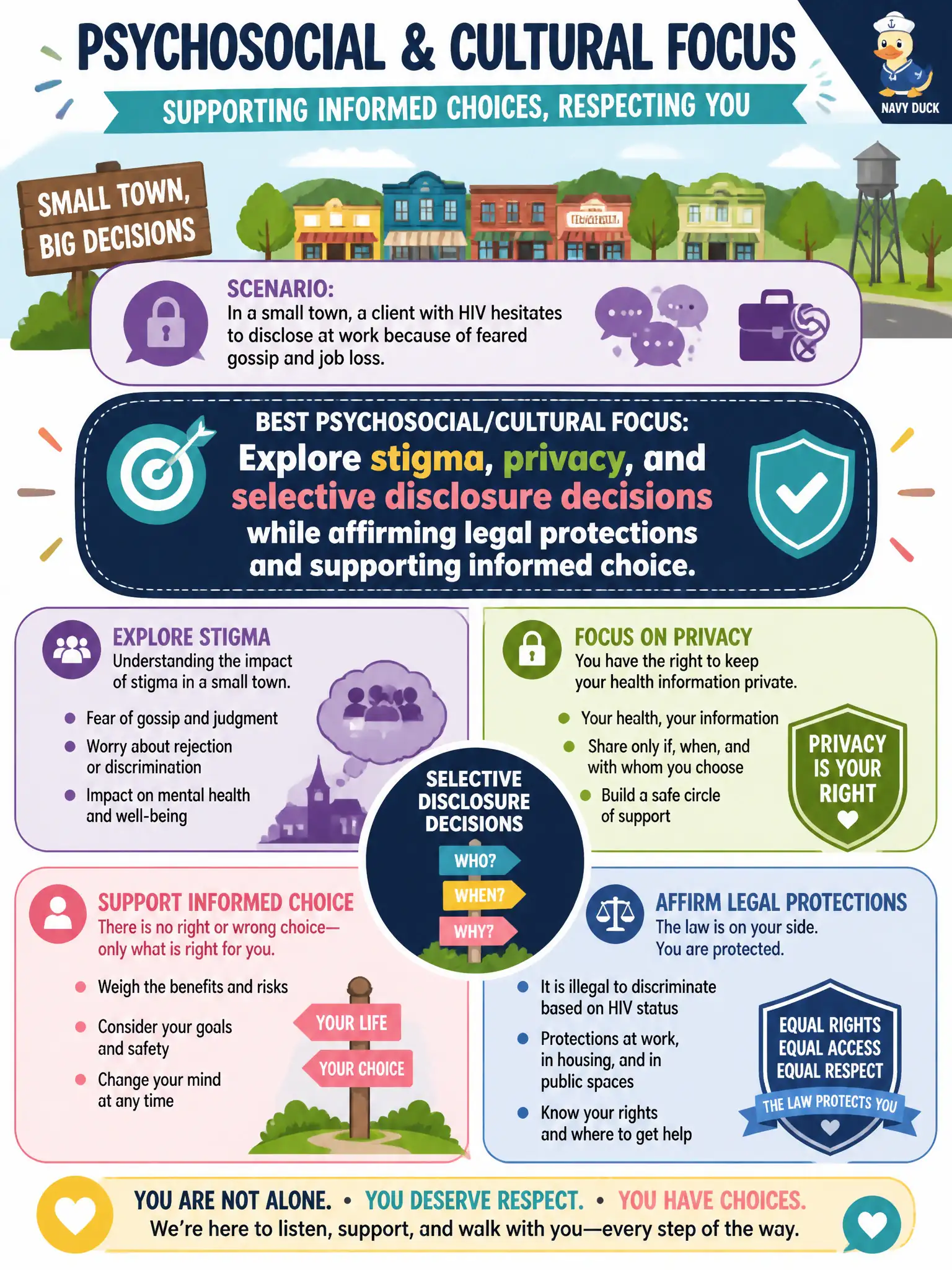
In a small town, a client with HIV hesitates to disclose at work because of feared gossip and job loss. What psychosocial/cultural focus fits best?
Select an answer to reveal the explanation.
Short Explanation
In a small town, HIV stigma can travel faster than the facts—and disclosure is a strategic choice, not a loyalty test. Walk through privacy, who needs to know, and the client's rights without forcing a town-square announcement. Informed choice beats pressure.
Full Explanation
In a small town, HIV-related hesitation to disclose at work because of feared gossip and job loss calls for exploring stigma, privacy, and selective disclosure decisions while affirming legal protections and supporting informed choice. The counselor neither forces public disclosure nor pretends stigma is obsolete. Psychosocial/cultural focus fits rural civic employment realities where privacy feels fragile.
Requiring full public disclosure to all coworkers as a rehab condition violates autonomy and can increase harm. Treating stigma as outdated and therefore irrelevant denies the client’s environment. Urging an immediate city move as the only ethical option over-prescribes life change and may be unfeasible.
Selective disclosure counseling affirms autonomy while mapping who truly needs information for accommodation versus who does not in gossip-prone small communities.
Exam caveat: HIV workplace counseling centers stigma, privacy, and informed selective disclosure—not forced outing or dismissal of stigma.
Operational check: discuss disclosure risks/benefits; clarify legal protections and who needs to know for accommodations; support the client’s chosen privacy boundary; address coping with local stigma without mandating relocation.