
A client with epilepsy is exploring commercial driving and heavy-machinery operator jobs. What medical-implication counseling is most appropriate?
Select an answer to reveal the explanation.
Short Explanation
Seizures and steering wheels don't mix on hope alone—there are real licensing and safety rails. Talk precautions, get medical input, and steer toward goals that fit the risk picture. Skipping that chat isn't kindness; it's a crash waiting to happen.
Full Explanation
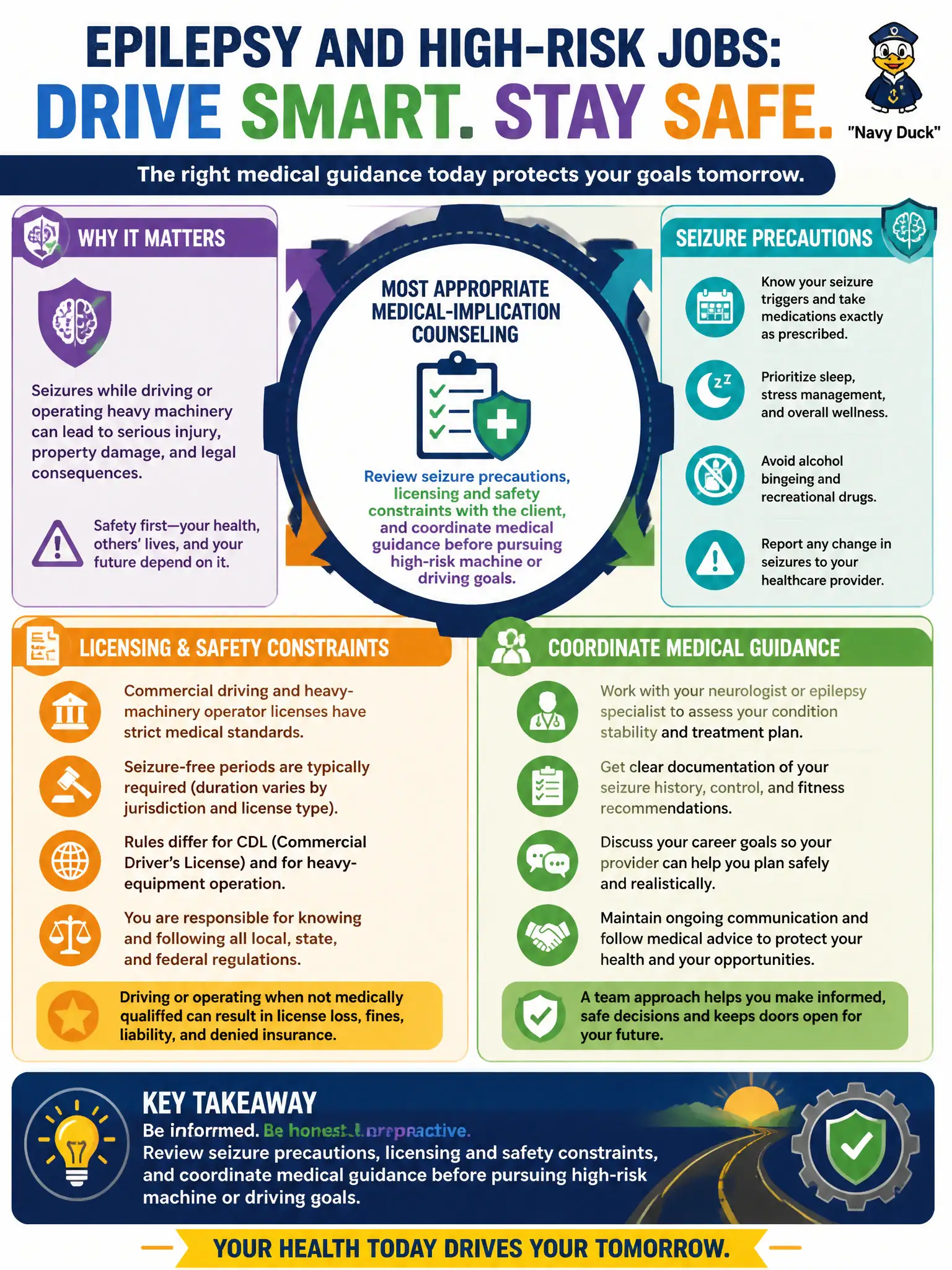
Epilepsy exploration of commercial driving and heavy-machinery roles requires reviewing seizure precautions, licensing and safety constraints with the client, and coordinating medical guidance before pursuing high-risk goals. Medical residuals interact with regulated safety roles; résumé cosmetics do not settle fitness. Responsible civic VR counseling prevents unsafe placements while preserving informed choice about feasible alternatives.
Assuring that seizure history never interacts with driving or machinery roles ignores safety and often licensing rules. Recommending stopping anticonvulsants to expand options immediately is medically dangerous. Focusing solely on résumé fonts because residuals are irrelevant abandons medical-implication counseling.
DOT medical standards and employer safety policies often constrain commercial driving after seizures; accurate counseling prevents unsafe goal pursuit and surprise disqualification.
Exam caveat: seizure disorders plus driving/machinery goals demand medical coordination and safety/licensing review.
Operational check: obtain treating-clinician guidance on seizure control and restrictions; review licensing requirements; postpone high-risk machine/driving pursuits until cleared; develop alternate vocational targets as needed.