
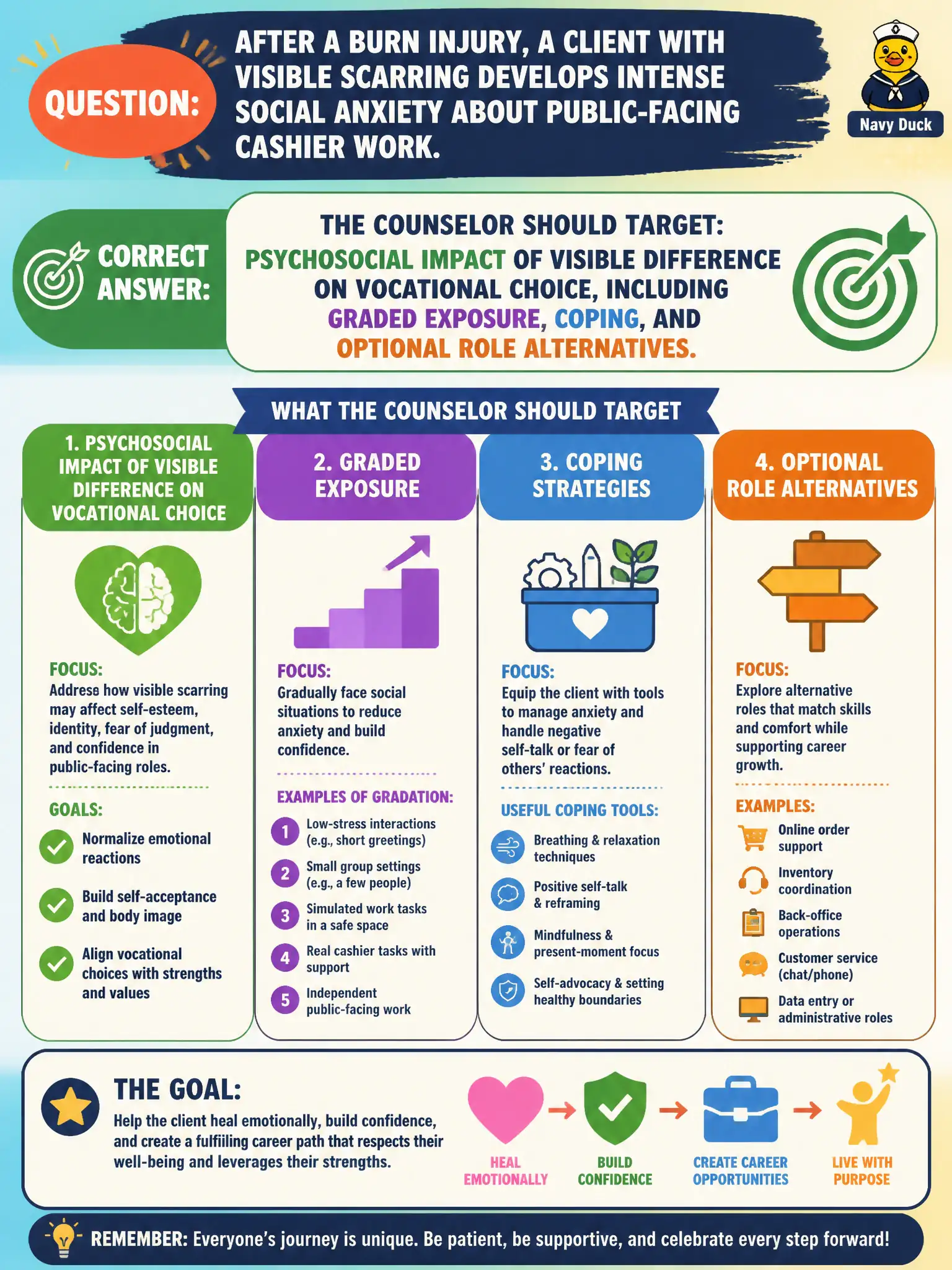
After a burn injury, a client with visible scarring develops intense social anxiety about public-facing cashier work. What should the counselor target?
Select an answer to reveal the explanation.
Short Explanation
Visible difference can turn a simple cashier line into a spotlight the client dreads—and that anxiety is a real vocational factor. Work the psychosocial piece: coping, graded steps, disclosure choices, and maybe role options if needed. Don't pretend only lifting limits count.
Full Explanation
Visible scarring after burn injury with intense social anxiety about public-facing cashier work points to psychosocial impact of visible difference on vocational choice. Counseling targets coping, graded exposure if desired, and optional role alternatives without mandating permanent back-of-house exile or declaring legal disqualification. Client goals and supports drive the path in community placement work.
Ignoring appearance-related distress because only lifting limits matter vocationally dismisses a real barrier to preferred roles. Mandating only back-of-house jobs permanently without assessing goals or coping supports over-restricts. Telling the client scarring always disqualifies customer-service roles under disability law misstates the law and removes choice.
Appearance-related anxiety after burn injury responds to counseling and optional graded exposure; law does not mandate permanent exclusion from public-facing roles.
Exam caveat: visible difference can shape vocational anxiety; respond with psychosocial supports and choice, not automatic permanent exclusion.
Operational check: assess social anxiety and goals; offer coping and graded exposure options; explore accommodations or alternate roles if the client prefers; avoid counselor-imposed permanent customer-service bans.