
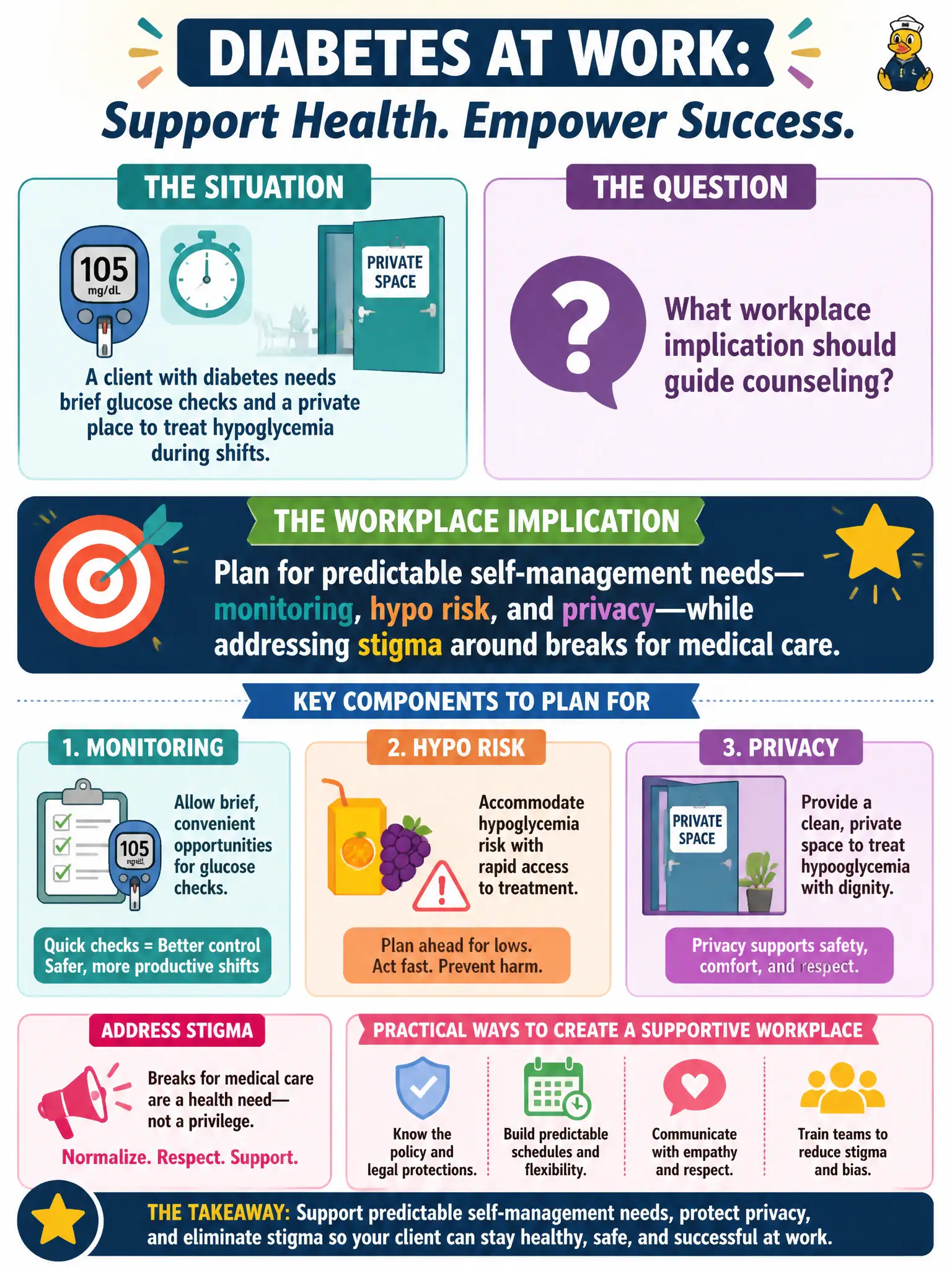
A client with diabetes needs brief glucose checks and a private place to treat hypoglycemia during shifts. What workplace implication should guide counseling?
Select an answer to reveal the explanation.
Short Explanation
Diabetes at work is logistics plus dignity: quick checks, a private corner for lows, and no shame for medical breaks. Treat hypo risk like a real safety factor, not a personality quirk. Good plans normalize self-management instead of hiding it.
Full Explanation
Diabetes at work implies predictable self-management needs—glucose monitoring, hypoglycemia risk, and privacy to treat lows—while counseling also addresses stigma around medical breaks. Planning for those needs supports safety and tenure; skipping care to appear able-bodied is dangerous. Public and private employers can usually accommodate brief medical self-management with minimal disruption when planned.
Advising skipping all glucose monitoring at work to appear fully able-bodied prioritizes appearance over medical safety. Assuming diabetes never affects scheduling because it is ‘only dietary preference’ trivializes a medical condition. Requiring public injection in the break room to demonstrate transparency can violate privacy and increase stigma.
Brief, private medical self-management is a routine reasonable need; planning it reduces both medical emergencies and workplace conflict.
Exam caveat: diabetes vocational counseling integrates self-management logistics and stigma, not appearance management that skips care.
Operational check: identify private space and timing for checks/treatment; educate on hypo recognition; discuss accommodation language with the employer as needed; reject advice to skip monitoring.