
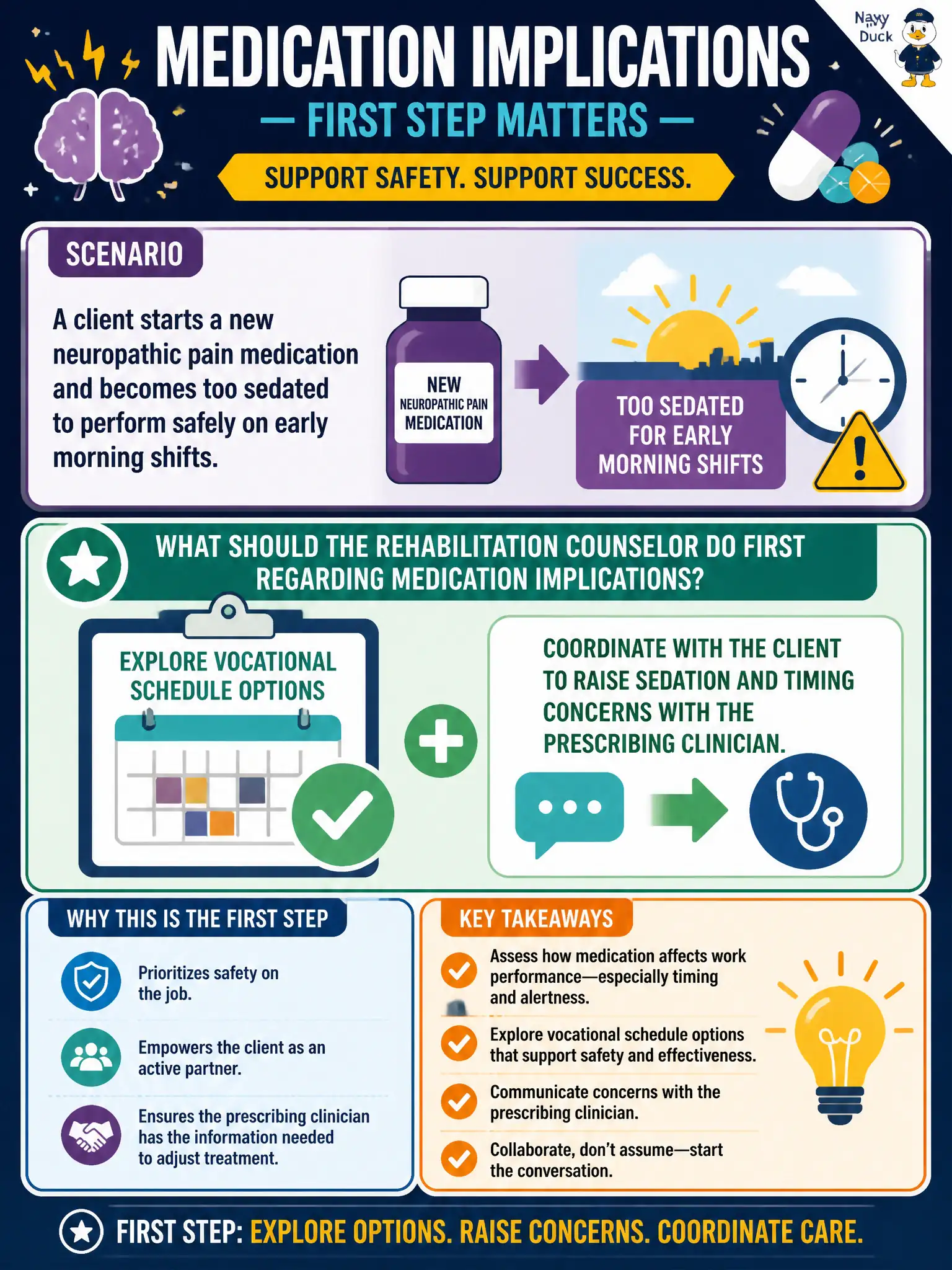
A client starts a new neuropathic pain medication and becomes too sedated to perform safely on early morning shifts. What should the rehabilitation counselor do first regarding medication implications?
Select an answer to reveal the explanation.
Short Explanation
Sedation that wrecks the morning shift is a side-effect story, not a character flaw. Talk schedule flexibility and help the client loop in the prescriber about timing—don't play pharmacist or pull the plug on work. Side effects and shifts can often be negotiated together.
Full Explanation
When a new neuropathic pain medication leaves a client too sedated for safe early morning shifts, the CRC first explores vocational schedule options and coordinates with the client to raise sedation and timing concerns with the prescribing clinician. Medication implications are addressed through collaborative medical communication and job-design flexibility—not unilateral dose changes by the counselor. Public VR practice keeps safety and treatment alliance intact.
Instructing the client to double the night dose without the prescriber is practicing medicine unsafely. Documenting that pain medication always precludes competitive employment and closing the case overgeneralizes and abandons accommodation pathways. Advising abrupt cessation until interviews finish risks withdrawal, pain crisis, and instability.
Documented schedule flexibility and prescriber coordination also protect employers and workers in safety-sensitive morning roles common in municipal and warehouse settings.
Exam caveat: counselors coordinate around medication side effects; they do not independently alter regimens or declare universal unemployability.
Operational check: discuss schedule flexibility; support client contact with the prescriber about sedation/timing; document safety concerns; pause high-risk early shifts until clarified.