
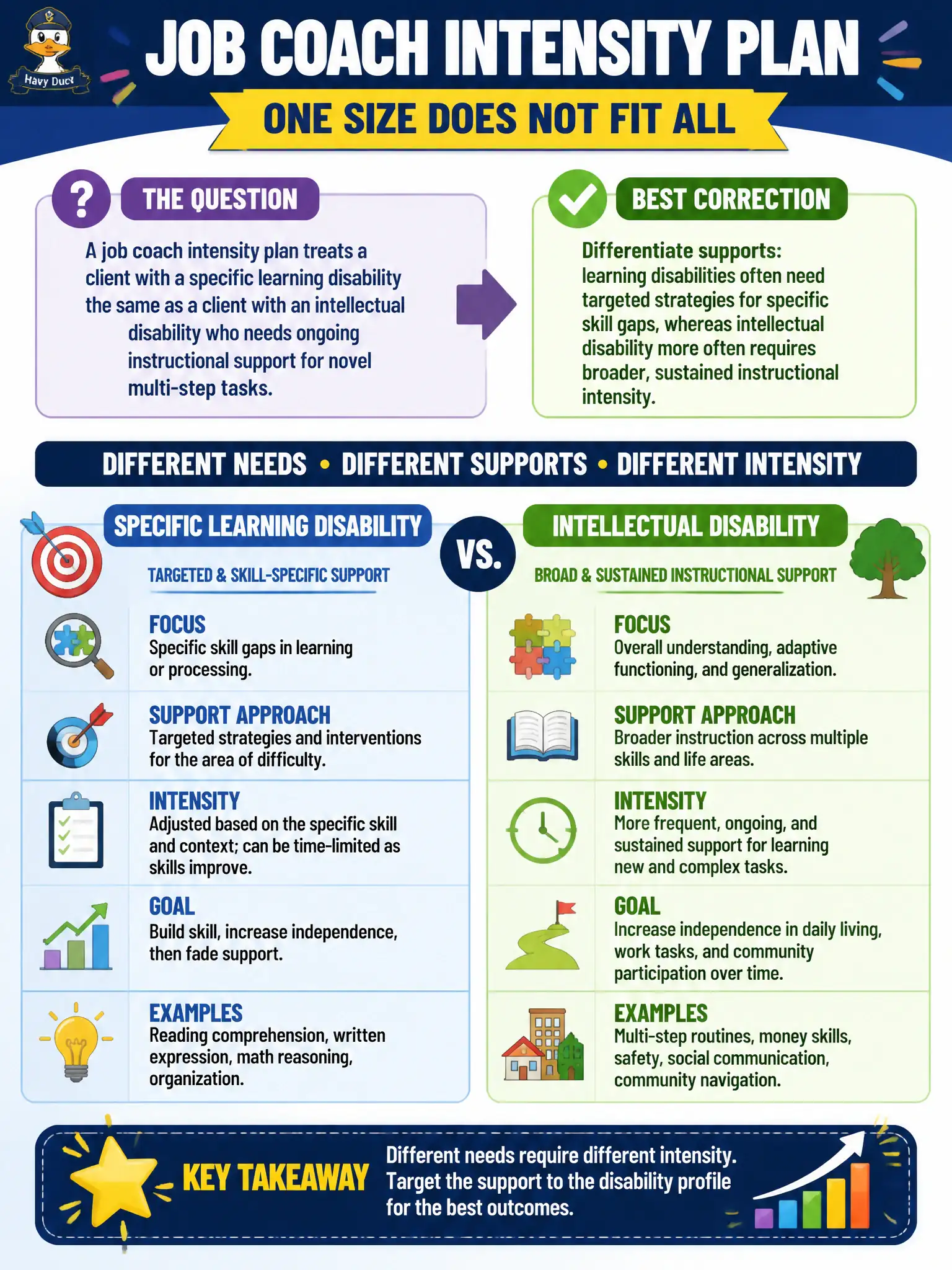
A job coach intensity plan treats a client with a specific learning disability the same as a client with an intellectual disability who needs ongoing instructional support for novel multi-step tasks. What is the counselor's best correction?
Select an answer to reveal the explanation.
Short Explanation
Mixing ID and SLD support plans is like using the same wrench for every bolt. A learning disability might need a reading or sequencing strategy; an intellectual disability may need thicker, longer coaching on new multi-step work. Match intensity to the disability profile, not a generic 'cognitive' label.
Full Explanation
A job-coach intensity plan that treats specific learning disability the same as intellectual disability needing ongoing instructional support for novel multi-step tasks should be corrected by differentiating supports: learning disabilities often need targeted strategies for specific skill gaps, whereas intellectual disability more often requires broader, sustained instructional intensity. Matching coach dose to disability-related learning profile protects public VR resources and client dignity in community employment.
Increasing coaching equally for both because any cognitive diagnosis mandates lifelong one-to-one job coaching overgeneralizes and ignores differentiated need. Eliminating coaching for learning disabilities because workplace literacy issues are not disability-related denies legitimate, targeted support. Using IQ cutoffs alone to deny coaching to anyone above a fixed score regardless of task demands substitutes a number for functional analysis of novel multi-step demands.
Exam caveat: differentiate LD (targeted skill-gap strategies) from ID (often broader, sustained instructional intensity)—do not apply one coaching intensity to both by default.
Operational check: rewrite the intensity plan with distinct LD versus ID support hypotheses; observe task performance; adjust coach fade schedules to demonstrated need rather than diagnosis stereotype or IQ cutoff alone.