
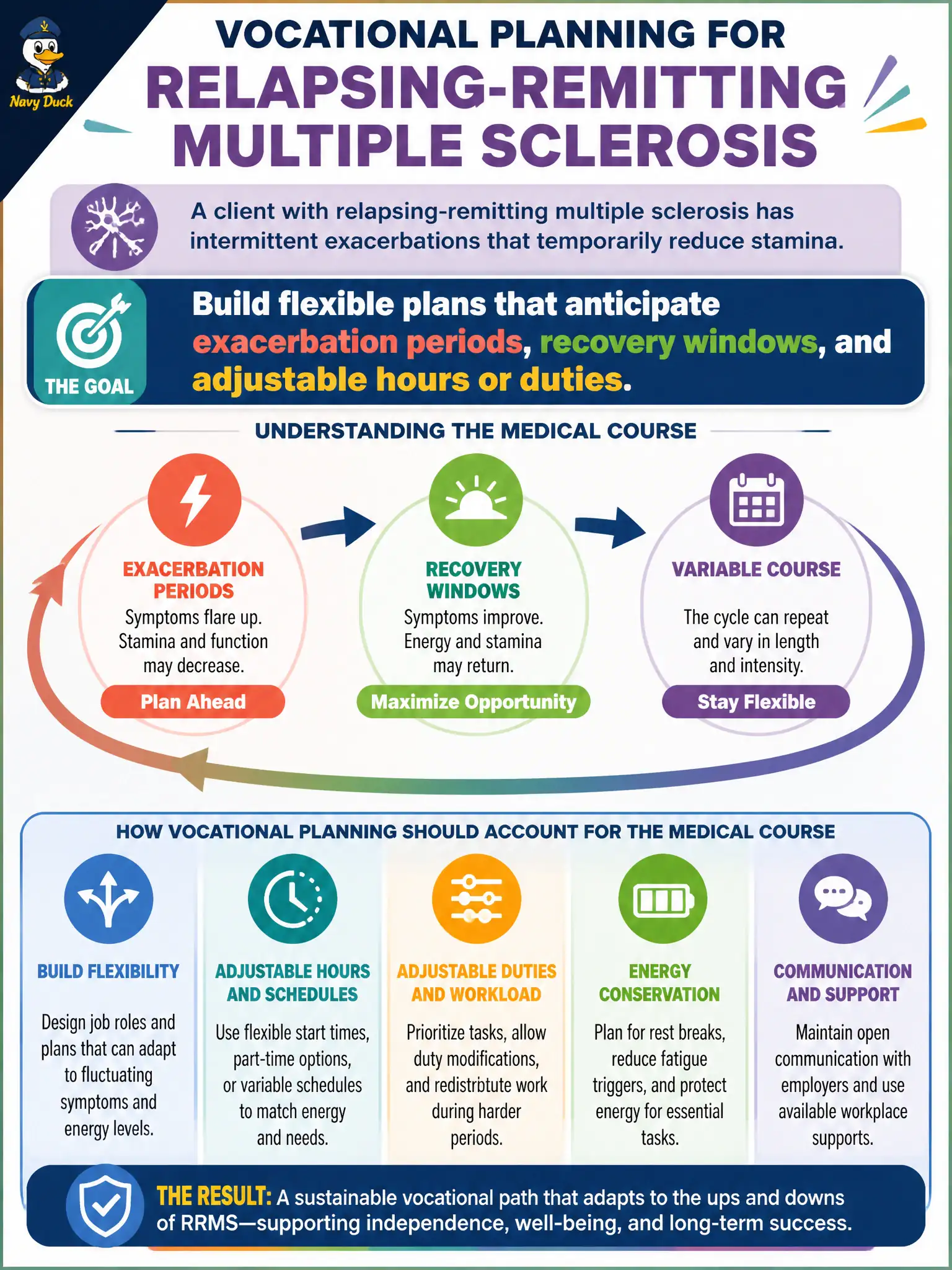
A client with relapsing-remitting multiple sclerosis has intermittent exacerbations that temporarily reduce stamina. How should vocational planning account for the medical course?
Select an answer to reveal the explanation.
Short Explanation
MS can be a weather pattern, not a one-way slope—storms (exacerbations), then clearer skies. Smart rehab plans bend with the flares: flexible hours, backup duties, recovery windows. Rigid full-time forever plans snap when the next relapse hits.
Full Explanation
Relapsing-remitting MS with intermittent exacerbations requires flexible vocational plans that anticipate flare periods, recovery windows, and adjustable hours or duties. Disease course is variable; planning should preserve employment attachment through adaptable expectations rather than assuming one linear path. Community and state VR counselors serve MS clients well with contingency-ready IPEs.
Assuming permanent full disability at first diagnosis and suspending all job goals overpredicts impairment for many RRMS presentations. Planning only for progressive decline as if every MS course is identical ignores phenotype differences. Ignoring variability and locking fixed full-time goals after placement sets clients up for preventable failure during exacerbations.
Benefits counseling and intermittent leave planning often travel with flexible MS vocational plans so exacerbations do not automatically mean case closure.
Exam caveat: MS vocational planning should reflect course variability—especially RRMS exacerbation/recovery cycles—not one-size trajectories.
Operational check: build flare and recovery contingencies into the plan (hours, duties, remote options); coordinate with neurology; review the plan after each significant exacerbation.