
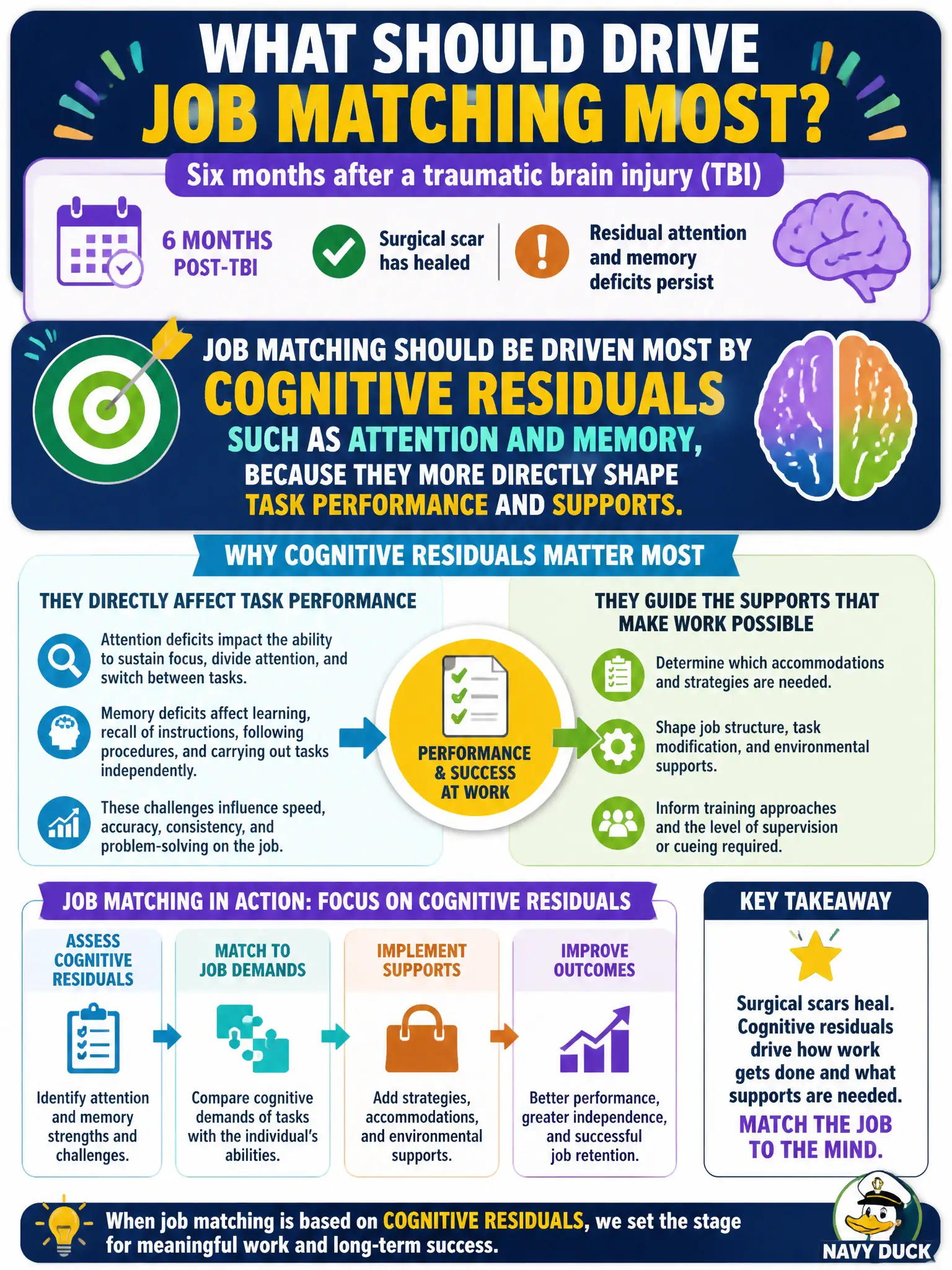
Six months after a traumatic brain injury, a client's surgical scar has healed, but residual attention and memory deficits persist. What should drive job matching most?
Select an answer to reveal the explanation.
Short Explanation
The scar is the postcard; the cognitive leftovers are the itinerary. After TBI, job fit usually turns on attention, memory, and pacing—not whether the incision looks tidy. Match the work to the brain residuals you still see in daily tasks.
Full Explanation
Six months after TBI, a healed surgical scar is less vocationally decisive than residual attention and memory deficits that shape task performance, error rates, and support needs. Job matching should prioritize cognitive residuals and related accommodations over cosmetic appearance. Public VR TBI caseloads routinely hinge on cognition long after wounds close.
Prioritizing cosmetic appearance because employers supposedly evaluate visible residuals first misplaces the performance drivers for most roles. Assuming cognitive issues resolve fully once scars heal contradicts common TBI trajectories. Using insurance diagnosis codes alone without linking residuals to essential functions skips functional analysis.
TBI clubs and public VR cognitive remediation partnerships can support attention/memory strategies while placement focuses on task analysis rather than scar visibility.
Exam caveat: after TBI, cognitive residuals typically drive matching more than healed surgical cosmetics.
Operational check: inventory attention/memory residuals with neuro or therapy input; match tasks and accommodations to those limits; treat scar healing as medically good news, not proof of full vocational recovery.