
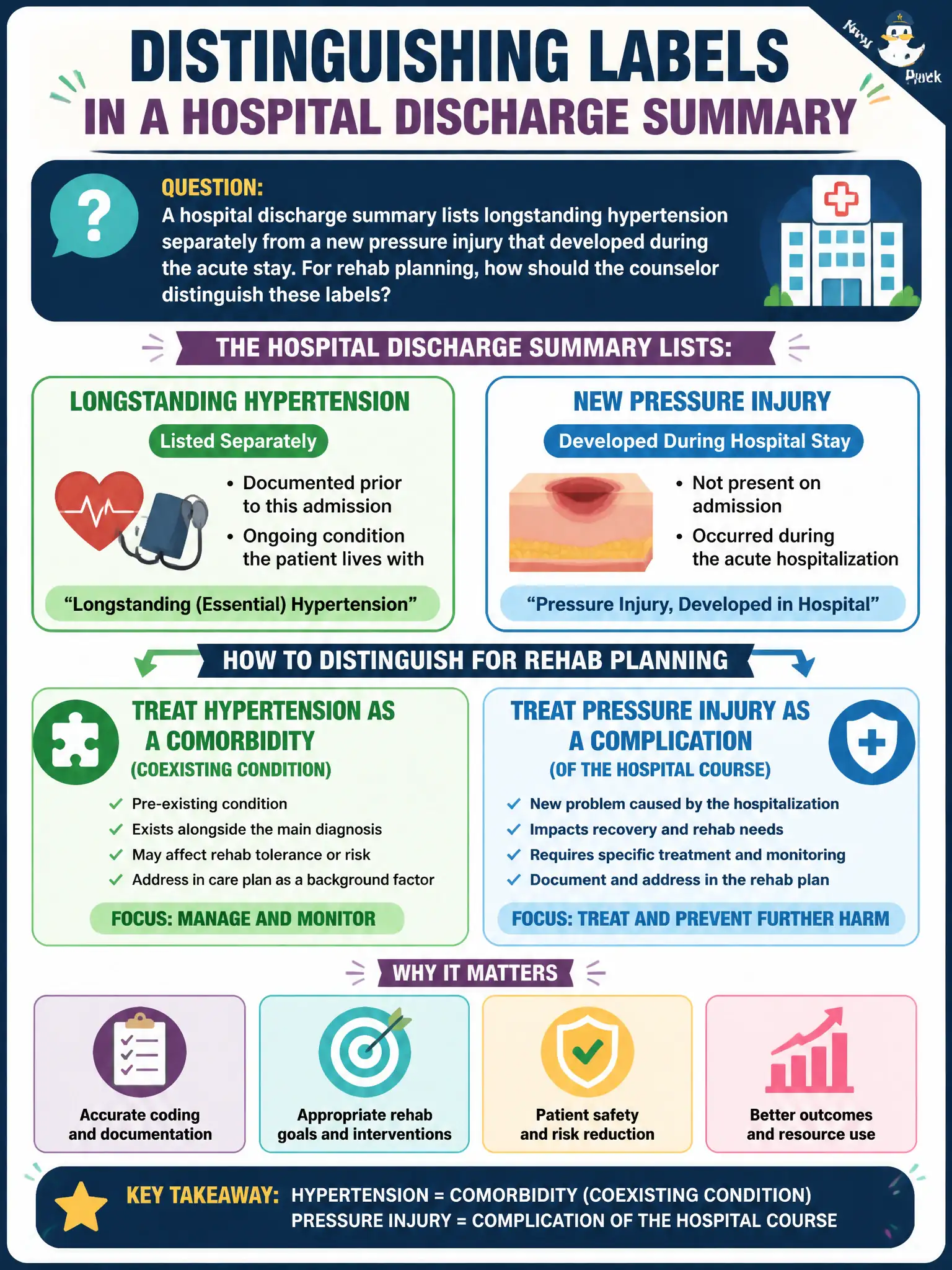
A hospital discharge summary lists longstanding hypertension separately from a new pressure injury that developed during the acute stay. For rehab planning, how should the counselor distinguish these labels?
Select an answer to reveal the explanation.
Short Explanation
Comorbidity is the roommate that moved in years ago; a complication is the mess that showed up because of this hospital stay. Hypertension riding along is comorbidity; a new pressure injury from bedrest is a complication. That split tells you what was already on the table versus what the acute episode added.
Full Explanation
For rehab planning, comorbidity means a coexisting condition (here, longstanding hypertension), while a complication arises from the hospital course or treatment (here, a new pressure injury). Distinguishing those labels clarifies what is chronic background disease versus what may reflect acute care risk and prevention needs. County and hospital-linked VR counselors use that distinction when prioritizing education, seating, skin care, and medical follow-up alongside vocational goals.
Treating both as complications solely because they appear on a discharge summary erases the chronic-versus-episode distinction. Calling hypertension a complication and the pressure injury a comorbidity reverses the definitions. Ignoring both terms and relying only on nursing narrative discards useful structured medical language for planning.
Exam caveat: comorbidity = coexisting condition; complication = condition arising from disease course or care—CRC medical-aspects items test that contrast.
Operational check: label hypertension as comorbidity and the pressure injury as a complication in the rehab plan; address skin integrity and positioning urgently; keep hypertension management in ongoing medical coordination.