
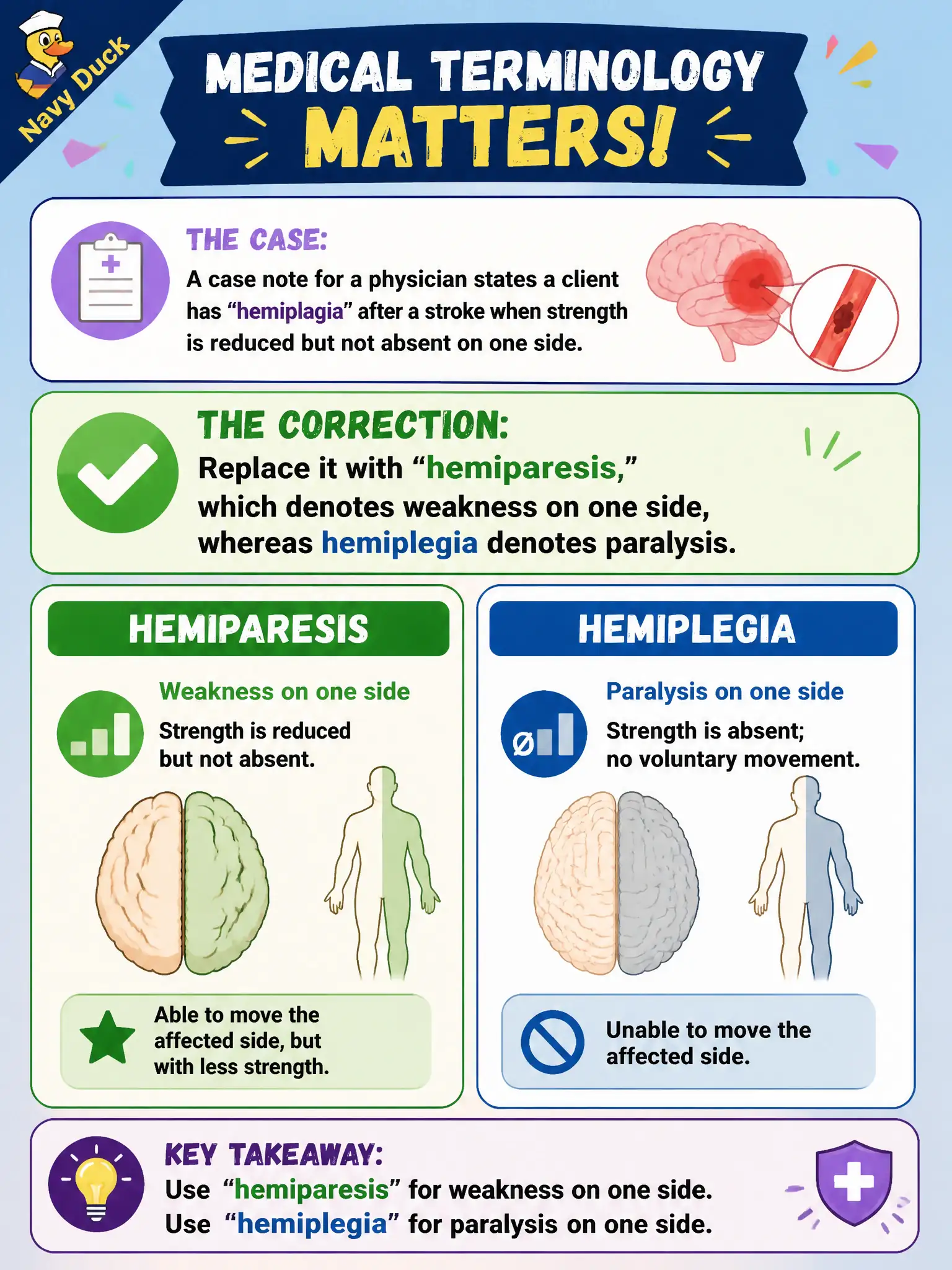
A case note for a physician states a client has 'hemiplagia' after a stroke when strength is reduced but not absent on one side. Which correction best reflects accurate medical terminology?
Select an answer to reveal the explanation.
Short Explanation
Words matter when you talk to doctors—paresis means weak, plegia means paralyzed. Mixing them up is like telling a mechanic the engine is dead when it only sputters. Fix the note so the physician hears the real functional picture.
Full Explanation
Accurate medical terminology matters in interdisciplinary rehab notes. Hemiparesis denotes weakness on one side; hemiplegia denotes paralysis on one side. Replacing a misspelled ‘hemiplagia’ used for reduced-but-not-absent strength with ‘hemiparesis’ communicates the correct functional picture to physicians and protects planning quality in hospital-to-community VR handoffs.
Keeping the misspelling because physicians treat variants as interchangeable risks real clinical misunderstanding, not mere pedantry. Changing the note to ‘quadriplegia’ for any unilateral post-stroke weakness overstates impairment and misdirects goals. Using ‘paraplegia’ for stroke residuals affecting an upper extremity confuses spinal patterns with hemispheric unilateral findings.
Interdisciplinary trust in hospital-based and public VR teams rests on precise language; wrong plegia/paresis labels can distort FIM expectations and job targets.
Exam caveat: know paresis versus plegia and avoid swapping paraplegia/quadriplegia labels for unilateral stroke weakness.
Operational check: correct the note to hemiparesis; confirm strength findings with the medical record; ensure vocational implications reflect weakness rather than assumed total paralysis.