
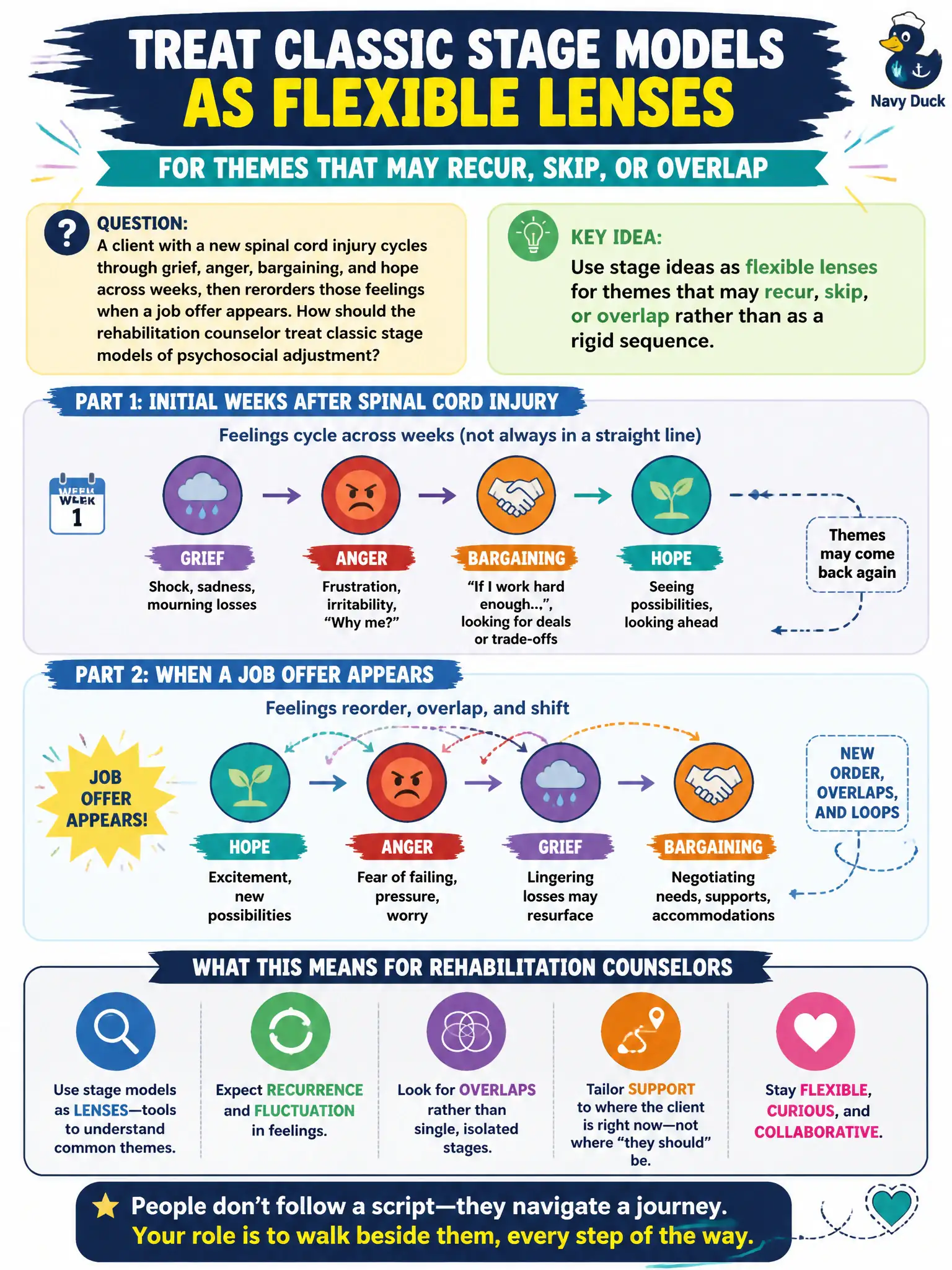
A client with a new spinal cord injury cycles through grief, anger, bargaining, and hope across weeks, then reorders those feelings when a job offer appears. How should the rehabilitation counselor treat classic stage models of psychosocial adjustment?
Select an answer to reveal the explanation.
Short Explanation
Stage charts are maps, not train tracks. People zigzag—grief today, hope tomorrow, anger again when a job pops up—and that is still adjustment, not failure. Treat stages as themes you can revisit, not a checklist that blocks vocational work.
Full Explanation
Classic stage models of psychosocial adjustment can help name themes such as grief, anger, bargaining, and hope, but they are flexible lenses—not rigid sequences clients must finish before vocational planning. Feelings may recur, skip, or overlap when a job offer appears or medical status shifts. Public VR counselors use stage language tentatively while continuing collaborative planning aligned with current functioning and goals.
Requiring each Kübler-Ross stage in fixed order before any vocational planning begins turns a heuristic into a gatekeeping ritual unsupported by evidence. Discarding all stage language because frameworks supposedly have no value throws away useful vocabulary for common themes. Mapping every session to one stage label and refusing work talk until denial ends prioritizes labeling over the client’s lived pacing and civic employment rights.
Exam caveat: CRC psychosocial items often reject rigid stage sequencing as a prerequisite to vocational work while still allowing flexible thematic use of stage ideas.
Operational check: note recurring adjustment themes without forcing order; keep vocational discussion available when the client is ready; revisit goals when emotional themes spike around new offers or setbacks.