
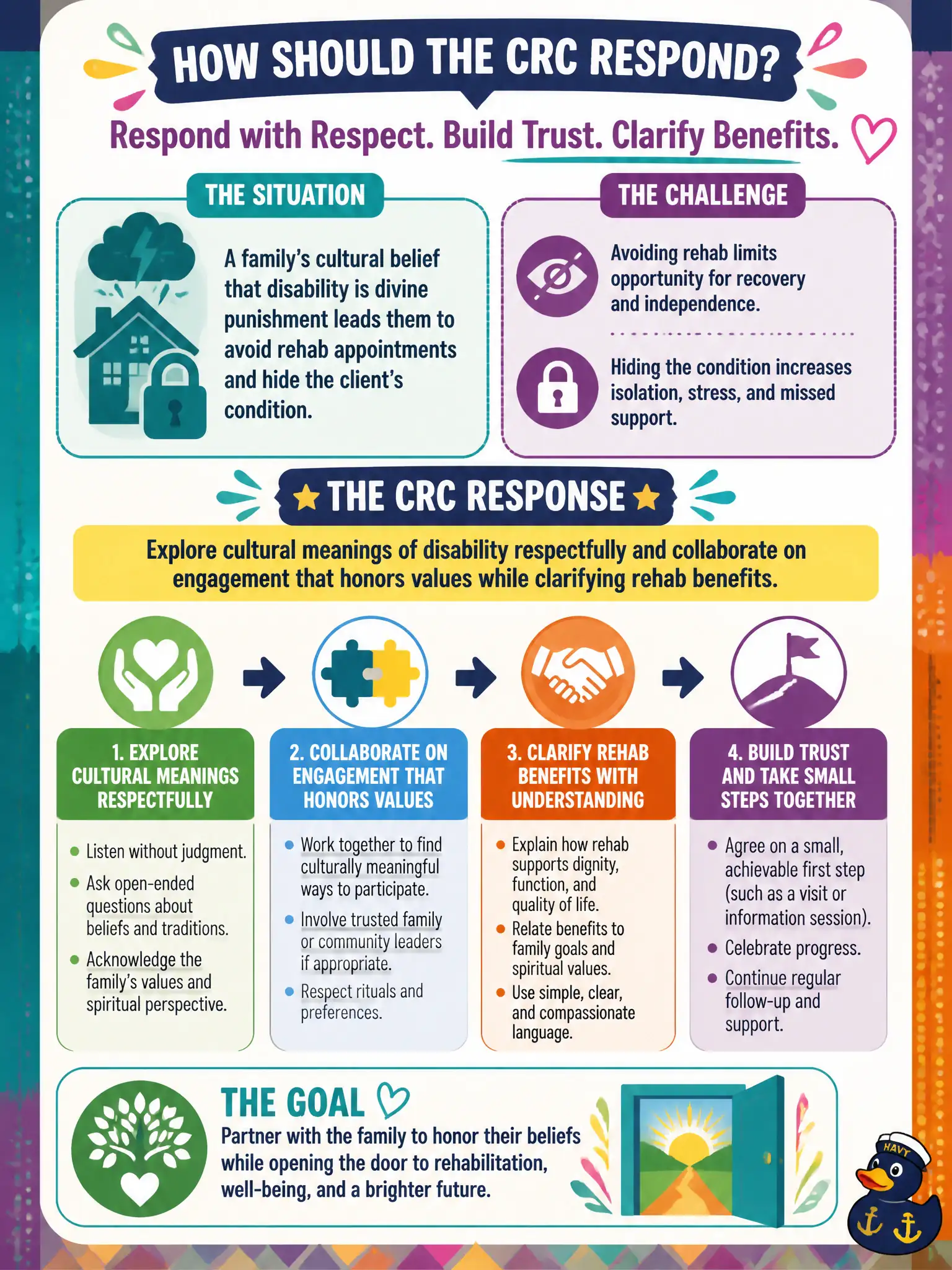
A family's cultural belief that disability is divine punishment leads them to avoid rehab appointments and hide the client's condition. How should the CRC respond?
Select an answer to reveal the explanation.
Short Explanation
If a family sees disability as punishment, a brochure dump won't open the door. Respectful curiosity about their meaning of disability builds trust, then you can still explain what rehab offers. Culture shapes help-seeking—work with it, don't bulldoze it.
Full Explanation
When a family frames disability as divine punishment and avoids rehab appointments while hiding the condition, culturally responsive practice explores those meanings respectfully and collaborates on engagement that honors values while clarifying rehabilitation benefits. Mockery and coercion destroy trust; ignoring culture leaves the barrier untouched. Community and public VR counselors succeed when they bridge belief systems and service access without demanding cultural erasure.
Mocking the belief system and demanding immediate compliance is culturally violent and clinically ineffective. Refusing services until the family abandons all cultural frameworks conditions care on assimilation. Sending only technical medical pamphlets while ignoring culture fails engagement where meaning-making drives avoidance.
Exam caveat: multicultural rehab counseling explores cultural meanings of disability and collaborates on engagement; it does not ridicule or require abandonment of culture.
Operational check: schedule a respectful cultural dialogue; ask how the family understands disability and healing; identify acceptable entry points to services; clarify benefits without ridicule; document collaborative engagement plans.