
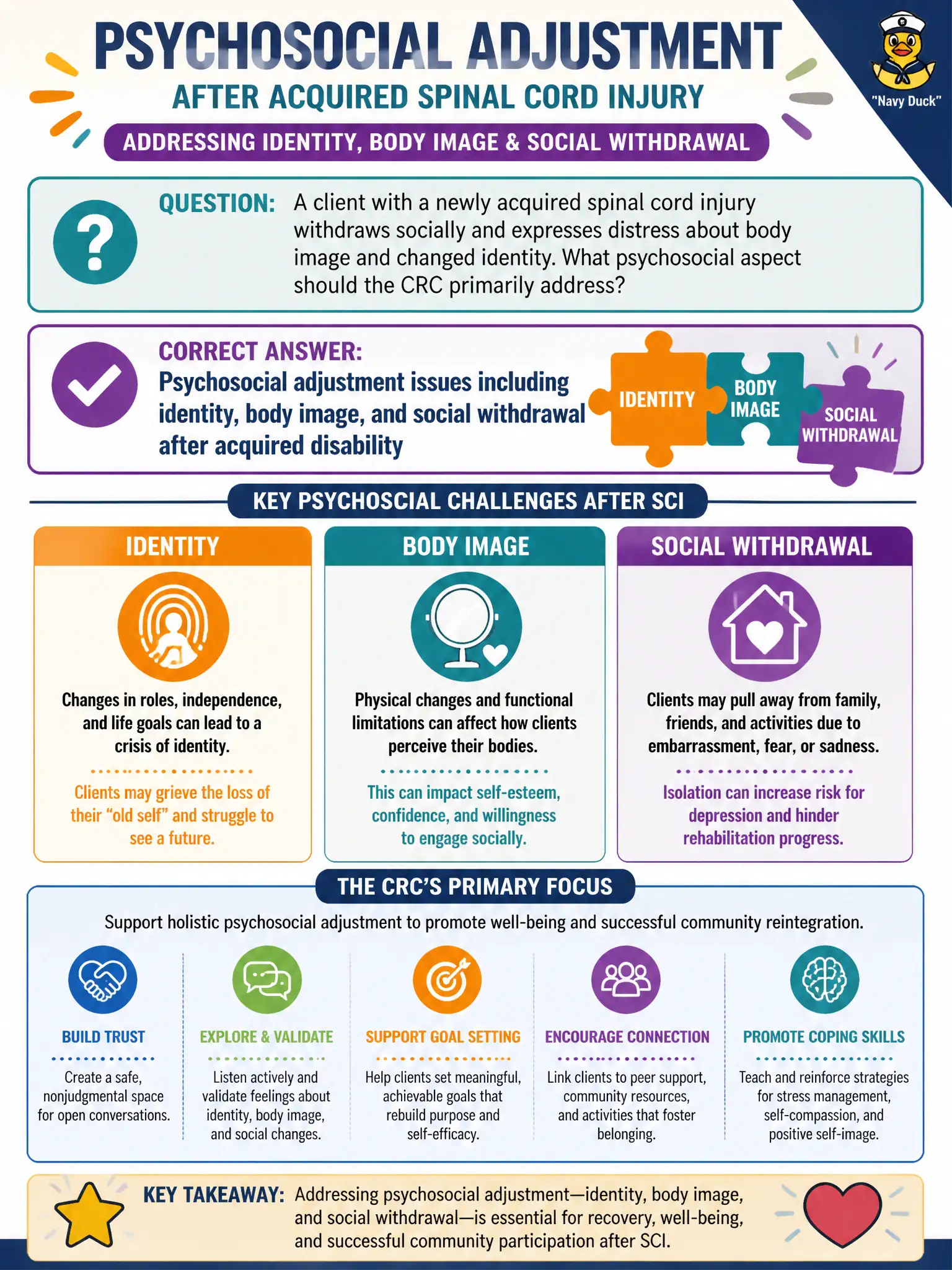
A client with a newly acquired spinal cord injury withdraws socially and expresses distress about body image and changed identity. What psychosocial aspect should the CRC primarily address?
Select an answer to reveal the explanation.
Short Explanation
A new SCI doesn't just change how someone moves—it can shake who they see in the mirror. Body image, identity, and pulling away from people are normal psychosocial storms to work through. The CRC walks with that adjustment, not around it.
Full Explanation
After newly acquired spinal cord injury, social withdrawal and distress about body image and changed identity point to psychosocial adjustment as a primary counseling target—identity, body image, roles, and relationships—not merely equipment preferences. Addressing adjustment supports engagement with rehab and eventual vocational goals in public VR pathways.
Discussing only wheelchair brand preferences without exploring adjustment misses the emotional core of acquired disability. Assuming withdrawal always means permanent rejection of all rehab overinterprets a common adjustment phase. Ignoring body image as unrelated to disability adjustment contradicts well-established psychosocial literature.
Peer mentoring with others who have navigated SCI adjustment, offered through community rehab or independent-living centers, often complements counselor-led identity and body-image work.
Exam caveat: Domain 5 psychosocial items often center identity and body image after acquired disability rather than equipment trivia alone.
Operational check: open adjustment-focused sessions on identity, body image, and social connection; screen mood/safety; coordinate peer support and clinical referrals; link psychosocial gains to paced vocational steps.