
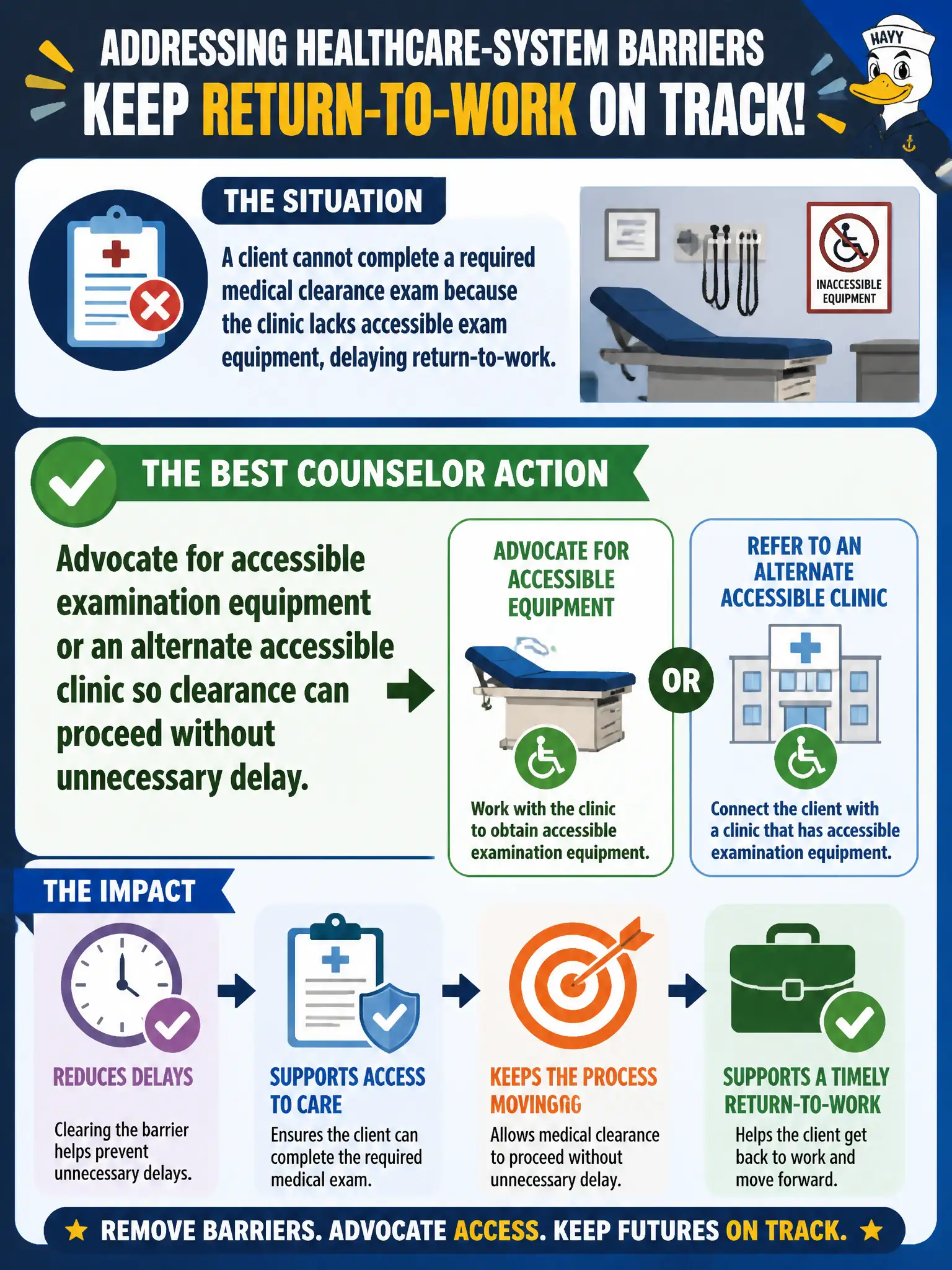
A client cannot complete a required medical clearance exam because the clinic lacks accessible exam equipment, delaying return-to-work. What counselor action best addresses this healthcare-system barrier?
Select an answer to reveal the explanation.
Short Explanation
If the exam table itself is the roadblock, the problem isn't the client's motivation—it's the clinic's setup. Pushing for accessible gear or another site that can actually do the exam keeps the vocational train moving. Walking away or skipping clearance just trades one risk for another.
Full Explanation
When a required medical clearance exam is blocked because a clinic lacks accessible exam equipment, the counselor should advocate for accessible examination equipment or an alternate accessible clinic so clearance can proceed without unnecessary delay. Healthcare-system accessibility barriers are legitimate disability advocacy targets that directly affect municipal return-to-work timelines and equal access to care. Closing the case because inaccessible clinics permanently bar all medical clearance accepts discrimination as destiny and abandons advocacy. Instructing the client to skip medical clearance and return to work without documentation can violate employer and safety requirements. Blaming the client for choosing a disability that requires accessible equipment is unethical victim-blaming incompatible with CRC values. Exam caveat: advocacy may include ADA channels, clinic administration, and scheduling at equipped sites; counselors pursue access rather than abandoning medically required clearance. Operational check: document the inaccessible equipment barrier, request an accessible exam site or portable equipment accommodation, track the new appointment date, and escalate if civic RTW clearance remains delayed solely due to clinic inaccessibility.