
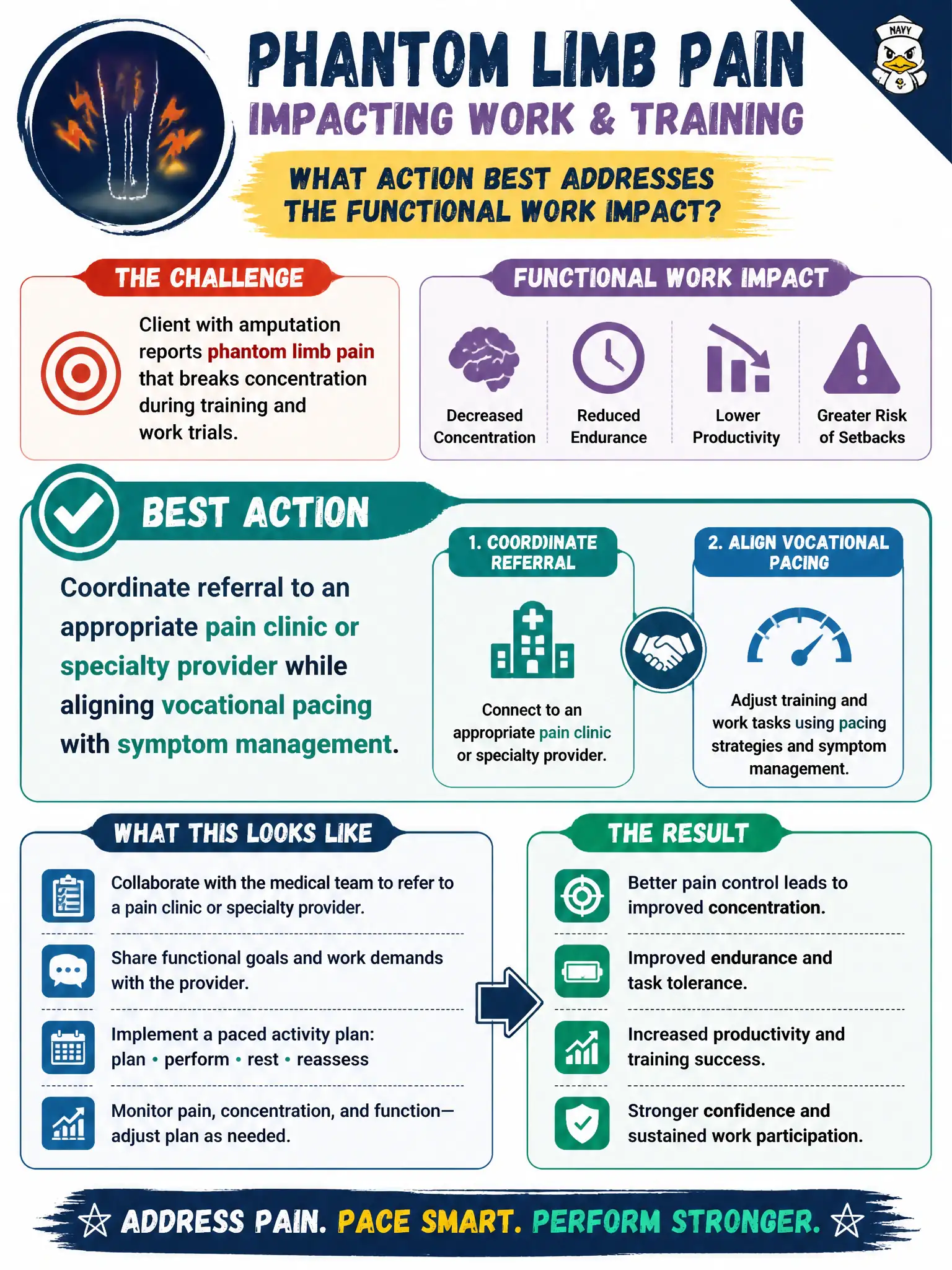
A client with amputation reports phantom limb pain that breaks concentration during training and work trials. Which medical-resource action best addresses the functional work impact?
Select an answer to reveal the explanation.
Short Explanation
Phantom limb pain isn't 'in someone's head' as a motivation problem—it's a real distractor on the job. Getting a pain clinic or specialty team involved, and matching work pace to how the person feels that day, keeps rehab honest. Pretending it's just soft skills leaves the real barrier untreated.
Full Explanation
Phantom limb pain that breaks concentration during training and work trials is a medical-functional issue; the counselor should coordinate referral to an appropriate pain clinic or specialty provider while aligning vocational pacing with symptom management. Treating the work impact seriously preserves both comfort and civic vocational progress instead of moralizing lapses in attention. Treating concentration lapses only as a soft-skills deficit and ignoring pain reports misattributes a medical problem to attitude and delays care. Recommending discontinuing all pain discussion because phantom sensations are not medically recognized contradicts established clinical recognition of phantom limb pain. Advising increased caffeine intake as the primary pain-management plan is an unsafe, non-evidence substitute for specialty care. Exam caveat: counselors coordinate referrals and pace vocational activity; they do not independently prescribe analgesics or dismiss specialist recommendations. Operational check: obtain client consent for pain-specialty referral, note how symptoms disrupt training or work trials, adjust session length or duty progression pending treatment input, and document medical-vocational coordination in the municipal case file.