
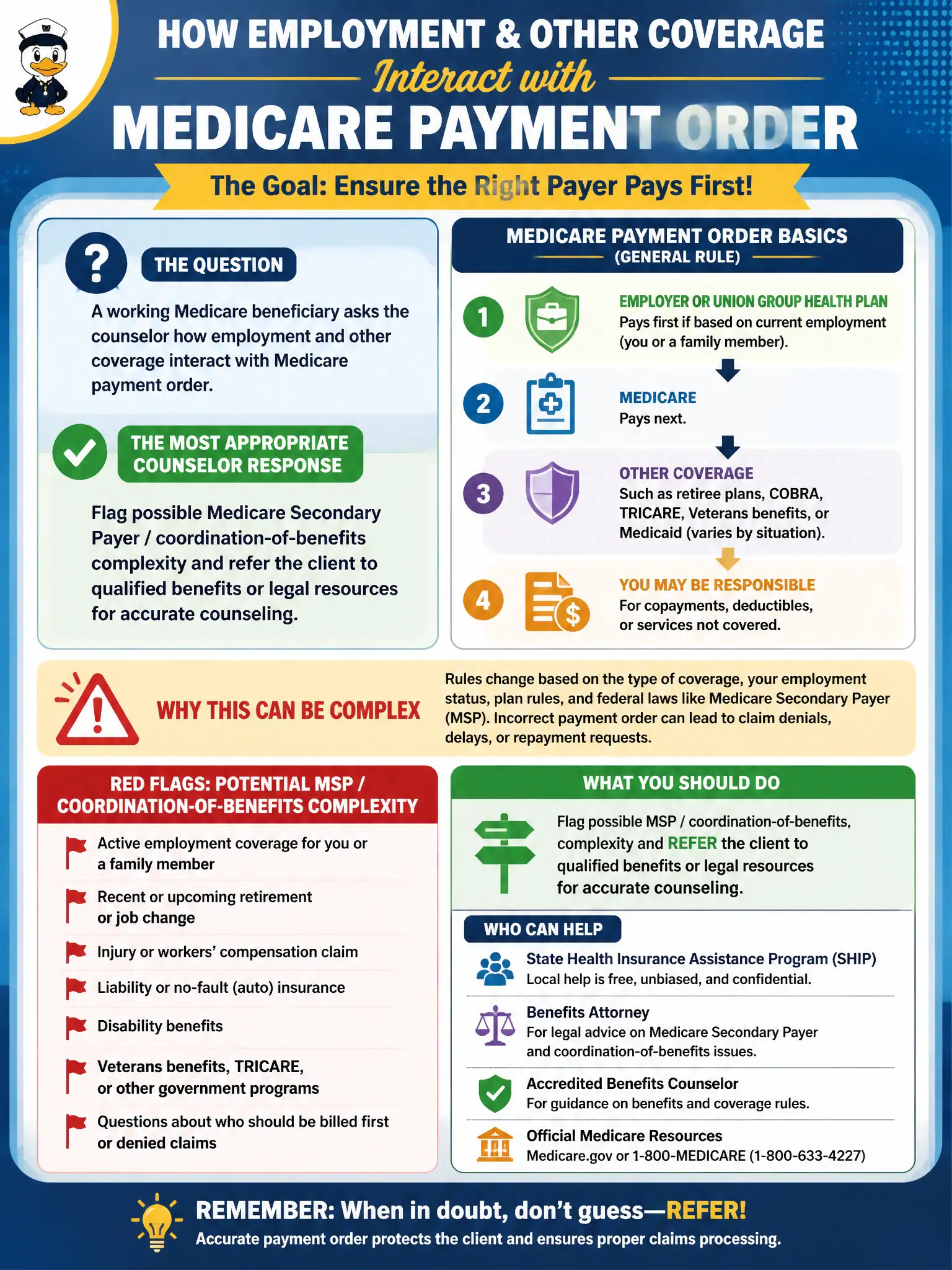
A working Medicare beneficiary asks the counselor how employment and other coverage interact with Medicare payment order. What is the most appropriate counselor response?
Select an answer to reveal the explanation.
Short Explanation
When Medicare and a paycheck collide, the 'who pays first' puzzle gets messy fast. Counselors aren't supposed to play courtroom lawyer on Secondary Payer rules—they spot the complexity and point people to folks who live in that maze. Guessing primary/secondary status can blow up someone's coverage.
Full Explanation
When a working Medicare beneficiary asks how employment and other coverage interact with Medicare payment order, the counselor should flag possible Medicare Secondary Payer and coordination-of-benefits complexity and refer the client to qualified benefits or legal resources for accurate counseling. Payment-order rules are technical and fact-specific; CRCs recognize the issue without posing as definitive legal authorities in every scenario. Giving definitive legal opinions about which payer must pay first in every scenario without referring out exceeds typical counselor competence and risks harmful misinformation. Ignoring coordination-of-benefits issues because Medicare always pays primary for all working beneficiaries is often wrong under MSP rules. Telling the client to drop employer coverage immediately so Medicare becomes simpler can create dangerous coverage gaps and is not a default counseling recommendation. Exam caveat: educational high-level flags are appropriate; case-specific primary-payer determinations belong with benefits specialists, employers' COB units, or legal resources. Operational check: document that MSP/COB complexity was explained at a high level, provide a referral to a qualified benefits counselor or official resource, and avoid recording unverified payment-order guarantees in the civic chart.