
A client with a rare condition needs ongoing specialist care. Comparing a large employer group health plan with individual marketplace coverage, what insurance-literacy point should the counselor emphasize for specialty access?
Select an answer to reveal the explanation.
Short Explanation
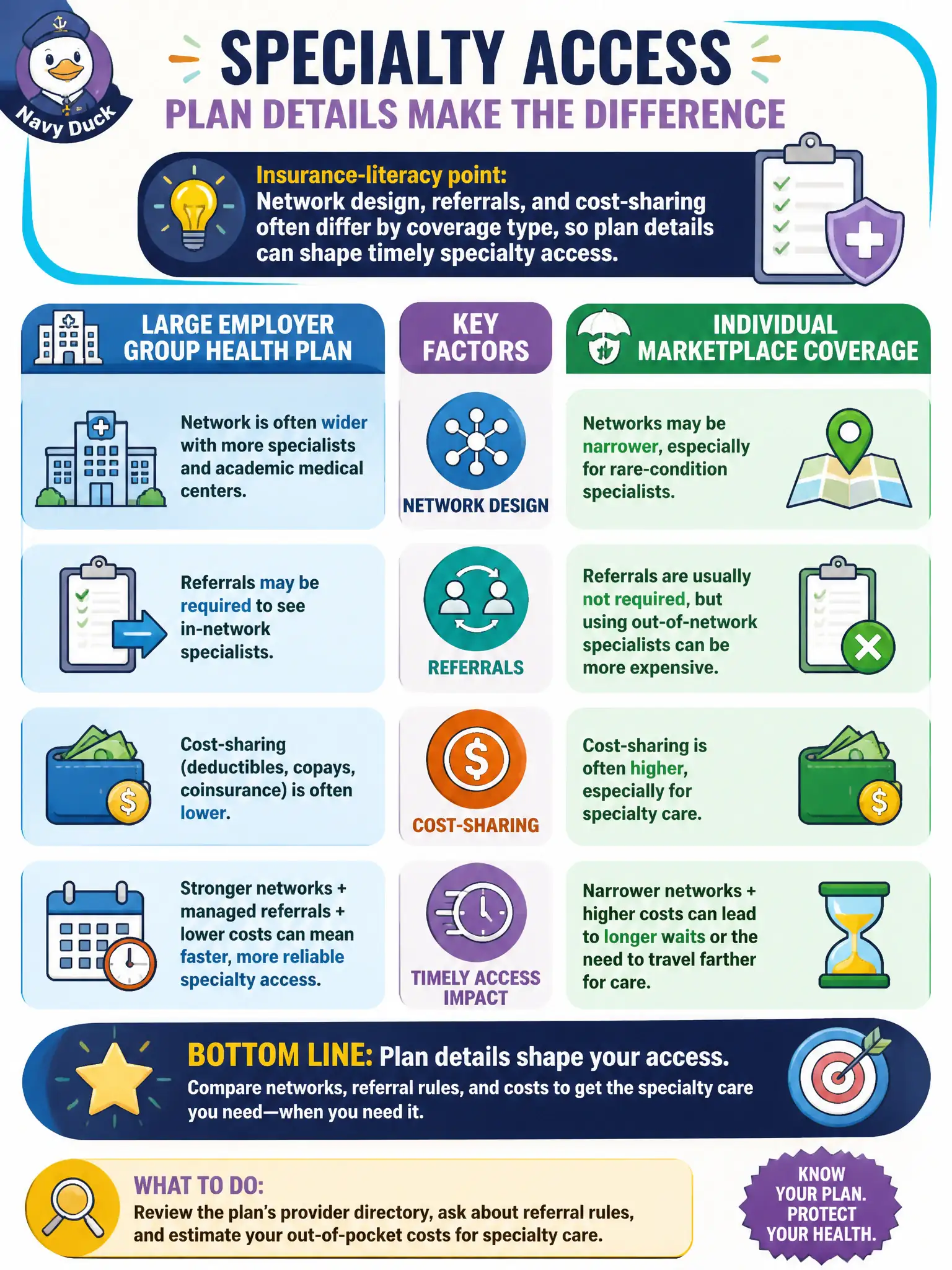
Insurance isn't one flavor of ice cream—group and marketplace scoops can come with totally different toppings for specialists. Networks, referrals, and out-of-pocket rules decide how fast someone with a rare condition actually gets seen. Helping the client read those plan details beats assuming every card works the same.
Full Explanation
Network design, referrals, and cost-sharing often differ between large employer group health plans and individual marketplace coverage, so plan details can shape timely specialty access for a municipal client with a rare condition. Insurance literacy counseling helps clients anticipate prior authorization, out-of-network risk, and wait times rather than assuming all private coverage behaves identically. Claiming individual marketplace plans always guarantee same-day specialty access nationwide with no networks is false. Asserting group and marketplace plans are identical in specialist networks so coverage type never affects access erases real variation that drives rehab timelines. Saying only Medicare Advantage can cover rare-condition specialists and private plans never do is inaccurate and unnecessarily narrowing. Exam caveat: counselors teach comparative questions to ask and refer to benefits navigators; they should not guarantee network inclusion or quote binding coverage determinations beyond available plan documents. Operational check: compare the client's actual group versus marketplace options (or current plan) for specialty network status, referral rules, and cost-sharing for the needed rare-condition clinic; document implications for the civic rehab timeline and any navigator referral made.