
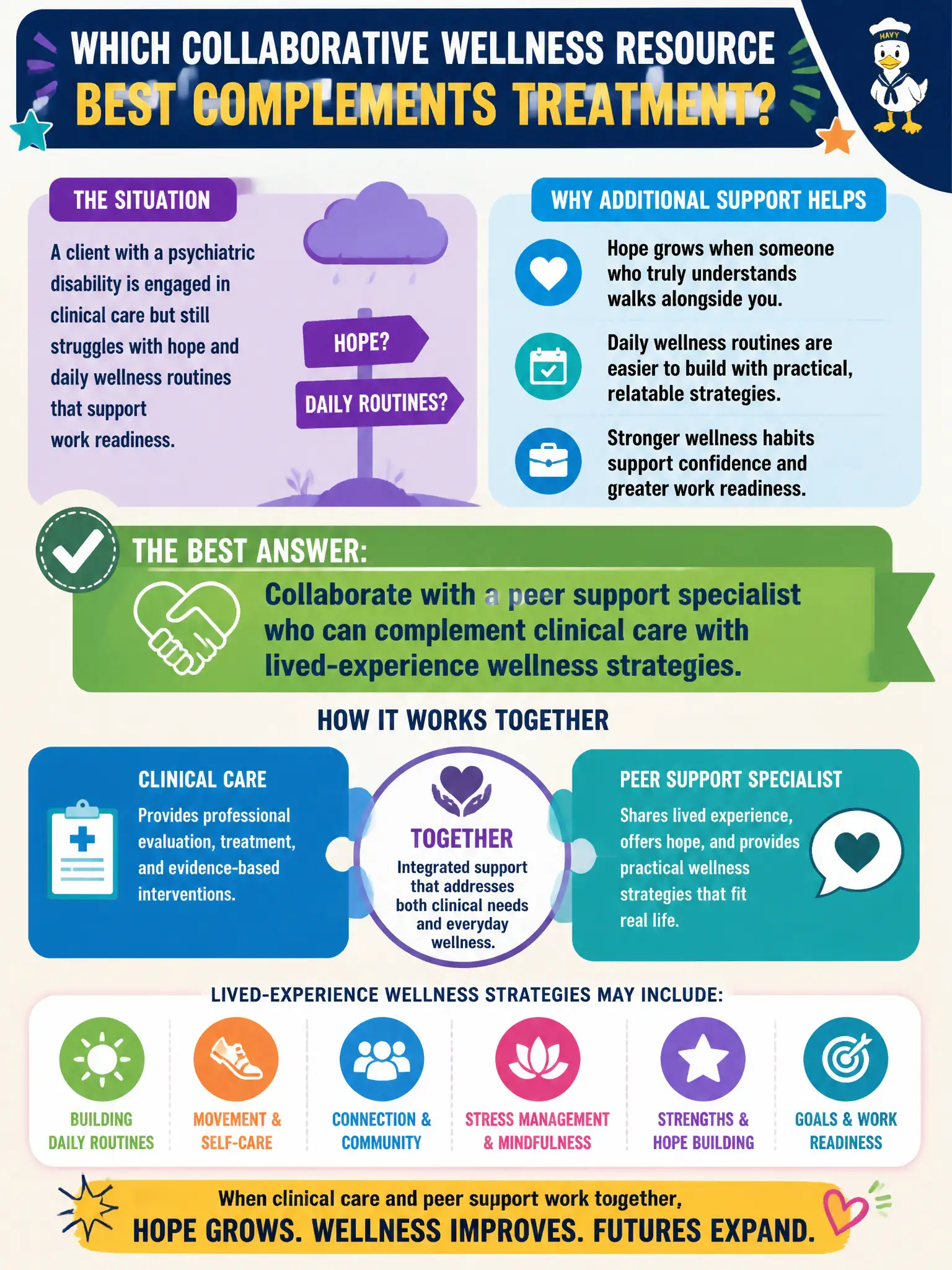
A client with a psychiatric disability is engaged in clinical care but still struggles with hope and daily wellness routines that support work readiness. Which collaborative wellness resource best complements treatment?
Select an answer to reveal the explanation.
Short Explanation
Peers are like trail guides who've hiked the same path—they don't replace the doctor's map, but they sure help with the day-to-day footing. Pairing peer support with clinical care often boosts hope and routines that make work feel doable. Dumping treatment for chat-only, or waiting for a hospital bed first, misses that sweet spot.
Full Explanation
Collaborating with a peer support specialist who can complement clinical care with lived-experience wellness strategies best supports a municipal client with a psychiatric disability who is engaged in treatment yet still struggles with hope and daily wellness routines tied to work readiness. Peer supports add recovery-oriented practical strategies without replacing clinical care. Discontinuing clinical care and replacing it entirely with informal peer conversation removes needed treatment. Referring only to a financial literacy workshop and avoiding any wellness or peer supports misses the hope and routine domain described in the scenario. Requiring inpatient hospitalization before any peer or wellness collaboration is allowed is an unnecessarily restrictive gate that is not a prerequisite for community peer support. Exam caveat: peer specialists work within defined roles and confidentiality structures; they complement psychiatry or therapy rather than providing crisis medical management alone. Operational check: with client consent, refer to a qualified peer support specialist, clarify how peer work complements the clinical team, set wellness routine goals linked to work readiness, and review progress jointly within a defined civic case timeframe.