
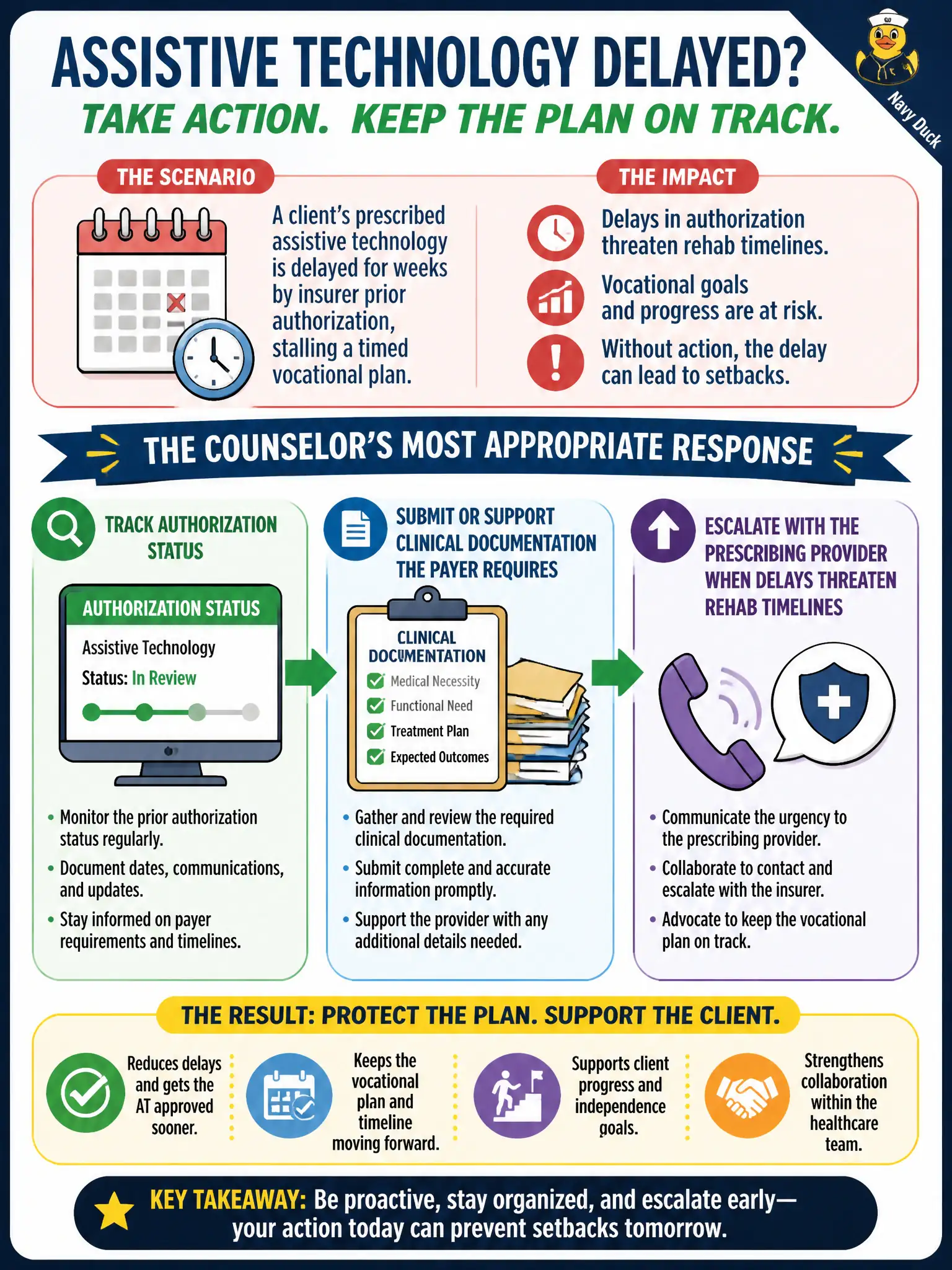
A client's prescribed assistive technology is delayed for weeks by insurer prior authorization, stalling a timed vocational plan. How should the counselor most appropriately respond within the healthcare delivery system?
Select an answer to reveal the explanation.
Short Explanation
Prior auth is the gate that slows the package at the loading dock—not a reason to throw away the delivery plan. Good counselors stay on the paperwork, keep the clinician looped in, and push when the delay starts eating the rehab clock. Sitting quiet or inventing workarounds usually makes things worse.
Full Explanation
When insurer prior authorization delays prescribed assistive technology for weeks and stalls a timed vocational plan, the counselor should track authorization status, submit or support clinical documentation the payer requires, and escalate with the prescribing provider when delays threaten rehab timelines. Navigating healthcare delivery friction is part of municipal case management and disability resource coordination. Telling the client that prior authorization rules cannot be questioned and canceling the vocational goal abandons advocacy and unnecessarily discards the goal. Ordering a different device from an unlisted vendor to bypass authorization without consulting the care team risks funding denial, poor clinical fit, and fractured team trust. Advising a malpractice suit against the insurer as the first counseling step escalates legally before administrative remedies and documentation support are exhausted. Exam caveat: escalation pathways include peer-to-peer reviews and formal appeals; counselors assist and coordinate but do not fabricate medical necessity language outside collaboration with the prescriber. Operational check: log authorization request dates and missing documents, supply required clinical support with the provider, set an escalation date if the device remains pending, and adjust interim vocational tasks so the civic plan does not silently expire during the delay.