
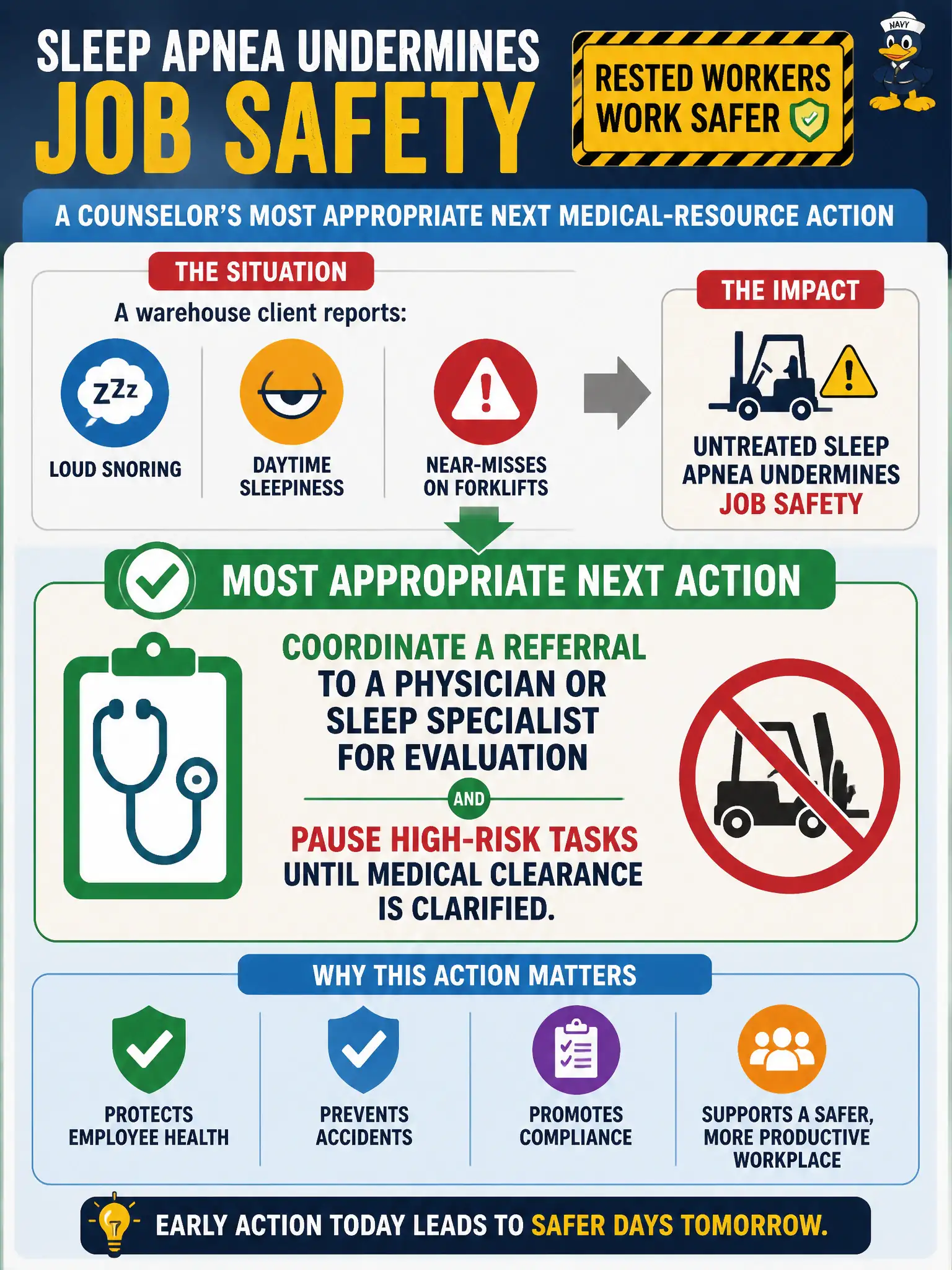
A warehouse client reports loud snoring, daytime sleepiness, and near-misses on forklifts. Untreated sleep apnea is suspected and appears to undermine job safety. What is the counselor's most appropriate next medical-resource action?
Select an answer to reveal the explanation.
Short Explanation
Think of untreated sleep apnea like driving with fogged-up glasses—you can still move, but safety goes sideways. When sleepiness and near-misses show up on the job, the counselor's job is to get medical eyes on it and protect the work until that's sorted. Skipping the referral just leaves risk on the floor.
Full Explanation
When loud snoring, daytime sleepiness, and forklift near-misses suggest untreated sleep apnea undermining job safety, the counselor should coordinate referral to a physician or sleep specialist for evaluation while pausing high-risk tasks until medical clearance is clarified. Safety-sensitive municipal or warehouse work makes medical evaluation urgent, and counselors facilitate resources rather than self-treating sleep disorders. Advising an over-the-counter snoring aid and continuing forklift duty without medical review leaves a potentially impairing condition unmanaged in a high-risk job. Documenting sleepiness only as a motivation issue and delaying medical referral until placement ends misattributes a medical-safety problem to attitude. Requiring the employer to terminate the client immediately without discussing medical evaluation options jumps to job loss before assessment and accommodation pathways are explored. Exam caveat: temporary task restriction should follow employer safety policy and medical guidance; counselors raise the concern and coordinate evaluation, they do not independently diagnose apnea or unilaterally fire workers. Operational check: document safety observations, facilitate a same-week medical or sleep-specialty referral, communicate work-restriction needs to the employer per consent and policy, and keep high-risk equipment operation on hold until clearance status is known.