
In a workers' compensation case, how should the rehabilitation counselor balance coordination with claim adjusters and counseling duties?
Select an answer to reveal the explanation.
Short Explanation
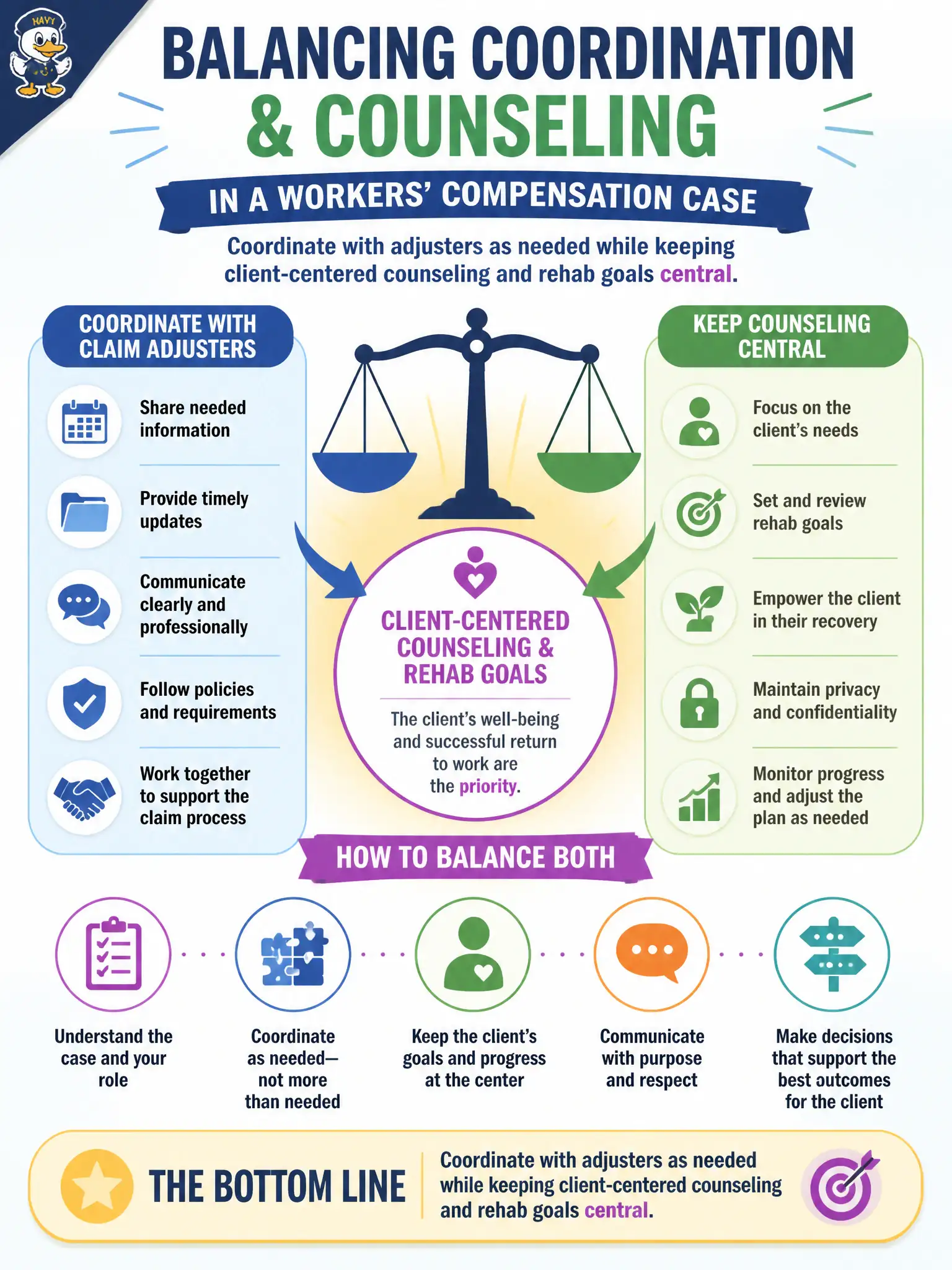
Adjusters are part of the WC orchestra, but the client is still the soloist. Coordinate the paperwork and keep the counseling-and-rehab melody in the lead. Don't become only a cost-cutting messenger.
Full Explanation
In workers' compensation cases, rehabilitation counselors coordinate with claim adjusters as needed while keeping client-centered counseling and rehab goals central. Coordination supports funding and service authorization in municipal and insurer-driven systems without converting the CRC into a pure cost-containment agent. Dual awareness of claim realities and counseling ethics is the professional balance. Abandoning client counseling entirely to act only as the insurer's cost-containment agent violates the counseling core of the CRC role. Refusing all adjuster contact even when release of information and coordination are authorized can stall needed services the client wants. Letting billing disputes replace vocational and counseling planning as the sole focus displaces rehabilitation with accounts-receivable warfare. Exam caveat: counselors remain honest with both clients and payers—advocacy is not deception, and coordination is not automatic agreement with every adjuster preference. Operational check: with valid consent, schedule necessary adjuster updates tied to rehab goals, document what was shared under minimum-necessary standards, and record client counseling goals separately so civic case notes show counseling was not abandoned for claims administration.